三陸復興 | Sanriku Fukkou

Deutsch-Japanisches Synergie Forum (DJSF) Sanriku Fukkou e.V.

三陸復興 | Sanriku Fukkou

岩手)高田松原海岸に巨大防潮堤 来春の完成目指す

杉村和将

2015年12月10日03時00分

 陸前高田市の高田松原海岸に全長2キロの防潮堤が全容を現しつつある。工費は約310億円で進捗(しんちょく)率は8割。来年3月の完成を目指している。

震災前は、海側に高さ3メートル、山側に高さ5・5メートルの二つの防潮堤があったが、津波で流失。新たな防潮堤は、海側は同じ3メートルだが、山側は倍以上の12・5メートルの高さに整備する。二つの防潮堤の間には、市内の高台造成地などから出る土を盛り、松原を再生させる計画だ。山側の防潮堤の背後地では、土地を10メートル以上かさ上げする新市街地の造成工事が進む。

県のシミュレーションでは、東日本大震災のような最大クラスの津波は山側の防潮堤も越えるが、かさ上げした土地には浸水しないとされている。(杉村和将)

Centuries-old cedar tree that initially survived tsunami to be cut down

The head priest of Imaizumi Tenmangu Shrine, Masaki Araki, right, is shown here by the giant cedar tree that is set to be cut down, in the town of Kesen in Rikuzentakata, Iwate Prefecture, on Jan. 23, 2016. (Mainichi)

RIKUZENTAKATA, Iwate — A single giant cedar tree around 800 years old that remained standing after the March 2011 tsunami washed away the local shrine and everything else in the vicinity will be chopped down after experts determined that it has necrotized.

The giant cedar tree at Imaizumi Tenmangu Shrine was considered a sacred tree, with a trunk circumference of 2.7 meters and measuring about 30 meters tall. Due to the dangers of having such a large necrotized tree on its grounds, however, the shrine has decided to cut down the tree — a decision parishioners have accepted.

Imaizumi Tenmangu stood along the Kesen River in the Kesen district of Rikuzentakata. It was established for the re-enshrinement of Heian-era poet and scholar Sugawara no Michizane, who is also enshrined at Kitano Tenmangu Shrine in Kyoto, and is said to have been built in 1481 by Ota Dokan, known for building Edo Castle.

Local residents were fond of the tree, calling it „the giant cedar of the gods.“ The tree is also linked to Chiba Shusaku, who founded the Hokushin ittoryu style of martial arts at the end of the Edo Period.

„It is said that at the foot of the giant cedar tree was the house in which Chiba — who lived in the town of Kesen until age 5 — was born in,“ said Masaki Araki, 72, the shrine’s head priest.

The shrine, which was at an elevation of approximately 10 meters above sea level, was washed away with the rest of the surrounding landscape by the massive tsunami following the Great East Japan Earthquake. Self-Defense Force helicopters that took part in rescue efforts shortly after the disaster are said to have used the one giant tree left standing as a landmark.

The giant cedar, however, had been drenched in saltwater. Major landscapers from Tokyo and elsewhere worked to revive the tree; the following year, several new buds appeared. By 2013, however, the tree began shedding large branches, and in 2015, experts told the shrine priest that the tree had necrotized.

„We really wanted to save the tree somehow,“ Araki said with disappointment, „but we can’t risk keeping the tree when it might fall over and block the road used by cars involved in the reconstruction effort, or when falling branches might hurt visitors.“ Araki is set to apply for approval to cut down the tree from the Association of Shinto Shrines, a religious entity overseeing all Shinto shrines.

Shrine parishioners, meanwhile, are working toward rebuilding the shrine. Volunteers are collecting donations in Tokyo to fund such efforts as well. It has been suggested that parts of the tree, after it is cut down, be used in the main pillar of the new shrine.

巨大防潮堤、何守る? 地元離れる住民たち 宮城・雄勝

朝日新聞デジタル 1月31日(日)7時45分配信

 いったい何を守るためなのか。

硯(すずり)の生産やホタテ養殖で知られた宮城県石巻市雄勝(おがつ)町。津波で壊滅した町中心部にいま、130億円をかけて高さ9・7メートル、延長3・5キロの防潮堤を築く計画が進む。津波をかぶったまちの跡は、災害危険区域に指定され、もう人は住まない。高台の集団移転地が完成し、町外で仮住まいを続ける人が戻っても、中心部に住むのは震災前の620世帯から約80世帯にまで減る。

【写真】震災前の宮城県石巻市雄勝町の中心部

更地にぽつんと立つ仮設商店街の一室で昨年12月25日、防潮堤計画をめぐり、宮城県と「持続可能な雄勝をつくる住民の会」の話し合いが持たれた。「景観を破壊する」と建設に反対する住民。道路や再建された水産加工場など、保全すべき施設があると主張する県。平行線が続いた。

「海と陸が切り離された雄勝では、観光客も呼べない。10年以内に町は衰退する」。硯職人の3代目、高橋頼雄さん(48)は語気を強める。自宅を流されながら、この5年近く、町のホタテ祭りなどを引っ張ってきた。「何とかこの地で皆でやっていけないかと、考えてきたんです」

県の担当者は「まちづくりの様々な会合で説明し、住民合意はなされたと判断した」という。だが決議などをとったわけではない。住民の会事務局の徳水博志さん(62)は「いま一度、地域住民を集めて採決すべきだ」と反論した。

地元の市役所も、壁のような防潮堤を望んだわけではなかった。

石巻市雄勝総合支所は震災の年、住民団体の議論もふまえ、海沿いを走る県道や国道を20メートルの高さまで移し、道沿いに山をきりひらいて住宅地をつくる復興案をまとめた。それなら防潮堤は、もとの4メートル程度に復旧すればいい。

ところが県は、数十年から百数十年に一度の津波に対応する「L(レベル)1」の高さにこだわった。「道路移転は必要ない。費用もかかる」との考えが示され、9・7メートルの計画が動きだしたという。「防潮堤の上げ下げを議論していても、まちづくりは進まない。のまざるを得なかった」と三浦裕総合支所長は振り返る。

県は2018年春の防潮堤完成を目標に、年度内の着工をめざす。工事が始まれば、硯職人の高橋さんは雄勝を離れるつもりだ。

朝日新聞社

最終更新:1月31日(日)13時30分

Coastal areas of tsunami-ravaged prefecture still hurt by drop in population

Kesennuma in Miyagi Prefecture was devastated by the tsunami following the Great East Japan Earthquake. This photo was taken on March 12, 2011, a day after the disaster. (Asahi Shimbun file photo)

Kesennuma in Miyagi Prefecture was devastated by the tsunami following the Great East Japan Earthquake. This photo was taken on March 12, 2011, a day after the disaster. (Asahi Shimbun file photo)

Toggle

January 13, 2016

By HARUFUMI MORI/ Staff Writer

SENDAI–Tsunami-stricken coastal areas of Miyagi Prefecture registered significant population declines, but the overall number of residents dropped only slightly due to an influx of workers and volunteers to urban areas, national census figures show.

The population of the northeastern prefecture as of Oct. 1 stood at 2,334,215, down 13,950, or 0.6 percent, from the last census taken in 2010, a year before the Great East Japan Earthquake and tsunami that triggered a nuclear crisis in nearby Fukushima Prefecture.

In releasing the figures Jan. 12, the Miyagi prefectural government stressed that they are only preliminary.

It estimated that the number of people relocating to the prefecture outnumbered those leaving by about 24,000 since 2010. The inflow is due mainly to the number of people engaged in reconstruction projects, construction work and volunteer activities to help the prefecture recover from the disaster. That helped stem a sharp decline in the prefecture’s overall population even though many residents perished in the tsunami or moved away.

Authorities said at least 6,000 residents who evacuated their homes after the tsunami disaster are still living outside the prefecture. It also noted that many others died or went missing in the disaster.

The population increase centered mainly in urban areas.

In Sendai, the population increased by 36,199, or 3.5 percent, from 2010.

On the other hand, municipalities along the scenic Sanriku coast in the northern part of Miyagi Prefecture experienced a significant population decrease because of the devastation caused by tsunami that claimed around 12,000 lives locally.

The town of Onagawa found its population depleted by 37 percent. This was the highest rate in the three disaster-hit prefectures of Fukushima, Iwate and Miyagi, excluding municipalities where evacuation orders were issued following the nuclear disaster at the Fukushima No. 1 nuclear power plant. The town of Minami-Sanriku found its population dropped by 29 percent.

By HARUFUMI MORI/ Staff Wr

Study tour gives students glimpse of stark reality facing town near crippled Fukushima plant

Students who joined a study tour from the Kansai region stroll through the neighborhood near JR Namie Station on Nov. 8, 2015. (Natsuki Edogawa)

Students who joined a study tour from the Kansai region stroll through the neighborhood near JR Namie Station on Nov. 8, 2015. (Natsuki Edogawa)

By NATSUKI EDOGAWA/ Staff Writer

NAMIE, Fukushima Prefecture–A convenience store might seem an odd venue to start a study trip, especially when it is closed.

But the outlet in question is unusual in that it is located just 9 kilometers from the crippled Fukushima No. 1 nuclear power plant, just down the road from the Namie town hall building, and the only one where workers involved in decontamination work around the shattered nuclear facility can purchase food, drinks and other items.

The fact it reopened at all, in August 2014, marked a key step in Namie’s efforts to regain a degree of normalcy after the March 2011 nuclear disaster.

Most of the store’s customers work at the nuclear plant or are involved in decontamination operations in neighboring communities. As Sunday is their day off, the store also closes. That’s because no one lives in Namie anymore.

The tour took the students from the Kansai region through Namie, now a veritable ghost town: houses falling into ruin near JR Namie Station, others with just their foundations remaining and a big clock at an elementary school frozen at the moment towering tsunami spawned by the Great East Japan Earthquake on March 11, 2011, inundated the area and other parts of northeastern Japan.

“Even after four and a half years, during which I moved on to a technical college after finishing three years at junior high school, this town is still gripped by the disaster. The scars are everywhere,” said 17-year-old Keitaro Watanabe, who attends the National Institute of Technology, Akashi College, in Akashi, Hyogo Prefecture.

Watanabe was among 19 students taking the trip in November 2015, the first trial tour organized by the Fukushima prefectural government for young people to see the tragedy that befell this part of Japan.

Although no one is allowed to stay overnight, day trips to the town are permitted.

The entire town of 20,000 or so people was evacuated as the nuclear accident, triggered by the quake and tsunami, unfolded. About 180 Namie residents lost their lives in the tsunami.

Prefectural authorities sponsored the trip to ascertain the reactions of the participants so that study tours with more meaningful programs to schools and travel agencies can be undertaken in the future. Local officials are particularly interested in visitors to the prefecture who do not need to be accompanied by their parents.

In fiscal 2009, 550,000 children out of the prefecture–ranging from elementary school pupils to college students–visited Fukushima Prefecture on school trips or training camps, according to local officials.

The number, however, plunged to less than 80,000 in fiscal 2011. In fiscal 2014, it bounced back to 250,000, half of the pre-disaster level.

For the tour to Namie, the students aged 17 to 23 traveled through the town by bus to near JR Namie station, where they alighted and strolled through the neighborhood accompanied by a town employee.

A stack of newspapers dated March 12, 2011, was piled up at a shop nearby. It was the day that the town was evacuated.

“Time has stopped,” a student murmured at the sight as tears welled in her eyes.

Watanabe recalled he did not see lasting scars when he was growing up in Akashi, a city that was severely damaged by the 1995 Great Hanshin Earthquake.

But residents of Akashi were able to swiftly move on with rebuilding efforts because, unlike in Namie, they did not have to contend with radioactive fallout.

Ena Onishi, a student who majors in social studies of disaster management at Kobe Gakuin University in Kobe, said she initially thought a tour allowing students to experience a day in the life of an evacuee will be a good approach to bolster visitor numbers.

But her view was somewhat altered, she said, after listening to Fukushima high school students at a gathering prior to the trip to Namie.

They stressed the importance of watching and remembering today’s Fukushima because the prefecture will undergo a significant change in coming years.

“Only after coming to Fukushima, I have realized the enormity of the challenge facing people struggling to rebuild,” she said.

Onishi said the big stumbling block to a Fukushima tour is a widespread concern about the possible impact of radiation, something that prefectural officials are also trying to counter.

Her mother was very concerned about the trip, while some of her friends said they will delay visiting Fukushima.

Their concerns are understandable, but the trip was rewarding nevertheless, Onishi added.

“There are many things we can learn from today’s Fukushima,” she said.

Prefectural officials said the recent trip to Namie was an opportunity to get input from the participants so they could create a more worthwhile tour in the future.

One program they are weighing is bringing together tour participants and local high school students to interact with each other.

By NATSUKI EDOGAWA/ Staff Writer

Temporary housing in Tohoku to get new life after evacuees move out

Temporary housing for evacuees of the 2011 Great East Japan Earthquake and tsunami in Kesennuma, Miyagi Prefecture (Asahi Shimbun file photo)

Temporary housing for evacuees of the 2011 Great East Japan Earthquake and tsunami in Kesennuma, Miyagi Prefecture (Asahi Shimbun file photo)


By HIDEAKI ISHIBASHI/ Senior Staff Writer

Prefabricated temporary housing for disaster evacuees in Miyagi Prefecture will find new uses as a warehouse and nursing facilities after residents vacate them.

The prefectural government said it will transfer some of the buildings to a private entity at no cost rather than have them dismantled.

Prefectural officials said it is practical to continue utilizing the buildings, given that building a prefab home has become increasingly costly in recent years.

It will mark the first time former temporary housing for evacuees of the 2011 Great East Japan Earthquake and tsunami has been donated in the three disaster-stricken prefectures of Miyagi, Fukushima and Iwate.

The buildings are two in Kesennuma and one in Sendai, both in Miyagi Prefecture, all of which were used as makeshift nursing homes. The private organization that operated the facilities will take over the three buildings. The two in Kesennuma will be used as centers where senior citizens can receive outpatient nursing care.

The one in Sendai will be moved to Natori, also in the prefecture, where it will become a warehouse.

The prefectural government and the organization are expected to sign the official transfer agreements by the end of March.

After the earthquake and tsunami devastated northeastern Japan in March 2011, more than 53,000 prefab units were constructed to house evacuees.

It costs about 7.3 million yen ($60,330) in Miyagi Prefecture and about 6.17 million yen in Iwate Prefecture to build such a unit.

The price has surged due to a steep rise in costs for building materials and labor, as well as for insulation materials.

Of the 53,000 units, 10,000 will be leased by prefab makers after evacuees leave them.

But for the remainder, money from national coffers will fund their dismantlement and disposal.

The Miyagi prefectural government has been soliciting requests for use of prefab buildings from local governments and nonprofits to help save money and reuse them.

The three buildings in question were among nine such units that the prefectural government put up for grabs.

By HIDEAKI ISHIBASHI/ Senior Staff Write

New photos show tsunami pummeling Otsuchi town hall, unprepared workers

The tsunami carries away cars parked at the former Otsuchi town hall at 3:26:46 p.m. on March 11, 2011.

Town employees set up a disaster response headquarters outside the former Otsuchi tow

n hall at 3:20:04 p.m. on March 11, 2011.

Toggle

  • The tsunami carries away cars parked at the former Otsuchi town hall at 3:26:46 p.m. on March 11, 2011.

    The tsunami carries away cars parked at the former Otsuchi town hall at 3:26:46 p.m. on March 11, 2011.

  • The tsunami carries away cars parked at the former Otsuchi town hall at 3:26:46 p.m. on March 11, 2011.

    Muddy water sweeps through the former Otsuchi town hall at 3:26:45 p.m. on March 11, 2011.

  • The tsunami carries away cars parked at the former Otsuchi town hall at 3:26:46 p.m. on March 11, 2011.

    Earthquake damage inside the former Otsuchi town hall at 2:57:25 p.m. on March 11, 2011

  • The tsunami carries away cars parked at the former Otsuchi town hall at 3:26:46 p.m. on March 11, 2011.

    The tsunami pushes a wrecked house toward the former Otsuchi town hall at 3:26:53 p.m. on March 11, 2011.

September 14, 2015

By MASAKAZU HIGASHINO/ Senior Staff Writer

OTSUCHI, Iwate Prefecture–Photos taken by a town employee who narrowly escaped death in the 2011 disaster show Otsuchi government officials calmly working, unaware of the approaching tsunami that would kill 40 civil servants.

The recently released photographs are also prompting residents to ask the town government to reassess its report of what happened before and after the tsunami swamped the former town hall four-and-a-half years ago.

The 28 photographs are all dated March 11, 2011. The first one was snapped at 2:56:56 p.m., soon after the magnitude-9.0 Great East Japan Earthquake struck of the northeastern coast of Japan. The last one was taken at 3:26:54 p.m., when the ensuing tsunami was destroying the town.

The first photo shows fallen ceiling lights, shattered glass and other damage inside the town hall about 10 minutes after the initial tremor.

Another image shows town employees setting up a disaster response headquarters outside the building.

There is even an ominous photograph of water spewing from a hand pump in front of the town hall, but there appears no sense of urgency among the town employees.

“I was taking the pictures because I was ordered to record the activities of the disaster response headquarters,” said the employee who took the photos. “I never imagined that a tsunami was coming toward us.”

The photographs take on a dramatic change with a shot of cars being carried away by the tsunami around the facility. The last image is taken from inside the town hall and shows, through a window, the wreckage of a house being pushed toward the building.

The employee ran to the second floor of the town hall when he saw the tsunami but was soon swept up by the water. He managed to save himself by reaching a window and climbing to the rooftop.

He put the camera on the floor to help a colleague get to the rooftop. The camera was left there when the worker climbed to an even higher rooftop level to avoid a larger tsunami wave.

When he returned to the building the next day, he found the camera hanging from a rooftop.

The images in the camera were left untouched until they were discovered in the town hall’s archives this summer, when Otsuchi was putting together a record of the 2011 disaster.

In its final assessment report of the disaster published in March 2014, the town government admitted its shortcomings in responding to the earthquake and tsunami, including failure to order the public workers to evacuate to a hilltop.

However, many residents have criticized the report as lacking validity in its facts, depth in its investigation, and details on what employees were doing at the time.

“As far as we can tell from the photos, there is no urgency among the town employees fearing that a tsunami may come,” said Tokumi Saito, a professor emeritus of local disaster management at Iwate University. “The town government should reassess what happened, including why there were no orders issued to evacuate to higher ground and whether these decisions affected the actions of the townspeople.”

By MASAKAZU HIGASHINO/ Senior Staff Write

Nearly 5 years after the Great East Japan Earthquake 14,000 temporary housing units are still occupied!

12400890_849916788454574_802062994065649105_n

SENDAI — At least 14,000 prefabricated temporary housing units are expected to remain occupied in Iwate, Miyagi and Fukushima prefectures as of April 1, five years after the Great East Japan Earthquake in March 2011, according to a Yomiuri Shimbun survey.

Following the 1995 Great Hanshin Earthquake, all temporary housing units were vacant after five years. The government plans to move people out of all the temporary housing units in Iwate and Miyagi prefectures by 2020, but a system must be created to deal with the fact that reconstruction efforts are taking a long time.

30% of peak figure

A 49-year-old female restaurant employee in Kamaishi, Iwate Prefecture, was selected for public reconstruction housing at the end of 2014, but she has not been able to move there yet because the units are expected to be completed at the end of this year at the earliest.

The temporary housing unit she lives in now is cold due to its thin walls and hot in summer because of the corrugated iron roof. When she thinks that she will be there for about another year, she cannot help but sigh.

“At first, I thought I’d live in a temporary housing unit for about two years. I didn’t think this life would go on for so long,” she said.

As of the end of November 2015, there were 30,293 prefabricated temporary housing units in the three prefectures, with 62,798 people living in them. The Yomiuri Shimbun asked 46 municipalities operating these temporary housing units about the number of units they estimate there will be as of April 1, when the new fiscal year starts.

Among the municipalities, 34 gave estimates amounting to a total of 14,058 units. This figure is equivalent to about 30 percent of the peak figure in April 2012 of 48,628 units, which were managed by 51 municipalities.

The remaining 12 municipalities did not give a concrete number of temporary housing units, but the Kesennuma municipal government in Miyagi Prefecture, which has 2,351 units, said: “We expect at least 2,000 units will remain, but we still don’t know the exact number.”

Other municipalities also said the outlook remained unclear, meaning the actual number of remaining temporary housing units as of April 1 is certain to be more than the total compiled in the survey.

Asked about the prospects of moving people out of temporary housing units in fiscal 2016, three municipalities said they could not draw up prospects, while 14 said they would not be able to empty almost any of the units.

Under the Building Standards Law, people are allowed to live in temporary housing units for up to two years. However, if a disaster is given special designation by the central government, the period can be extended by one year every year.

The residence period was extended following the Great Hanshin Earthquake, for which the number of temporary housing units peaked at 46,617. The number of residents in those units was reduced to zero five years later.

Completion delays

Municipalities have had a hard time emptying their temporary housing units because of prolonged reconstruction work in disaster-affected areas. Large-scale civil engineering work, such as the creation of high land and the elevation of land in relocation areas, has been conducted to enhance anti-disaster measures. This has delayed the building of public reconstruction housing.

According to the three prefectures, the completion rate for public reconstruction housing units stood at 46 percent as of the end of November 2015. In municipalities where flat land is scarce — such as Yamada, Iwate Prefecture, and Kesennuma, Miyagi Prefecture — the rate is somewhere between 20 to 29 percent. The completion rate for evacuees who fled as a result of the crisis at the Fukushima No. 1 nuclear power plant in Fukushima Prefecture also remains low, at 18 percent.

According to a survey conducted by the Ishinomaki municipal government in Miyagi Prefecture, 1,117 households, or about 15 percent of disaster-affected households, are still unsure about housing once they leave the temporary units. Residents will have to pay rent for the public reconstruction housing units, although it will be relatively cheap.

In contrast, they do not need to pay rent for temporary housing units. “Many households that are undecided about their next housing are elderly or low-income,” said a municipal government official in charge of the issue. The percentage of single elderly households among temporary housing units in Miyagi Prefecture increased to 22 percent in fiscal 2014 from 16 percent in fiscal 2012.

Limited durability

The major role of temporary housing is to quickly provide evacuees living in gymnasiums and other shelters with housing units. To shorten construction periods, easily available wooden piles are often used for the base part of these housing structures.

According to the Japan Wood Protection Association, cedar and pinewood — materials commonly used for temporary housing — lose durability after five to 6½ years, which can be followed by fears of rotting. Some residents have complained of negative effects on their health caused by mold that grew due to condensation on the floors and walls.

A survey conducted by the Iwate prefectural government in 2014 confirmed that deterioration was present in more than a quarter of about 9,000 makeshift housing units.

The three prefectures are making desperate efforts to prolong the life of the temporary housing units through such measures as installing metal piles. However, such efforts are merely stopgap measures.

Damage from tsunami in the event of a massive earthquake in the Nankai Trough in the Pacific Ocean is also anticipated.

According to Yoshiteru Murosaki, a professor emeritus at Kobe University and an expert on disaster management planning: “It seems to be time to review disaster-related legislation to make it possible to construct semi-permanent temporary housing units that evacuees could move into [from shelters or makeshift units] in cases where reconstruction is expected to be prolonged.”

http://www.the-japan-news.com/news/article/0002675068

<アーカイブ大震災>黒い波 町長流される

<アーカイブ大震災>黒い波 町長流される

 2011年3月11日、岩手県大槌町の役場は大津波の直撃を受け、多くの職員が津波に流された。加藤宏暉町長(69)は3月19日に遺体で発見。町職員139人のうち、死亡・行方不明は加藤町長を含め33人に上った。被災時の加藤町長らは当初、「役場で会議中」と伝えられ、後に「役場前で対策会議中だった」とされた。

◎その時 何が(2)庁舎前で会議 はしごに殺到(岩手・大槌町)

直線距離で海岸から約300メートル。海辺に近い岩手県大槌町役場で、加藤宏暉町長(69)は3月11日午後、2階の執務室で机に向かっていた。
2時46分、庁舎を強い揺れが襲った。電気は突然消え、備え付けロッカーの扉がバタンバタンと音を立てて開き、天井から蛍光灯が落ちた。
「老朽化した庁舎内は危険だと判断し、災害対策本部は外に置こうと思った」。東梅政昭副町長(66)は振り返る。加藤町長も承諾し、間もなく外へ出てきた。
町の防災無線は大津波警報の発令を知らせていた。「高台へ避難してください」。放送が流れる中で、職員約30人は対策本部の会議準備のため、玄関脇の駐車場に机やいすを並べていた。その時だった。「津波だ」。誰かが叫んだ。遠くに黒い波が迫るのが見えた。
辺りを見渡せば平地。逃げる場所は、庁舎の屋上しかなかった。2階から屋上へ続く幅30センチほどの鉄製はしごには、約60人の職員が殺到した。屋上までたどり着いたのは、東梅副町長ら22人。加藤町長の姿はなかった。

加藤町長は8日後の19日、遺体で見つかった。場所は国道45号バイパス付近。役場から北へ約500メートルも離れていた。
町の地域防災計画によると、震度5弱以上の地震が発生したり、津波警報が発令されたりした場合には、町長を本部長とする災害対策本部を設置すると定めている。庁舎が使えない状態のときは、西へ直線で約400メートル離れた高台にある中央公民館に本部を設置するとも記されている。
しかし、庁舎が使用不可能となる想定は、職員の意識には薄かった。毎年3月に実施する町民との避難訓練で、中央公民館に本部を設置したのは数年前の1度きりだ。
「中央公民館に本部を置くことは私も含め、職員にあまり浸透していなかった」。東梅副町長はうつむきながら明かす。

これまでの被災経験が、判断を誤らせたとの指摘もある。
2008年6月に岩手・宮城内陸地震、同7月には大槌町新町で震度5強を観測した岩手沿岸北部地震があった。昨年2月末のチリ大地震では、1.45メートルの津波を大槌漁港で目の当たりにした。
中堅職員の男性は本音を漏らす。「いつも庁舎に本部を置いて事足りてきたし、まさか防潮堤を越える津波が来るとは誰も思っていなかった」
庁舎があるのは、県の津波シミュレーションの浸水区域だ。51年前のチリ地震津波でも床上浸水した経験を持つ。
東梅副町長は悔やむ。「いつの間にか職員の間で、危機感や防災意識が薄れていたのかもしれない」
プレハブの仮庁舎は、大槌小の校庭に建てられた。罹災(りさい)証明書の発行は4月27日にようやく可能になった。新庁舎をどこに建てるのか。先はまだ見えない。(岩崎かおり、剣持雄治、菊間深哉)
◆         ◆         ◆
2011年3月11日の東日本大震災発生以来、河北新報社は、被災地東北の新聞社として多くの記事を伝えてきた。
とりわけ震災が起きた年は、記者は混乱が続く中で情報をかき集め、災害の実相を明らかにするとともに、被害や避難対応などの検証を重ねた。
中には、全容把握が難しかったり、対応の是非を考えあぐねたりしたテーマにもぶつかった。
5年の節目に際し、一連の記事をあえて当時のままの形でまとめた。記事を読み返し、あの日に思いを致すことは、復興の歩みを促し、いまとこれからを生きる大きな助けとなるだろう。

<アーカイブ大震災>砂糖なめ飢えしのぐ

屋上に描かれた「SOS」。校舎内では約600人が孤立していた=2011年3月12日午前7時40分ごろ、石巻市の大街道小

大街道小は今も体育館が避難所となっており、約160人が身を寄せる=2011年5月11日

 東日本大震災。2011年3月11日、世界最大級マグニチュード(M)9.0のエネルギーが東北の大地を突き上げ、1000年に一度の大津波が太平洋沿岸をことごとく破壊した。復興に立ち向かうために、あの日の事実、今の現実を後世に伝えなければならない。「ドキュメント 大震災」。シリーズ第1弾「その時 何が」では、震災直後の混乱の中で断片的な情報だけが入り、詳細が不明のままとなっていた出来事を掘り下げる。

◎その時 何が(1)屋上のSOS(石巻)

2011年3月13日の朝刊に、宮城県石巻市の学校を上空から撮影した写真が載った。屋上に「SOS」の白い文字が浮かんでいる。小さな人影が両手を大きく広げ、助けを求めていた。

その学校は大街道小だった。石巻工業港から北へ約1キロ。3月11日の津波で1階が水没し、学校の周辺も海水に沈んだ。2、3階に避難した住民や教員、児童ら約600人が孤立状態に陥っていた。
甲斐好子さん(36)は地震後、首まで水に漬かりながら、近所のお年寄りや赤ちゃんを救助。ずぶぬれになって、母親(69)と学校にたどり着いた。
恐怖と不安の一夜。上空に非常事態を象徴するヘリコプターの爆音がとどろいていた。夜明けが近づくと、爆音が交錯し始める。12日朝、何機ものヘリが、上空を飛び交っていた。

甲斐好子さん(36)は地震後、首まで水に漬かりながら、近所のお年寄りや赤ちゃんを救助。ずぶぬれになって、母親(69)と学校にたどり着いた。
恐怖と不安の一夜。上空に非常事態を象徴するヘリコプターの爆音がとどろいていた。夜明けが近づくと、爆音が交錯し始める。12日朝、何機ものヘリが、上空を飛び交っていた。
甲斐さんら数人が屋上へ駆け上がった。ヘリを見上げる。「気付いて」。救助を求めようとの声が挙がった。誰が発案したか甲斐さんは覚えていないが、教員らがB4判のコピー用紙を持ってきて、並べ始めた。「SOS」。風で飛ばされぬよう、ウレタンの破片を重りにした。
甲斐さんはヘリに向かって必死に手を振った。「何か物資を落としてくれないか、誰か降りてくれないかって…。でも、みんな飛び去ってしまった」

約600人を飢えが襲った。備蓄食糧はなかった。避難者のうち子どもが約400人。わずかな食べ物でも、子どもたちを優先した。
11日は放課後児童クラブの菓子を児童らに分けた。12日、水が止まる。住民らはスティック袋に入った砂糖をなめた。
北村統教頭(49)は「先生方や大人は2、3日間、ほとんど食べるものがない状態。我慢するしかなかった」と言う。
水が徐々に引き始めた12日、自宅などから逃げ遅れた住民らが水に漬かりながら、続々と校舎に来た。避難者は1300人まで膨れ上がった。
近所の中華料理店が炊き出しをしたのは14日だ。紙コップ半分ぐらいの野菜スープを皆ですすった。だが、周囲にガソリンやガスの臭いが漂い、炊き出しは中止せざるを得なかった。差し入れや買い出しで調達したわずかな食料を分け合った。
自衛隊員が19日、おにぎりとお湯を運んできた。拍手が湧き上がった。「ごつごつした、いかにも男の人が握ったおにぎりだった」。甲斐さんはその味が忘れられない。

校舎の中では、懸命な救命、医療活動も続いていた。
石巻市立病院の看護師中里珠丹さん(36)は12日早朝、教員の叫ぶ声を聞いた。「誰か看護師さんはいませんか」。1階の保健室へ行くと、ベッドに女性が横たわっている。低体温症だった。毛布はない。カーテンを体に巻き付けた。
もう一人いた看護師と心臓マッサージを施したが、女性は間もなく、静かに息を引き取った。
十分な治療設備はない。ピンセットはライターであぶって消毒した。
急ごしらえの救護室には昼夜を問わず、行列ができた。中里さんは10日間、ほとんど寝る時間もなく、応急処置などに忙殺された。
日赤の緊急医療チームがやって来たのは震災1週間後だった、と記憶する。「精神的にも肉体的にも、もう限界だった」(大友庸一)
◆         ◆         ◆
2011年3月11日の東日本大震災発生以来、河北新報社は、被災地東北の新聞社として多くの記事を伝えてきた。
とりわけ震災が起きた年は、記者は混乱が続く中で情報をかき集め、災害の実相を明らかにするとともに、被害や避難対応などの検証を重ねた。
中には、全容把握が難しかったり、対応の是非を考えあぐねたりしたテーマにもぶつかった。
5年の節目に際し、一連の記事をあえて当時のままの形でまとめた。記事を読み返し、あの日に思いを致すことは、復興の歩みを促し、いまとこれからを生きる大きな助けとなるだろう。

Repentant ex-TEPCO exec helps Fukushima with new tomato farm

Repentant ex-TEPCO exec helps Fukushima with new tomato farm

Employees tend to tomato seedlings at a computerized farm that opened in Minami-Soma, Fukushima Prefecture, on Jan. 20. (Masakazu Honda)

Employees tend to tomato seedlings at a computerized farm that opened in Minami-Soma, Fukushima Prefecture, on Jan. 20. (Masakazu Honda)

http://ajw.asahi.com/article/0311disaster/recovery/AJ201601210044

  • Employees tend to tomato seedlings at a computerized farm that opened in Minami-Soma, Fukushima Prefecture, on Jan. 20. (Masakazu Honda)
January 21, 2016

THE ASAHI SHIMBUN

MINAMI-SOMA, Fukushima Prefecture–A former Tokyo Electric Power Co. executive who feels guilt over the 2011 nuclear disaster is behind the start-up of a tomato farm which opened in the devastated region here Jan. 20.

Eiju Hangai, whose previous employer operates the Fukushima No. 1 nuclear power plant, is now president of Minami-Soma Fukko Agri KK, an enterprise formed by business leaders with ties to the city.

At the farm’s opening ceremony, Hangai said he hopes that the project will help ease local farmers’ struggles in the aftermath of the disaster at the plant.

“We must shoulder the responsibility for causing the nuclear accident for the rest of our lives and we are hoping to carry out part of our responsibility through this initiative,” he said.

“We aim to offer not only job opportunities in the agricultural sector, but also train people for future managers in the industry.”

The company spent 1.1 billion yen ($9.4 million) to purchase a 2.4 hectare property and build the farm.

Of this, 740 million yen was covered by a grant from the central government designed to help businesses creating jobs.

Financial institutions in the prefecture collaborated by extending loans worth 100 million yen in start-up funds.

Around 50 local people have been hired to work on the farm in the city’s Shimoota industrial park.

Mayor Katsunobu Sakurai, who is from a farming family himself, gave encouragement to the employees at the ceremony.

“Since I started in agriculture myself, I am fully aware of the frustration of farmers who could no longer do their work,” he said. “I would like you to channel your frustration into hope and take pride in working in an industry that protects life.”

The farm’s tomato is named “Asubito Tomato” (Tomatoes grown by people playing a key role in building the future).

Minami-Soma Fukko Agri has set an annual target of 660 tons, with the first shipment expected in early March.

Currently, 28,000 tomato seedlings are grown in a 1.5-hectare greenhouse where the room temperature is kept above 20 degrees by computerized control.

Humidity and the concentration of carbon dioxide in the greenhouse are also managed by the computer.

THE ASAHI SHIMBUN

From ‘sorrow and despair,’ tsunami-hit Miyagi town opens shopping street

A shopping street extending from JR Onagawa Station toward the Pacific Ocean opened on Dec. 23 in Onagawa, Miyagi Prefecture. (Yosuke Fukudome)

A shopping street extending from JR Onagawa Station toward the Pacific Ocean opened on Dec. 23 in Onagawa, Miyagi Prefecture. (Yosuke Fukudome)

Toggle

  • A shopping street extending from JR Onagawa Station toward the Pacific Ocean opened on Dec. 23 in Onagawa, Miyagi Prefecture. (Yosuke Fukudome)
  • Local children ring a bell that was recovered from rubble of the 2011 tsunami during a ribbon-cutting ceremony in Onagawa, Miyagi Prefecture, on Dec. 23. (Yosuke Fukudome)

By NAOTO KISO/ Staff Writer

ONAGAWA, Miyagi Prefecture–With its population depleted, this coastal town opened a shopping street on Dec. 23 in hopes of generating a buzz and putting the misery of the 2011 tsunami behind it.

“We started from the midst of sorrow and despair and completed the shopping street by bringing together the ideas of town residents,” Onagawa Mayor Yoshiaki Suda said at the opening ceremony for the street. “We want to maintain the bustle in the town.”

The nearly 20-meter-high tsunami triggered by the Great East Japan Earthquake on March 11, 2011, swept through Onagawa, destroying buildings and killing about 570 in the town.

Onagawa’s population has declined from more than 10,000 before the disaster to about 7,000 now.

Six one-story wooden commercial facilities line the new 15-meter-wide walkway.

The walkway stretches 170 meters from JR Onagawa Station, which was rebuilt on higher ground after the disaster, toward the Pacific Ocean.

The 27 businesses housed in the facilities include a grocery store that was hit by the tsunami, a restaurant that had been operating on a makeshift shopping street, a guitar workshop and a car rental office for tourists.

Town officials are considering setting up a park near the area.

By NAOTO KISO/ Staff Writer

高い防潮堤何を守る 海も生活再建も…姿見えず

2016.1.3 08:50

http://www.sankei.com/affairs/news/160103/afr1601030007-n1.html

魚市場などを見下ろすようにして高さ10・4メートルの防潮堤が120メートルにわたってそびえる。岩手県宮古市の鍬ケ崎(くわがさき)地区。電器店を営む島崎秀男さん(69)は、「こんなに高い壁が必要あったのか。これで6億5千万円だって」とこぼした。

隣接する日立浜町地区と合わせて総延長1・6キロの防潮堤を整備する事業が進行中だ。90億円で平成28年度中の完成を目指している。

東日本大震災前から防潮堤建設の話はあったが、地区の住民たちは「海が見えなくなる」などと反対して頓挫。死者・行方不明者65人、流された住居など約700棟という震災の被害が建設計画を前に進めた。

それでも高い壁が目の前に築かれると、賛成してきた住民からも、否定的な意見が上がり始めた。島崎さんもその一人だ。

「津波が来たら逃げるしかねえんだから。どんな高さの津波が来るか分からないんだから、いくら高くしたってキリがねえ」

政府は平成23年6月、チリ地震津波など発生頻度が数十年~百数十年に1回と比較的高い「L1津波」を対象に被災地の防潮堤を設計し、東日本大震災級の「L2津波」に対しては、住民避難を軸に総合的に対策を講じる方針を決めた。

これを受けて岩手、宮城、福島の3県の海岸線約1700キロのうち、約400キロで防潮堤が整備されていく。高さが10メートル以上の防潮堤は岩手県で約46キロ、宮城県で約4キロ。総事業費は約1兆円に上る見通しだ。

被災地では防潮堤整備を歓迎する声がある一方で、住民の高台移転が決まった地域の計画に疑問の声が出ている。観光や漁業に与える悪影響にも懸念が根強い。それよりも避難道の整備、生活再建につながる投資を望む声も上がる。

国土交通省などによると、27年9月時点で防潮堤が大部分を占める被災6県の海岸対策事業677カ所のうち、完成したのは115カ所で、31カ所では地元との調整が済んでいない。

「万里の長城」。宮古市田老地区では高さ10メートルで二層構造の巨大防潮堤(総延長2433メートル)が威容を誇り、そう呼ばれていた。

しかし、大震災の津波を防げず、外側の壁は跡形もなく破壊された。死者は181人、行方不明者は43人。「防潮堤の存在が危機感を薄め、避難を遅らせた」ともささやかれた。

今、田老地区では外側高さ14メートル、内側高さ10メートルの巨大防潮堤が再び整備されようとしている。高台に造成地や公営住宅が完成したものの、浸水したかつての市街地には更地が広がる。行政側は商店街の再建を描くが、住民らの間では実現性に懐疑的な見方が強い。

同地区で自宅が流失し、仮設住宅に1人で暮らす女性(72)は、復旧する堤防が守るはずの町が「本当に復活するのか不安」と漏らす。

岩手県の調査によると、内陸部の親族宅などに移った被災者で「元の市町村に戻りたい」と答えた人は26年に22・7%いたが、27年は18・5%に落ち込んだ。この女性も、帰る家を失ってから千葉県に嫁いだ娘宅で年を越すようになった。

「戻ることを諦める人は日に日に増えている。堤防を高くすることより、堤防で守る町の姿を示して」

日本三景のひとつ、松島に浮かぶ野々島(宮城県塩釜市)。船着き場近くに鉄パイプを組み立て、パネル板を据えた構造物が異質な存在感を放つ。

「宮城県が計画する防潮堤高」と書かれたパネルのとなりには、高さが1メートル低い「住民が望む防潮堤高」と書かれたパネルがある。住民側が設置した。

「県側」のパネルの前に立つと、松島湾の景色は見えなくなる。「高い壁に囲まれるような島に魅力はないでしょ。素晴らしい景色を残すことがおれたちの責務だ」。自営業の遠藤勝さん(52)は厳しい表情でパネルを見つめた。

野々島では東日本大震災の津波で31戸が全壊するなどした。県や市の防潮堤整備計画は外洋から直接津波が流れ込む南側の海岸で海抜4・3メートル、北側の海岸で同3・3メートルに設定。島民は南側の高さには賛成する一方、北側については「高すぎる」と反発する。

県は政府の方針に基づき、昭和35年のチリ地震津波クラスなど発生頻度が比較的高い「L1津波」に対応する防潮堤の高さを地域ごとに決定。野々島についてはチリ地震津波で塩釜市内で確認された同3・3メートルの痕跡を参考にした。

だが野々島で漁業を営む鈴木嘉男さん(78)は「チリ地震のときに内湾から津波はこなかった」と主張。島民らは「北側は2・3メートルで十分」としている。

白波をあげる船首の先に、亀裂が入り段差が生じた防潮堤が姿を現す。松島の大森島など無人4島では、破損した防潮堤の復旧事業が持ち上がり、20億円超の査定費用に「ムダだ」との批判が沸き起こった。

塩釜市によると、4島ではかつて付近の住民が船で訪れて水田を耕し、昭和40年代半ば以降、高さ3・1メートルの防潮堤が計約900メートルにわたり整備された。

被災時点ではいずれの水田も耕作放棄されていたが、市は深刻な被害が出た有人島の防潮堤と一緒に県を通じて、国負担の災害復旧事業に申請した。

本来なら申請前に島民に耕作再開の意志があるかなどを確認しておくべきだったが、市の担当者は「当時は時間がなかった」と釈明する。国側の査定を災害が発生した年内に原則終わらせるという“暗黙”のルールを意識したというのだ。

首相夫人の安倍昭恵さんが視察して事業を疑問視するなど防潮堤整備の「負の象徴」として注目を集めるると、市は平成25年12月に地主の島民に聞き取りを行って耕作再開の見込みはないと判断。土砂流出によるカキ養殖への悪影響を懸念する地元漁協などの声を踏まえ、最低限の補修にとどめるとし、事業費は大幅に圧縮される見通しだ

「変更にあたって林野庁への相談はなかった」。27年4月、参院予算委員会。林野庁と宮城県が建造を進める気仙沼市の約300メートルの防潮堤建設をめぐり、当時の林芳正農林水産相が釈明した。防潮堤の断面が、北側の林野庁分は三角形、南側の県の分は台形と異なり、物議を醸していた。

合同の地元説明会を経て、林野庁は25年2月に着工。県は同11月、耐震性を強化するための基準変更に基づき、台形の防潮堤を造ると林野庁側に連絡。26年9月に着工した。

結果として、林野庁は県側と同じ台形に合わせるため盛り土など当初の工事契約を大幅に見直し、追加費用も生じた。縦割り行政の弊害が露呈した格好だ。

林野庁の担当者は「合同説明会では裏直立型(三角形)で説明していた」と指摘し、台形への変更が想定外だったとする。県の担当者は「基準変更の時点で林野庁に伝えている」と説明。双方の言い分は食い違うが、仕様の違う防潮堤の出現は、復興を待ち望む地元住民をあきれさせた。

「何をムダなことをしているのかと思った。ちゃんと調整して工事したらいいのに」。海岸近くの家が被災し、仮設住宅で暮らす50代の女性は表情を曇らせた。

行政が策定した防潮堤計画が地域の実情に沿っていないという批判の声は各地で上がっている。国交省によると、住民との話し合いなどを経て昨年9月末までに岩手県の27カ所、宮城県の154カ所、福島県の1カ所で高さを下げるなどの見直しが行われている。

野々島では防潮堤整備の膠着(こうちゃく)が続く。「こんな負の遺産を残して死ねない。島のことを一番分かっている島の人間の意見を無視して高さを決めるのはおかしい」。松島湾を望みながら遠藤さんは訴えた。

Kinder in Tohoku, fast 5 Jahre nach dem Tsunami

Wie geht es den Kindern in den zerstörten Gebieten? Haben sie die Erinnerungen an den Tsunami und den Verlust von nahe stehenden Verwandten und Freunden verarbeitet? Wie verläuft der Alltag in den vorübergehenden Gebäuden der Ersatzschule und das Leben im Container. Es gibt keinen Platz, in Ruhe Schularbeiten zu machen.

【東北の子ども達へ、あなたができること】
津波で家を流され、学ぶ場を失った子ども達が、被災地には残されています。
東北の子ども達のために、一人ひとりができること、考えてみませんか?

Plutonium-Fabrik verzögert sich bis 2018

30. November 2015 von

Plutonium-Fabrik verzögert sich bis 2018

Tokio (JAPANMARKT/fr) – Die japanische Wiederaufbereitungsanlage für abgebrannte nukleare Brennelemente geht erst im Herbst 2018 in Betrieb. Stur wird an der Plutonium-Fabrik festgehalten, obwohl sie sich nur noch schwer rechtfertigen lässt.

Neue Sicherheitsauflagen

Der Start der über 15 Milliarden teuren Fabrik zum Recycling von Plutonium im nördlichen Küstenort Rokkasho wurde damit zum 22. Mal verschoben. Eigentlich sollte die Fabrik schon 1997 fertig sein. Doch lange Zeit gab es Probleme mit dem Einglasen des Atommülls. Jetzt muss die Fabrik noch die nach dem Fukushima-Unfall verschärften Sicherheitsauflagen erfüllen.

Wegen der riesigen Mengen von hochradioaktiven Flüssigkeiten und dem komplexen Leitungssystem ist die Anlage besonders durch Beben und Tsunami gefährdet. Außerdem braucht die Anlage ein zweites, doppelt so großes Kontrollzentrum, das im felsigen Untergrund verankert werden muss. Das bisherige Kontrollzentrum wurde erst 2011 errichtet.

Kreislauf ohne Schnellen Brüter

Die Fabrik wurde ursprünglich für einen geschlossenen Brennstoffkreislauf aus Uran und Plutonium gebaut, der im Jahr 2100 zustande kommen sollte. Dafür wollte Japan auch Schnelle Brüter entwickeln. Doch der einzige Versuchsbrüter Monju ist ein technisches und finanzielles Desaster. Das Aus für den Brüter ist wohl nur noch eine Frage der Zeit.

Dennoch wird die Kreislaufidee in Japan nicht hinterfragt, weil sie Autarkie in Energiefragen verspricht. Statt in Schnellen Brütern will man das recycelte Plutonium in MOX-Brennelementen, die aus Uran und Plutonium bestehen, weiter nutzen. Die dafür notwendige Fabrik – ebenfalls in Rokkasho – verzögert sich jedoch bis mindestens 2019.

Atommüll außer Kontrolle

Ein zweiter Grund für das sture Festhalten an der Wiederverwendung von Plutonium ist der wachsende Atommüll von Japan. Die provisorischen Zwischenlager in den Reaktoren sind in wenigen Jahren voll, auch in Rokkasho ist bald kein Platz für die angelieferten Brennstäbe mehr. Die Fabrik würde daraus jedes Jahr 9 Tonnen Plutonium produzieren und die Zahl der abgebrannten Brennelemente damit reduzieren.

Doch die meisten Experten sind sich einig, dass es angesichts der niedrigen Uranpreise und der teuren Wiederaufarbeitung wenig Sinn ergibt, Plutonium zu extrahieren. Je weniger Atomkraftwerke es zudem gibt, desto weniger rechnet sich die Wiederaufarbeitung. Für den Stromkunden wäre es billiger, wenn die abgebrannten Brennelemente sofort zwischen- bzw. endgelagert würden. Dennoch gibt es niemanden in Japan, der diesen Vorschlag macht.

Ein Grund dafür ist, dass alle Experten für die Atomindustrie arbeiten. Als zweiten Grund nennen Beobachter, dass ein funktionierendes Zwischenlager für Atommüll fehlt, geschweige denn ein Endlager. Doch es gibt Druck aus dem Ausland: Japan hat 48 Tonnen Plutonium angehäuft – genug für fast 6.000 Atombomben. China und Korea misstrauen daher Japans Erklärung, dass man damit Brennstoff für Atomkraftwerke produzieren will.

http://www.japanmarkt.de/2015/11/30/trends/energie/plutonium-fabrik-verzoegert-sich-bis-2018/

Der Geist der Akiya

27. November 2015, 18:58 Uhr
Japan
Akiya

Verlassene Häuser

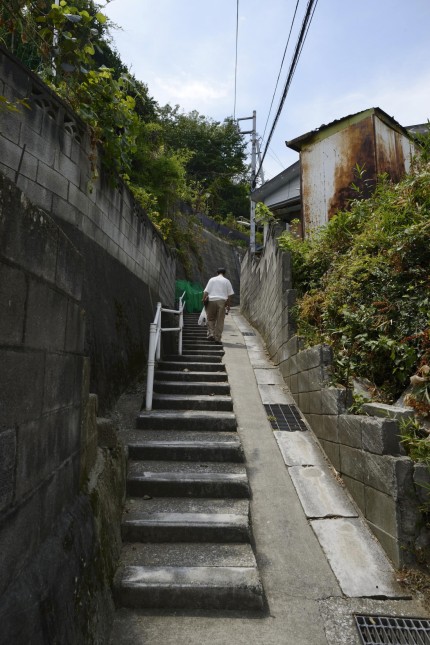
Ein Treppenaufgang in Yokosuka. In dem Viertel mit seinen engen Durchgängen und grünen Hügeln stehen zwanzig Prozent der Häuser leer. (Foto: Akio Kon/Bloomberg)

Wenn es ums Wohnen geht, scheren sich Japaner nicht um kulturelles Erbe oder Schönheit. Deshalb verfällt die historische Bausubstanz.

Von Christoph Neidhart, Ainokicho
Der Schnee vom letzten Winter hat das Dach eingedrückt, im Wohnzimmer wächst zwischen den Trümmern der Dachbalken Gestrüpp, die Schindeln der Decke hängen herunter wie ein Vorhang. Im Hinterhaus rankt sich Efeu an einem Fahrrad hoch. Bis vor zwei Jahren hat hier ein altes Bauernpaar gewohnt, im Briefkasten steckt noch Post. Jetzt gehört das Haus im Weiler Ainokicho zu Japans 8,2 Millionen Akiya, wie man die verlassenen Häuser nennt. Zur Zeit stehen 13,5 Prozent aller Eigenheime Japans leer, und es werden täglich mehr. Ein Fünftel von ihnen sind alte Holzhäuser, die verfallen, so Hidetaka Yoneyama vom Fujitsu-Forschungsinstitut. Er ist Japans Akiya-Experte.

Ainokicho liegt in einem Tal mit Reisfeldern in Fukui, einer Präfektur an der dünn besiedelten Küste Japans, einer jener Gegenden, deren Bevölkerung besonders schnell abnimmt: um 2,8 Prozent in den letzten fünf Jahren. Tiefer in den Bergen von Fukui sterben ganze Dörfer aus. „Die Jungen wollen alle gehen, die meisten sind schon weg“, erklärt eine Frau im Laden des nächsten Dorfes. „Unsere Winter sind hart und schneereich.“ Irgendwann können auch die Alten nicht mehr. Zurückbleiben ihre Häuser. Und auch die Reisfelder, die niemand mehr beackert. Die Landwirtschaft habe, so Shunzo Naito, Bürgermeister im Städtchen Echizen, zu dem Ainokicho gehört, enorme Schwierigkeiten, Nachwuchs zu finden. Wenn die Eltern sterben, will meist keines der Kinder das Haus. Sie leben ihr Leben in den Städten. Die Häuser verrotten. Das Institut Nomura erwartet, dass bis 2023 ein Fünftel, 2033 sogar ein Drittel von Nippons Häusern leer stehen wird.

Es lohnt sich steuerlich, Häuser verwahrlosen zu lassen. Die Regierung will das ändern
In Tokio kann man alte Häuser an Immobilienfirmen verkaufen, obwohl diese nur das Grundstück wollen. Sie reißen das Haus dann ab. In der Provinz dagegen muss man den Abbruch selber bezahlen, vorher hat man keine Chance, ein Grundstück loszuwerden. Es lohnt sich auch steuerlich, alte Häuser verwahrlosen zu lassen, statt sie abzubrechen. Ein leeres Grundstück wird sechsmal höher besteuert als eines, auf dem ein Haus steht, unabhängig davon, ob es bewohnt ist oder nicht. Die Hälfte der Besitzer haben deshalb die Absicht, ihre Akiya einfach weiter verkommen zu lassen, wie Experte Yoneyama mit einer Umfrage ermittelt hat.

ANZEIGE

Dieser Unsitte versucht die Regierung von Premier Shinzo Abe mit einem neuen Gesetz den Riegel vorzuschieben. Akiya seien ein Sicherheitsrisiko, meint die Regierung. Unbefugte könnten sie besetzen oder dort Müll ablagern, Ratten und anderes Ungeziefer nisteten sich ein, und wenn die Häuser einstürzten, gefährde dies Passanten und Verkehr. Außerdem seien sie hässlich. Das Gesetz ermächtigt die lokalen Behörden deshalb, Akiya-Besitzern die Steuererleichterung zu verweigern. Nach mehrfacher Warnung dürfen die Gemeinden die Häuser neuerdings auch auf Kosten der Besitzer abreißen. Allerdings glauben viele Japaner, das Gesetz lasse sich nicht durchsetzen. Kleine Gemeinden befürchten, sie würden auf der Abbruch-Rechnung sitzenbleiben.

Die meisten Japaner wollen nicht in gebrauchten Häusern wohnen. Gebraucht gilt hier beinahe als Synonym für schmutzig, das ist nicht nur bei Häusern so, die Japaner meiden auch Gebrauchtwagen. Eine Familie, die in ein zuvor bewohntes Haus einzieht, gesteht ein, dass sie sich kein neues leisten kann. Ist ein Objekt mehr als 25 Jahre alt, gilt es deshalb als wertlos. Ein Käufer muss nur noch den Grundstückspreis zahlen. In Japan beträgt die durchschnittliche Nutzungsdauer eines Eigenheims 32 Jahre, im Jahre 2000 waren es sogar nur 27. Die hohen Grundstückspreise verleiten die Bauherren, bei der Qualität der Häuser zu sparen. Damit werden gebrauchte Objekte noch unattraktiver. In den USA beträgt die durchschnittliche Nutzung eines Eigenheims 67 Jahre, in Deutschland rechnet man sogar mit 80 Jahren. In Japan dagegen kommen die meisten gebrauchten Häuser nie auf den Markt, nur in 15 Prozent der angebotenen Objekte hat zuvor jemand gewohnt, in den USA sind es 70 bis 90 Prozent. Das erlaubt es Nippons Baugewerbe trotz des hohen Leerstands jährlich 800 000 bis 900 000 neue Häuser zu errichten.

Anzeige

ELEKTROMOBILITÄT
Ein straßentaugliches Quad macht Teenies mobil
Endlich Führerschein. Endlich unabhängig. Bis vor gar nicht langer Zeit setzte dies die Volljährigkeit voraus doch das erste Auto mit 16 ist auf dem Vormarsch. Möglich machen dies Elektrofahrzeuge. mehr …
Neuerdings machen allerdings viele Gemeinden bei der Akiya-Bank mit, einer Non-Profit-Organisation, die renovierungswillige Besitzer berät und per Online-Börse Bewohner für intakte, leer stehende Häuser sucht. Auf den kleinen Inseln vor Hiroshima hat eine Gruppe Aktivisten begonnen, traditionelle Holzhäuser zu renovieren. Das kennt man in Japan bisher kaum. Das kulturelle Erbe und die Schönheit gingen sonst verloren, so Initiator Masako Toyoda. Die Behörden reagieren freilich skeptisch, die Politik ist vor allem in der Provinz mit der Bauindustrie verbandelt, die kein Interesse an der Erhaltung von Bausubstanz hat.

Die Nachbarn beschwerten sich, weil es in dem leeren Haus angeblich spukte
Auf der Halbinsel Shimbara in der Nähe von Nagasaki hat sich die Apothekerin Yoko, als ihre Eltern noch lebten, in deren großem Garten ein eigenes Haus gebaut. Das ist auch in den Großstädten üblich. Seit die beiden gestorben sind, steht das Elternhaus leer. Sie wisse nicht einmal mehr, wie viele Zimmer es habe, lacht Yoko, sie sei lange nicht mehr darin gewesen. Häuser wie dieses tauchen in der Akiya-Statistik nicht auf, da auf dem Grundstück jemand wohnt. In den schnell alternden Landpräfekturen ist der Prozent-Anteil der Akiya besonders hoch. Auf der Insel Shikoku und in Yamanashi und Wakayama steht schon heute jedes fünfte Haus leer. In absoluten Zahlen jedoch gibt es in Osaka und Tokio die meisten verlassenen Eigenheime, viele von ihnen sind schöne alte, aber vernachlässigte Holzhäuser. Entweder können sich die Erben eines Objekts nicht einigen, oder die Besitzer behalten das Grundstück, weil sie es als sichere Geldanlage betrachten. Manche schreckt der Mieterschutz ab, deshalb vermieten sie nicht.

So gibt es immer weniger Objekte wie das alte Holzhaus, das siebzig Jahre lang im Tokioter Stadtteil Kyodo stand. Ein Haus, wie man es bald nur noch aus alten Filmen kennen wird, mit Tatami-Böden und in der Mitte des größten Raums eine Luke für die Feuerstelle der Teezeremonie. Dazu eine Nische für den Hausaltar und Papier-Schiebetüren zur Süd-Veranda mit Garten. In diesen Häusern, in denen man fast ohne Möbel auf den Tatami-Böden lebt, friert man im Winter etwas, kommt dafür aber ohne Klimaanlage durch den Sommer. Und man braucht etwas Geschick für anfallende Reparaturen.

Das ist den meisten zu viel. Manche wollen auch die Wohnlichkeit eines solchen Hauses nicht erkennen und sprechen nur von den Unannehmlichkeiten. Im vorliegenden Fall willigte der Hausbesitzer erst in einen Vertrag ein, als die Mieter schriftlich garantierten, dass sie im Falle eines Rauswurfs nicht klagen würden. Als die Mieter nach fünf Jahren auszogen, ließ der Eigentümer das Haus erneut leer stehen, bis er es schließlich abriss. Die Nachbarn hatten sich beschwert. Von vielen leeren Häusern heißt es, es spuke in ihnen. An seiner Stelle vermietet er nun Parkplätze. Nur 2,2 Prozent der Besitzer von Akiyas denken ans Vermieten, so Yoneyama, nur neun Prozent möchten verkaufen. Einzig an der Tohoku-Küste, der Gegend, die der Tsunami 2011 verwüstete, gibt es weniger Akiya. Nach der Katastrophe wurden viele leere Häuser reaktiviert. Tokio dagegen werde, glaubt Experte Yoneyama, bald einen ähnlich hohen Prozentsatz an Akiya erreichen wie die Provinz. Inzwischen vergammeln sogar Mietshäuser, die in Japans Boomjahren schnell und billig hochgezogen wurden. Auch ihre Besitzer überlassen sie oft sich selber. Auf dem Land stehen Fabriken total leer, in Kleinstädten Einkaufszentren. Und in ganz Japan sind 20 000 buddhistische Tempel ungenutzt, mehr als ein Viertel des gesamten Bestandes.

Disaster-hit Fukushima town to design reconstruction hub

The town of Okuma in Fukushima Prefecture, which houses the Fukushima No. 1 Nuclear Power Plant and where the majority of residential areas have been designated as „difficult-to-return zones,“ is designing a new sub-town in the form of a reconstruction hub, which will be located in residential zones with comparatively low radiation levels.

It is envisioned that the new zone will encompass a total area of around 40 hectares — around 0.5 percent of the town as a whole — and will house some 3,000 residents.

The Okuma town mayoral race, during which the need for the new residential area should by all accounts be raised as an issue to be questioned, was announced on Nov. 5. There are no likely candidates, however, other than sitting incumbent Toshitsuna Watanabe.

Even Watanabe himself has said, „I had actually hoped to retire and pass along the job to someone younger“ — a statement belying his true feelings, which only goes to show how fraught with difficulties the road ahead truly is.

„I plan to take on the task of implementing local development so that residents can feel their hometown is moving toward recovery one step at a time,“ commented Watanabe, 68, who is seeking a third term in office, in his first campaign speech on the morning of Nov. 5 in the Fukushima prefectural city of Aizuwakamatsu, which is located some 100 kilometers west of Okuma.

A temporary building for the Okuma town government has been set up in Aizuwakamatsu, where around 1,500 Okuma residents are additionally living in temporary housing facilities.

Okuma’s population stood at 10,778 as of the end of October, with 23 percent of the town’s residents having evacuated outside of Fukushima Prefecture — mostly within the Kanto region.

The designated „difficult-to-return zones“ — whose prospects for residents ever being able to go back are unclear — comprise some 62 percent of the town’s total area, and around 96 percent of its residential districts.

In September of last year, the town agreed to be one of the locations to host temporary storage for radioactively contaminated soil and other materials resulting from radiation decontamination work — with the area targeted for the facility covering around one-third of the town’s residential area.

Even so, some residents — the majority of them elderly individuals — insist that they wish to return to Okuma. It was within this context that the town government announced plans in March of this year to construct the new, smaller town in Okuma’s residential Ogawara district, which is designated as a restricted residence area where decontamination work has been carried out for residents to return within a few years.

New facilities are targeted to be built within an agricultural area of around 40 hectares in the new zone, including office buildings and research centers for the nuclear reactor decommissioning projects, as well as disaster recovery public housing for local residents.

The plan envisages around 2,000 reactor decommissioning workers living in the area in three years‘ time, along with some 1,000 Okuma locals, mainly elderly residents, returning to the town.

While the town government had at one time considered constructing a local elderly care facility, this plan was rejected due to the likelihood that not enough employees could be recruited to work there.

In addition, the town has no plans to rebuild elementary or junior high schools, with few parents bringing their children back to live in the town due to fears regarding the effects of radiation.

„Those who return here will likely be elderly individuals living on their own,“ commented a high-ranking town official. „For such people who have the desire to live here, we wanted to give them hope.“

Watanabe began telling others last autumn that he planned to retire as mayor, saying that his „back pain makes it difficult to work.“

Every town assembly member that he approached as a possible successor, however, declined — citing the numerous problems with local administration that made the job appear too daunting. Eventually, Watanabe was convinced to change his mind about retiring.

When he announced his candidacy at the beginning of October, with less than one month left before the deadline to do so, he let slip the comment that „things really aren’t seeming to go my way.“

A man in his 60s who is living in temporary housing in Aizuwakamatsu said, „Plans need to be put into place so that people who wish to return home may do so.“

He added apprehensively, however, „I wonder if a town that has no children and only elderly residents can actually work.“

November 05, 2015 (Mainichi Japan)

被災地負担、反対相次ぐ 復興相、首長らと会談 復興予算

2015年4月12日05時00分

 東日本大震災復興予算をめぐり、竹下亘復興相は11日、被災した岩手県市町村長らと会談した。2016年度以降は被災地側の一部負担を検討する考えを伝えたが、自治体側からは反対意見が相次いだ。復興相は近く宮城、福島両県も訪れるが、復興予算の枠組みが固まる6月までせめぎ合いが続きそうだ。

岩手県釜石市ログイン前の続きで開かれた会合には、竹下復興相や小泉進次郎復興政務官らが出席し、被災地からは野田武則・釜石市長ら13市町村の首長らが参加した。

冒頭、竹下復興相は「復興の基幹事業は引き続き国費で対応していく」とあいさつ。その後、約2時間の会談は非公開だった。終了後、野田市長は「(国から)一部地方負担を検討しなければならないという発言もあった」と明らかにした。復興予算を国が全額負担する集中復興期間を今年度で終え、16年度以降は復興予算の枠組みを見直す考えを示されたという。

岩手県幹部によると、竹下復興相は「復興に使うお金は、国民からいただいた税金ということをおさえていただかなければ」と語ったという。

被災地側は、復興予算の地元負担に反対する姿勢を示した。大槌町の大水敏弘副町長は「市町村ごとに被害と復興の度合いが違う。資材や作業員の確保が難しい事情もくんでほしい」と訴えたという。

町では市街地のかさ上げ工事が始まったばかり。会談後、大水副町長は「町は重傷を負ってリハビリ中の段階。人口1万人の町が政令指定市並みの額の大事業を進めており、国に支援してほしい」と述べた。

戸羽太・陸前高田市長も「財政や復興状況をみて議論してもらわないと困る」と話した。市は今年度、市街地かさ上げと高台造成工事に約300億円を充てる。震災前の予算の2・7倍の規模だ。「社会教育施設や市役所も建てないといけない」とも語った。

市町村が懸念するのは厳しい財政状況だ。財政力指数は、震災前の10年度でも大槌町が0・31、陸前高田市が0・27と、全国平均の0・53を下回っていた。

会談では被災地側で負担する具体的な内容について説明がなかったという。終了後、竹下復興相は報道陣に「地方負担について共通の認識はできた」と話した。岩手県の中村一郎復興局長は「被災自治体は、自分の財布が痛まないから何でも国にやってもらったらいいという思いでは決してない」と語った。

(竹山栄太郎、斎藤徹、田渕紫織)

http://digital.asahi.com/articles/DA3S11700665.html?rm=150

Fighting to recover from the ocean’s wrath

BY

SPECIAL TO THE JAPAN TIMES

On April 11, Wataru Takeshita, the minister for reconstruction of the areas most seriously affected by the Great East Japan Earthquake, met in Kamaishi with local government representatives to discuss the budget for Iwate Prefecture. After the meeting, the mayor of Kamaishi spoke to the press and said Takeshita told them the central government would continue paying for reconstruction work through next year, but after that he expected the prefecture and municipalities to cover part of the burden themselves.

“Please understand that the money we spend on reconstruction is from taxes levied on people nationwide,” Takeshita reportedly said during the meeting, which was closed to the media.

According to an article in the Asahi Shimbun, the local governments in attendance rejected the minister’s remarks, mainly because he neglected to go into detail about how much of a burden he was talking about and what sorts of things they would be paying for. The mayor of the city of Rikuzentakata seemed offended by the government attitude.

“They must discuss our financial situation and the reconstruction process,” he told an Asahi reporter. “Otherwise, we can’t envision a future for ourselves.”

Rikuzentakata is currently spending ¥30 billion to elevate levees and prepare higher ground for new residential housing, an amount equivalent to 2.7 times its whole annual budget. “And we still have to build schools and a new city hall,” he added.

Takeshita seemed oblivious to the resistance. He told reporters that he and the local governments “came to a common understanding” regarding division of reconstruction costs. A prefectural representative tried to point out that the municipalities weren’t saying “the central government should pay for everything and we pay nothing,” only that there had been no substantive discussion about what would happen after the current reconstruction budget expired in 2016.

As the Asahi presented the story, it read like a classic instance of official condescension, but the situation is more complicated. The report implies that the local governments formed a united front, but as the vice mayor of the town of Otsuchi said, the degree of damage suffered and the amount of reconstruction required differs from one place to another. By treating all the local governments the same way, the agency effectively demonstrates a lack of imagination and coordination, while the media gives the impression that money is the only issue.

Otsuchi, in fact, is the subject of a new documentary by Haruko Konishicalled “Akahama Rock’n Roll.” Akahama is the district closest to the sea and the one that contains the town’s fishing industry. One-10th of Akahama’s residents died in the 2011 tsunami or remain missing. The central subject of the film is the surviving residents’ objections to the central government’s plan to build a 14.5-meter-high seawall along the edge of the community. The rest of the town approved the seawall, or, at least, didn’t object to it.

The budget for construction was set in January 2012, when the town’s residents were still in shock from the disaster and hadn’t had time to think over the plans carefully. Since then, the people of Akahama decided that a better idea would be to move homes in the district to higher ground. The seawall, they contend, causes more problems than it solves. The tsunami, after all, was 22 meters high, so 14.5 meters may not do any good, but in any case, the fishermen of Akahama need to have constant visual contact with the ocean, and not just for the sake of their livelihoods. One reason so many people died in the tsunami was that they didn’t see it coming, since there was already a seawall blocking their line of sight, and that one was only 6.5 meters high.

Akahama is too small to attract the interest of the mass media, but Konishi managed to enlist one powerful supporter: Akie Abe, the wife of Prime Minister Shinzo Abe. At the U.N. Disaster Prevention Conference in Sendai in March, she raised the matter of the seawall during an awards ceremony, saying that if you have to destroy the environment in order to safeguard a community from the forces of nature, then something is wrong. Since then, the movie and Akahama have been featured in a number of newspaper articles.

Konishi divides her footage between two principals: Tsutomu Abe (no relation to the prime minister), a fisherman who went back to work a few days after the tsunami, even though it killed his father, and Hiromi Kawaguchi, chairman of the Akahama Reconstruction Committee, who spearheads the local resistance to the seawall. This dual narrative approach toggles between the political aspects of the issue and the less concrete cultural ones.

Abe the fisherman represents the community’s soul, a man whose close relationship with the sea is primal. The tsunami was a tragedy, but, as he says over and over, you can’t fight nature.

“As long as our lives are connected to the ocean,” his mother says, “we have to be here.” And what’s the point of being here if you can’t see the water? When your life is dependent on the sea, you make peace with it as best you can.

People, however, are another matter, and it’s Kawaguchi’s job to fight the powers that try to tell him and those he represents what is best for them. Once the bureaucracy has a notion in its head, it’s difficult to change, and his fellow committee members, worn down by the subtle but relentless force of authority, seem willing to compromise, but Kawaguchi isn’t.

“Life comes from the sea,” he says. “And keeping the sea separate from us destroys life.”

If Konishi’s purpose is to show how a community’s desires should not be discounted even if those desires place it at risk, her movie acutely points out how specific needs can’t be summarily dismissed by logic or taken care of by charity.

“I’m not interested in people’s sympathy,” says Abe as he shucks oysters. “I just want to sell my products.”