三陸復興 | Sanriku Fukkou

Deutsch-Japanisches Synergie Forum (DJSF) Sanriku Fukkou e.V.

三陸復興 | Sanriku Fukkou

Rough road ahead for gov’t to choose nuclear waste disposal site

Lager für radioaktiv belastete Abfälle sind in mehreren Präfekturen geplant. Verständlicherweise gibt es Widerstand.

Municipal officials of the town of Kami, Miyagi Prefecture, remove makeshift gates for the municipal road leading to a candidate site for nuclear waste disposal, on June 3, 2015. (Mainichi)

SENDAI — A road leading to a candidate site for a nuclear waste disposal facility opened in the Miyagi Prefecture town of Kami after being closed for months during winter, while locals, including the mayor, remain strictly against the plan to bring radioactive waste into the town.

Town officials removed gates and chains set up in front of a campsite, the entrance to the municipal road leading to the candidate disposal site, at around 10 a.m. on June 3, the same date the gates were opened last year.

A 75-year-old local man who came to watch said, „I would come running here if the Environment Ministry were to visit to survey the site. Depending on circumstances I would not hesitate to stage a sit-in.“

The Environment Ministry picked the towns of Kami and Taiwa as well as the city of Kurihara as candidate municipalities in Miyagi Prefecture to host the disposal site for designated waste, which includes radioactive materials generated by the 2011 Fukushima nuclear disaster. The Miyagi Prefectural Government has given approval for the ministry to conduct drilling surveys and other assessments, after which the ministry plans to narrow the candidate site to one municipality.

However, local residents began voicing concerns over the effects of a disposal site on the town’s farming industry. The Kami Municipal Government headed by Mayor Hirobumi Inomata then declared its opposition to the ministry’s decision, claiming that there were flaws in the disposal site selection process, including inadequate planning to secure sufficient space for the waste site.

In October last year, Kami residents blocked Environment Ministry officials, who had been dispatched to conduct a ground survey, from entering the candidate site by holding sit-ins. In the meantime, the ministry failed to start assessments in Kurihara and Taiwa — both of which requested simultaneous assessments in all three municipalities — before the snow season, and the municipal road in Kami closed for the winter.

The Kami Municipal Government has been working on countermeasures against the government’s plan, such as establishing an ordinance in December 2014 stipulating that construction of a disposal site requires permission from the town.

While the Environment Ministry held briefing sessions targeting residents of Miyagi Prefecture twice in the prefectural capital of Sendai, some 30 kilometers away from Kami, it was unable to hold such meetings in the town.

Meanwhile, Yasuhiro Muroishi, counsellor for the environment minister’s secretariat, went no further than saying that the ministry plans to conduct surveys at the candidate site as quickly as possible when conditions are met.

There is a total of 3,384 metric tons of designated radioactive waste in Miyagi Prefecture, including rice straw with concentrations of radioactive cesium over 8,000 becquerels per kilogram. While these waste materials are currently stored in front of farmers‘ homes and in greenhouse-type facilities, local residents have asked the authorities to remove them from their property.

At the same time, Miyagi Prefecture Gov. Yoshihiro Murai urged the national government to promptly decide what to do and begin its surveys.

The national government plans to build final disposal facilities for radioactive materials in Miyagi, Tochigi, Gunma, Ibaraki and Chiba prefectures. The town of Shioya in Tochigi Prefecture, one of the municipalities where a candidate site has been named, is opposing the government’s plan. The Chiba Municipal Government has yet to respond to the national government on whether it will accept the selection of Tokyo Electric Power Co.’s Chiba Thermal Power Station as a candidate site. For Gunma and Ibaraki prefectures, candidate locations have not yet been named.

Fukushima youths ready to desert irradiated hometowns, survey finds

Junge Menschen wollen nicht mehr in ihrer verstrahlten Heimat leben

JIJI

 http://www.japantimes.co.jp/news/2015/06/05/national/fukushima-youths-ready-desert-irradiated-hometowns-survey-finds/#.VYfhnvntlBe

In 30 to 40 years from now, a majority of the young people living in 12 radiation-contaminated municipalities in Fukushima do not plan to be living in the same place where they experienced the March 2011 earthquake and tsunami, it has been learned.

A survey by a panel from the Reconstruction Agency found that more than 50 percent of those respondents between the ages of 10 and 29 stopped short of choosing their prefectural hometowns as the place where they want to be living three or four decades from now.

The 12 municipalities were tainted by fallout from the triple core meltdown that crippled Tokyo Electric Power Co.’s poorly protected Fukushima No. 1 nuclear power station in March 2011 — a man-made disaster triggered by the quake and tsunami.

Many of the locales are partially or entirely within the evacuation zone designated around the power plant.

Based on the survey results, the panel plans to draw up proposals on the future of the 12 municipalities as early as this summer, informed sources said.

The survey, conducted in February and March, covered members of some 13,000 households randomly selected from the 77,600 still remaining in the 12 municipalities. Valid answers were only obtained from about 5,100 of the households.

The survey said the proportion of respondents willing to stay in the municipalities where they were residing at the time of the disaster topped 60 percent among those in their 30s or above. For those between 10 and 29, including elementary and junior high school students, the share dropped below 50 percent.

While a majority of those between their 30s and 60s expressed hope of working in their hometowns in the future, the ratio was less than 40 percent for younger people.

“The results are very shocking,” said Satoshi Endo, mayor of the town of Hirono, adding that the town, one of the 12 municipalities listed, needs to create a future vision that appeals to children.

About 60 percent of those who evacuated Hirono have not yet returned.

The Fukushima Prefectural Government will present a clear vision so young people can have hope about their hometowns, a senior official said.

The Reconstruction Agency established the panel last December to discuss the future of the 12 evacuated municipalities.

The proposals will be reflected in the agency’s budget request for fiscal 2016.

The remaining 11 municipalities were the cities of Tamura and Minamisoma, the towns of Kawamata, Naraha, Tomioka, Okuma, Futaba and Namie, and the villages of Kawauchi, Katsurao and Iitate.

Schrumpfende Gemeinden in Japan

Schrumpfende Gemeinden in Japan
Gefahr aus den Geisterhäusern
Jedes siebte Haus in Japan steht leer. Die zerfallenden Bauten sind nicht nur für die Besitzer eine Belastung. Sie verändern auch die Struktur der Dörfer.
  • von Patrick Zoll, Tokio
  • 19.6.2015, 19:17 Uhr
  • Vermutlich für immer geschlossen: Eine Soldatenbar auf Okinawa.
Vermutlich für immer geschlossen: Eine Soldatenbar auf Okinawa. (Bild: Patrick Zoll)

Auf dem Land sind sie zahlreich, und auch in Japans Städten sieht man sie immer wieder: Häuser, die offensichtlich leer stehen. Manche sind sorgfältig verrammelt, andere sind vernachlässigt und zerfallen langsam. Insgesamt 8,6 Millionen Häuser, rund 13 Prozent des Gesamtbestands, sind laut aktuellen Statistiken unbewohnt. Davon stehen rund 3,2 Millionen weder zum Verkauf, noch sind sie zu mieten.

Tsunami sorgt für Nachfrage

Besonders hoch ist die Zahl der verlassenen Häuser in Regionen, die stark unter der Entvölkerung leiden. Eine Ausnahme sind jene Gebiete im Nordosten Japans, die 2011 vom Tsunami betroffen waren. Da dort Tausende von Häusern zerstört wurden, gibt es eine hohe Nachfrage nach gebrauchten Immobilien. Im Allgemeinen werden in Japan Neubauten bevorzugt. Weniger als 15 Prozent aller verkauften Häuser sind aus zweiter Hand. Gleichzeitig ist die Lebenszeit japanischer Bausubstanz mit rund 30 Jahren enorm kurz.

Die Ursachen dafür seien sowohl auf der Angebots- als auch auf der Nachfrageseite zu finden, sagt Hidetaka Yoneyama vom Fujitsu Research Institute. Die Bauwirtschaft habe in den Nachkriegsjahren vor allem darauf geschaut, möglichst schnell zu bauen, sagt Yoneyama. Qualität zählte wenig. Die Käufer hätten dies in Kauf genommen, weil sie auf eine Wertsteigerung des Bodens spekulierten. Mit anderen Worten: Japanische Hausbesitzer akzeptierten lange, dass ihre Häuser in kurzer Zeit wertlos wurden, weil die rasant ansteigenden Bodenpreise dies wettmachten.

Das Auto davor kann nicht darüber hinweg täuschen, dass dieser Lebensmittelladen in der Präfektur Akita schon lange nichts mehr verkauft.
Das Luxushotel Maya oberhalb von Kobe wurde schon vor Jahrzehnten verlassen. Seine Eleganz behält es auch als Ruine.
Diese Soldatenbar war eine von vielen in Henoko in der Präfektur Okinawa. Doch die Soldaten vom benachbarten amerikanischen Stützpunkt kommen nicht mehr, seit ihr Ausgang stark eingeschränkt wurde. Denn einzelne Soldaten hatten Verbrechen begangen.
In Japan steht jedes siebte Wohnhaus leer. Daneben sind aber auch Läden, Bars, Hotels oder Schulen verlassen und dem Zerfall Preis gegeben. Man findet diese verlassenen Gebäude im ganzen Land. Alle Bilder anzeigen

Heute, wo vielerorts im Land die Bevölkerung schrumpft und die Nachfrage nach Boden entsprechend tief ist, geht diese Rechnung nicht mehr auf. Da die Bauwirtschaft aber trotzdem weiterhin in grossem Stil neue Häuser und Wohnungen baut, sinkt der Wert bestehender Häuser zusätzlich. Neubauten sind viel besser auf die heutigen Bedürfnisse ausgelegt. Gerade ältere Leute, die in eine Wohnung ziehen möchten, die ihrer Lebenssituation entgegenkommt, können sich das oft nicht leisten. Ein grosser Teil ihres Vermögens steckt nämlich in einem Haus, das unverkäuflich und damit wertlos geworden ist.

Wenn die alten Bewohner schliesslich sterben, bleiben ihre Häuser leer. Diese Erben sind meist vor langer Zeit in die Städte gezogen. Entsprechend häufig zerfallen die Bauten. Dort, wo sie eng zusammengebaut sind, geht von unbewohnten Häusern Brandgefahr aus. In Regionen mit viel Schnee besteht die Gefahr, dass sie einstürzen, wenn niemand regelmässig die Schneemassen vom Dach schippt.

Teure Leere

Die Besitzer haben wenig Interesse, diese Häuser abzureissen, denn die Grundstücksteuer für eine unbebaute Parzelle ist sechsmal höher, als wenn ein Haus darauf steht. Ob dieses bewohnt ist, macht dabei keinen Unterschied. Dank einer Gesetzesänderung haben lokale Behörden nun aber seit kurzem die Möglichkeit, leerstehende Immobilien, die sie als Gefahr ansehen, speziell zu kennzeichnen. Wenn der Besitzer das Haus nicht abreisst, können die Behörden das übernehmen. Die Kosten muss – soweit möglich – der Besitzer tragen.

Neue Ortsstrukturen

Durch diese Ausdünnung verändern sich Dörfer und Kleinstädte. Dies sei einfacher möglich als in vielen europäischen Ländern, sagt der Städteforscher Christian Dimmer. Viele japanische Ortschaften entstanden ohne Raumplanung. Daher sind auf dem Land vielerorts die Häuser weder an Gasleitungen noch an Abwassernetze angeschlossen. Diese Infrastruktur muss nicht teuer aufrechterhalten werden, wenn auf einmal weniger Häuser an einer Strasse stehen. «Es werden ja sowieso schon Gasflaschen angeliefert und Sickergruben ausgepumpt», sagt Dimmer.

Generell müsse ein Umdenken stattfinden, sagt Dimmer. Japanische Städte müssten anfangen, sich zu überlegen, wie sie richtig schrumpfen. Dazu gehört mehr, als bloss verlassene Gebäude abzureissen. Viel eher müssten Modelle gefunden werden, wie in den ausgedünnten Ortschaften wichtige Dienstleistungen aufrechterhalten werden könnten, sagt Dimmer. Diese müssen so gestaltet sein, dass die restlichen Einwohner ihren Alltag bewältigen können und sich nicht auch noch gezwungen sehen, wegzuziehen.

<復興費負担>復興支援に矛盾 国費使途疑問

Fluchtwege sind wichtiger  als Betondeiche

地盤沈下で失われた砂浜を再生する計画が復興交付金の効果促進事業で進められる十八成浜=石巻市

本年度まで全額国費負担だった東日本大震災の復興事業の一部に地元負担を導入する国の方針が近く、正式決定される見通しになった。被災地では、復興の事業の遅れを懸念する声の一方、負担を機に事業の在り方を見直すべきだとの冷静な受け止め方も出ており、反応は一様でない。

宮城県石巻市は災害危険区域に指定した津波被災地の低平地整備事業を、半島部の漁村集落など65以上の地区で実施する。地元負担が生じる効果促進事業で実施し、総事業費140億円のうち1億円弱が市の持ち出しとなる。

同市十八成浜(くぐなりはま)地区は約1.2メートル沈下した地盤をかさ上げし、県道を高台に付け替える。津波で消滅した砂浜を再生し海水浴客の誘致を図る計画はまだ着手に至らない。地元負担の導入でさらに遅れが生じ、工費も増加するのではないかとの不安が静かに広がる。

「十八成ビーチ・海の見える丘協議会」代表理事の沼倉憲一さん(67)は「砂浜は地元の財産。再生は大切な事業だ。最大被災地の石巻に負担を求めるのは復興支援に矛盾する」と国の姿勢を批判する。

ただ住宅の新築が制限される地域で進める低平地整備事業の必要性には懐疑的な意見もある。半島部の住民男性は「排水のための盛り土は必要だが、人口減が進む地域に大金をつぎ込んでどれだけの効果があるのだろうか」と話す。

市町村が新設する防潮堤は、5月に国が打ち出した復興事業方針の見直しに関する当初案から一転、国費負担が継続する見通しとなった。気仙沼市が22カ所分の7億6000万円と試算していた地元負担は取り越し苦労に終わる見込みだ。

「地元負担が消えるのはいいが、釈然としない気持ちも残る」と語るのは同市本吉町の漁業菊地敏男さん(67)。住んでいる前浜地区は、市が示した防潮堤新設計画をめぐって住民同士で勉強会を重ね、計画の一部変更を要望している。

菊地さんは「津波対策は地区ごとの実情に合わせるべきだ。あれほど巨大で一律に整備する防潮堤計画は、国の全額負担でなければあり得なかった」と述べ、地元負担の導入方針が防潮堤のありようを見直す契機になったと指摘する。

「避難道の整備や被災者の生活再建の方が急務。単純ではないだろうが、防潮堤にかけるカネと労力があるのなら、そちらに向けてほしい」と訴える。

A Tōhoku Town Returns to Life

In-depth A Four-Year Recovery Review
http://www.nippon.com/en/in-depth/a04302/
A Tōhoku Town Returns to Life
Onagawa Moving Forward on the Difficult Road to Recovery

Kikuchi Masanori [Profile]

[2015.06.19]Read in: 日本語 |

Onagawa was hit hard by the tsunami from the Great East Japan Earthquake in 2011. But four years later, it is starting to recover, with the fishing industry in particular making a rapid comeback. Journalist Kikuchi Masanori goes back to the town he has visited repeatedly since the year of the disaster for an update on its progress.

Reopened Station Brings New Energy to Town

“Welcome to Onagawa”

The message, displayed on a brand-new blue banner, greeted me when I alighted from a train at Onagawa Station in early June 2015. The recently completed three-story steel-frame station building, light brown and gleaming in the hot sunlight of the clear day, stood out among the scattered buildings of the area. Families and couples were enthusiastically snapping photos with their smartphones. And the station’s attached hot spring facilities were lively with visitors, even though it was daytime on a weekday.

Onagawa lies on the east coast of Miyagi Prefecture, and its train station is the eastern terminus of the East Japan Railway Company’s Ishinomaki Line. The station was finally reopened on March 21, 2015, four years after it was washed away by the tsunami following the Great East Japan Earthquake of March 11, 2011. Onagawa is located in a low-lying area facing the sea with a ring of hills behind it; the hills blocked the advance of the tsunami, and the waters rose to a height of 20 meters—much higher than in other affected areas. The tsunami laid waste to all the buildings in the town center, including the train station, and left 827 people dead or missing.

It took about two years for the town, with aid from the national and prefectural governments, to clear away the debris. Work has also been underway at a rapid pitch to rebuild the port and roads, raise the elevation of land in the town center around the station, and develop sites for residential construction on higher ground.

It was my fourth visit to Onagawa and, compared with the scene of ruin that greeted me in 2011, the progress was clearly visible both in inland areas and around the port. There were still many vacant lots in the vicinity of the station, but work had started on the station plaza and pedestrian promenade, and my eye was caught by all the shops under construction in the area around the station.

Artificially raised land near Onagawa Station. The tsunami hit the first floor of the local medical center (right), even though it was built on a natural elevation, and devastated the facility.

Rebuilding Only Just Begun

One week after the station reopened, the Future Center opened nearby as a facility for young entrepreneurs to get together and talk. It is managed by Asu e no Kibō, a nonprofit organization whose name means “hope for tomorrow,” which has been supporting the establishment of businesses and running employment training activities for two years. As well as being involved in the planning and launch of the El Faro hotel in the town, it has helped with the realization of projects including an art studio and café. The nonprofit’s leader, Komatsu Yōsuke, who is originally from the prefectural capital of Sendai, noted, “In contrast to a big city like Sendai, Onagawa has strong community ties and a culture where veterans boost the younger generation. This has been very heartening.”

Komatsu added that the reopening of the railway line has brought more visitors and it is possible to feel the renewed energy. But he emphasized that the rebuilding of the community powered by young people has only just begun: “Taking the initiatives to the next stage is crucial. We will provide support in drawing many kinds of people to the town, raising funds effectively, and helping businesses to achieve stability.”

A view of the Future Center, one of the still relatively few buildings that have been completed in the area around the train station.

Next, I walked for around 15 minutes to the waterfront and arrived at the Onagawa branch office of the Miyagi Prefecture Fisheries Cooperative. There I talked to 66-year-old Itō Kazuyuki, who has been engaged in the cultivation of scallops, Onagawa’s main seafood product, for over 40 years.

“It seems like we’re getting back on our feet faster than other places struck by the tsunami. I think we’re doing pretty well considering how hard we were hit.”

Although his expression seemed to relax somewhat as he spoke, Itō had only narrowly escaped the tsunami by jumping into a truck and driving from his coastal workshop to higher ground. But his home and the 13 rafts he used for cultivating scallops were all washed away. And he lost many friends and relatives, including his wife’s mother, whose remains have never been found.

“I lost the entire crop of scallops just before the spring shipment. That really hurt. First I had to clear away the debris, and then I had to start over—not from zero, but from less than zero.”

Sales Back to Pre-disaster Level

Despite the adversity, Itō managed to make quick progress toward recovery, first constructing three new rafts while commuting from temporary housing. Using young scallops ordered from Hokkaidō, he began cultivation again and has now built his way up to 10 rafts. And with government and other assistance he replaced his boat. This year’s sales, at about ¥10 million, were around the same level as before the 2011 disaster and at the end of last year, he was able to achieve a deeply held desire to build a house on high ground.

Itō Kazuyuki’s scallop harvest has returned to its pre-2011 level. “I worked as hard as I could after the disaster, and I’ve finally got to this stage.”

Itō’s face became a little more serious as he declared: “The pain won’t go away. Many of my friends have given up fishing since the disaster. But I couldn’t easily give up scallop cultivation after all those years and I had the will to succeed. I can see the light at last.”

Onagawa’s main industries before the disaster were fishing and seafood processing. Of these, the fishing industry in particular has made an amazing comeback. Cultivation of local specialties apart from scallops—ginzake salmon, oysters, and sea squirts—has been relatively quick to resume. And fishing of saury and other coastal species has recovered with almost no hitches. According to cooperative and town records, although the number of town residents involved in fishing has dropped from 570 before the disaster to 410 now, total sales for last fiscal year (April 2014–March 2015) came to ¥5.5 billion, topping the figure of slightly less than ¥5 billion for the year preceding the disaster. Onagawa is nearer to the many consumers in Sendai and fish traders in Ishinomaki than other fishing villages further north on the Sanriku Coast, and this has given it an advantage in restoring its delivery capabilities.

However, the increase in sales is mainly due to higher prices over the last few years. The catch itself is still only at around 80% of the total for before 2011, and today’s pressing issue is how to boost yields while maintaining the same price levels. This is because the town’s other major industry of seafood processing is dependent on a certain level of catch.

I spoke with Ishimori Yōetsu, vice president of the Onagawa Fish Market Buyers Cooperative, which is made up of local buyers of seafood for the processing industry: “Partly in the spirit of promoting recovery through mutual cooperation among the people of the town, we have been following an unwritten rule of submitting as high bids as possible. But the catch has still not recovered, and it was only this year that some of the seafood processing plants around the port finally started running again.” He added that there is no room for optimism.

Capital from Qatar Boosts Seafood Processing

Ishimori Yōetsu, vice president of the Onagawa Fish Market Buyers Cooperative: “Because Onagawa was all but washed away, it brought the people of the town together. We have lots of discussions, but move quickly once we reach a decision.

Even so, the wheels are definitely beginning to turn in the fishing industry, fish market, and seafood processing industry that support Onagawa. The high-tech multifunctional seafood processing plant Maskar has played a major role since its completion in autumn 2012. It was built at a cost of ¥2 billion with capital from the Qatar Friendship Fund, which was established by the emirate of Qatar to provide assistance in response to the 2011 disaster. The facility is designed to withstand even a tsunami of a once-in-a-century level. The first floor is for freight handling, the second has cold storage capacity for up to 6,000 tons of goods, and the third floor serves as an emergency evacuation area above tsunami level. The cooperative manages the facility, which is jointly used by firms in the processing industry.

Ishimori relaxed his visage as he explained: “We’ve been getting a stream of deliveries of saury, mackerel, salmon, bonito, and more, and the plant has been full since last autumn. Along with the train station, the plant has become a symbol of Onagawa’s revival. People in this town tend to be independent, and while they hold a deep sadness in their hearts, they want to use the symbol of this plant as a base to redevelop the town under their own steam. And things are gradually taking shape.”

Before the disaster, there were cold storage facilities with a total capacity of 53,000 tons in the town—nine times greater than Maskar. To make up the difference, the cooperative is currently building more facilities nearby.

The recovery of Onagawa’s port is well underway. The multifunctional seafood processing facility Maskar (left) maintains temperatures of minus 30 degrees Celsius in its freezer rooms (right). The name “Maskar” derives from a traditional Qatari fishing method.

Land Development Delays

Apart from the tsunami fatalities, many people moved away after the disaster, so the population of Onagawa has dropped from 10,000 to 7,000 and is continuing to shrink. Delays in the development of land for housing and the construction of subsidized public housing for disaster victims have left more than 2,100 people living in the temporary facilities put up after the quake and tsunami, which still have an overall occupancy rate of 80%. So far, only 25% of the planned 1,000 units of public housing have been completed. On my previous visit, in 2013, Mayor Suda Yoshiaki told me it would take five or six years to complete the public housing, but this time he said that the process of site development had been running more than three months behind schedule. He explained the situation and what the town was doing about it:

“The first problem was that we ran into a layer of solid bedrock that the initial boring survey didn’t find, and it also took time to acquire rights from the huge number of landowners. Then it required some effort to conduct construction work to deal with inundation caused by land subsidence. To avoid any further delays, we hope to reduce development time by reconsidering the methods being used and trying to devise new ones. We’re said to have recently become the first town in the tsunami-affected area to introduce blasting as a new way of breaking through the bedrock. Compared with relying on heavy machinery, it has certainly made the process quicker.”

Public housing built on high ground for disaster victims in Onagawa. Work on land development for additional units has fallen behind schedule, but the town government is striving to make up for lost time by adjusting its construction methods.

The reopening of the port is essential to the revitalization of the fishing industry. The wharfs and related facilities are due to be completed by the end of the current fiscal year, at which point the port will be basically ready to use. “After that, the recovery of the seafood processing industry, using fish and seafood caught locally, will be the key,” Mayor Suda said. “Over the next two years, we plan to finish developing sites for rebuilding plants and meeting expansion needs.”

Essential facilities are being completed, and the people and industries of Onagawa are starting to move again. Many difficulties lie on the road ahead, but the local administration, citizens, and outside contributors are achieving steady progress as they work more closely together.

(Originally written in Japanese and published on June 18, 2015. Banner photo: Onagawa Station reopened four years after the previous station building was washed away by the 2011 tsunami. The new station building was designed by award-winning architect Ban Shigeru. All photographs provided by the author.)

Tsunami-stricken Miyako rebuilds by combining disaster education, sightseeing

June 02, 2015

cropped-bild101.jpg
in Taro
Wir waren am 13.9.2012 dort, wussten zuerst gar nicht, dass uns im 6. Stock plötzlich ein „heiles“ Zimmer mit Clubsesseln erwartet – und die DVD von Matsumoto-san, dem Direktor, der den Tsunami ganz allein in seinem Hotel in diesem Zimmer erlebt hat. Man hört, und spürt, wie die Wellen unten das Gebäude zerstören und Herr Matsumoto dann ohnmächtig wird und der Film abbricht. Im letzten Herbst konnten wir nicht das Hotel besichtigen, da es als Denkmal stabilisiert wurde – aber die DVD haben wir in der Verwaltung angeschaut.

By HIROAKI ABE/ Staff Writer

MIYAKO, Iwate Prefecture–In a special room next to the lobby of the Nagisatei Taro-an hotel, guests can gain a sense of shock, horror and utter helplessness.

The hotel opened on June 1 in the Taro district of Miyako, a city devastated by the 2011 tsunami.

Constructed on a hill about 1 kilometer from the district’s coastline, the hotel is one example of the city’s efforts to rebuild local communities by drawing visitors, sharing survivors’ experiences and preserving testaments to the devastation of the disaster.

A 65-inch TV in the special room shows six minutes of footage of the tsunami taken by Yuki Matsumoto, president of Nagisatei Taro-an.

Matsumoto was on the sixth floor of the Taro Kanko Hotel, which he ran at a location about 150 meters from the sea, when the tsunami, spawned by the magnitude-9.0 Great East Japan Earthquake, struck northeastern Japan on March 11 four years ago.

“The tsunami was significantly more menacing than I had previously imagined,” he said. “My video is a record that enables guests to get a real sense of what the tsunami was like.”

About 200 people in the Taro district were killed, accounting for a third of the city’s death toll from the disaster.

Matsumoto’s video shows the waves reaching the fourth floor of the six-story Taro Kanko Hotel. The metal framework was about all that remained of the bottom two stories after the water receded, and the hotel was forced to close down.

But Matsumoto decided against demolishing the building.

“In Taro, visitors can see the destroyed hotel and listen to the accounts of survivors at the newly opened hotel,” he said. “I hope many people will visit Taro.”

Matsumoto thought deeply about what to do with the wrecked hotel and how to best use his and others’ experiences to pass down lessons learned from the disaster.

On a visit to Hiroshima in November 2013, hibakusha atomic-bomb survivors stressed the importance of keeping his hotel as a testament to the power of the tsunami.

“It would have been difficult for us to pass down our memories of the nuclear blast to future generations if the Atomic Bomb Dome had been demolished when the number of survivors is dwindling year after year,” one of the hibakusha he met said. “Your hotel should be preserved at any cost.”

In addition to preserving the Taro Kanko Hotel, Matsumoto’s 82-year-old mother, Miya, will be among the local survivors who will share their experiences with guests at the new hotel.

She was initially reluctant when her son suggested the idea in March, when they were busy preparing for the opening of Nagisatei Taro-an.

But he insisted, and she changed her mind.

“I thought that relating my experiences to guests could help them better prepare for a disaster and survive,” Miya said.

The Taro district has been vulnerable to tsunami since ancient times. The area was also well-known for its gigantic seawall as a defense against such waves.

But the seawall, 10 meters high and 2.4 kilometers long, was also destroyed by the 2011 tsunami.

The remains of the seawall and the Taro Kanko Hotel are two key monuments in the Taro district that guides show on study tours themed on the disaster and rebuilding efforts.

The district has drawn more than 80,000 visitors since 2012, many of them junior high and high school students on school excursions and people in group tours.

Miyako Mayor Masanori Yamamoto said the two relics in the city with a population of 56,000 will play a crucial role in passing down lessons from the tsunami.

“Memories of the disaster will be kept alive if people who have never gone through a disaster will be able to have a ‘you-are-there’ feeling here (with the sight of the structures),” he said.

Similar endeavors to preserve disaster ruins are also under way in Miyagi and Fukushima prefectures, the two other prefectures hardest hit in the 2011 disaster.

The Kesennuma municipal government in Miyagi Prefecture decided in May to preserve a high school building that was swamped to the fourth floor.

In Fukushima Prefecture, the town government of Tomioka is displaying a police car swallowed by the tsunami at a park. The vehicle symbolizes the bravery of police officers who rescued residents in the face of danger and the force of the tsunami.

By HIROAKI ABE/ Staff Write

Plan to end rent subsidies for some Fukushima evacuees under fresh fire

A plan to end rent subsidies for some evacuees from the Fukushima nuclear disaster has come under fresh fire, as it emerged that those subsidies are costing at most 8.09 billion yen this fiscal year.

The evacuees under consideration for having their subsidies cut — at the end of fiscal 2016 — are voluntary evacuees living in homes other than temporary housing structures built for evacuees. The total Fukushima Prefecture relief budget for disaster evacuees this fiscal year, including non-voluntary evacuees, is over 28.8 billion yen, so the subsidies being considered for being cut account for less than 30 percent of the relief budget.

One expert knowledgeable about evacuees says, „The reason that a plan to end these subsidies has arisen even though the financial burden is not large may be that government officials want to try and force voluntary evacuees to return to their homes, without respecting evacuees‘ own judgments on the matter.“

Voluntary evacuees are people who evacuated from areas outside of those where the government ordered evacuations. Until November 2012, Fukushima Prefecture did not allow them to use emergency temporary housing set up for evacuees in the prefecture, and many voluntary evacuees moved outside of the prefecture.

According to the Fukushima Prefectural Government, for this fiscal year it allocated about 20.73 billion yen for the temporary homes of non-voluntary evacuees within the prefecture, and 8.09 billion yen for those of evacuees outside the prefecture. The evacuees outside the prefecture include non-voluntary evacuees, but the exact numbers are not known. A Fukushima Prefectural Government official says, „Non-voluntary evacuees have been using compensation for their lost real-estate to buy homes, and most of the people getting rent subsidies outside of Fukushima Prefecture are probably voluntary evacuees.“

Within the prefecture, voluntary evacuees live in around 300 homes, which are not temporary housing structures, but subsidies for their rent are included in the „out-of-prefecture“ budget, so the 8.09 billion yen covers all voluntary evacuees from the prefecture.

According to the Cabinet Office, as of April 1 this year, there were evacuees living in 18,742 homes in Fukushima Prefecture other than temporary housing structures, and according to the Fukushima Prefectural Government, evacuees were living in around 10,000 such homes outside of the prefecture. Both numbers include voluntary and non-voluntary evacuees. Neither the Fukushima Prefectural Government nor the central government has yet released exact figures on the number of homes for voluntary evacuees other than temporary housing built after the disaster, nor have they released exact numbers for the total rent paid for them.

Currently, evacuee homes are set to be subsidized until the end of March 2016, with a decision on whether to extend this to be made soon after discussions between the Fukushima Prefectural Government and the Cabinet Office. A plan to end subsidies for voluntary evacuees would extend the deadline for one more year, to the end of March 2017, after which voluntary evacuees would no longer receive them. Although Fukushima Prefecture has money budgeted for subsidizing voluntary evacuees, this money is in effect all paid for by the central government. Tokyo Electric Power Co. has expressed reluctance to pay for voluntary evacuees‘ rent, and so far the central government has not billed them for such.

Meanwhile, this fiscal year’s Fukushima Prefecture budget for radiation decontamination measures is 64.39 billion yen, up 13.35 billion yen from the previous fiscal year. The Ministry of the Environment released an estimate in December 2013 that the total costs for decontamination and mid-term storage for radioactive waste would be 3.6 trillion yen.

「シーサイドパレス」解体惜しむ

  • 解体されるホテル。4階の塔屋は流失したが、建物は残り、地形変化で海水に浸るようになった(5月28日、気仙沼市で)
    解体されるホテル。4階の塔屋は流失したが、建物は残り、地形変化で海水に浸るようになった(5月28日、気仙沼市で)
  • にぎわっていた頃の南三陸シーサイドパレス。周辺の松林や農地は津波で流出し、ホテル(右上)だけが残った(和光建設提供)
    にぎわっていた頃の南三陸シーサイドパレス。周辺の松林や農地は津波で流出し、ホテル(右上)だけが残った(和光建設提供)

 An der Koizumi Bucht wird das alte Seaside Palace Hotel abgerissen. 1972 wurde es mit einem 2 Hekta großen Freizeitpark und Zoo eröffnet. Es war ein bekannter Ort für Urlaub, Versammlungen und um zu heiraten. Die Besucher kamen aus ganz Japan, aber mit dem Platzen der bubble Wirtschaft nach der Tourismus ab und 1987 musste das Hotel geschlossen werden.

Durch die mehr als 20 m hohe Tsunamiwelle am 11.3.2011 und das Absenken des Meeresboden nach dem Erdbeben, wurden über 200 m Strand und der Kiefernwald weggespült. Das Hotel lag als Ruine im Meer und wurde zum Mahnmal in Gedenken an den Tsunami.

Damit der 14,7 m hohe Betondeich errichtet werden kann, wird jetzt das Hotel abgerissen.

http://www.yomiuri.co.jp/local/miyagi/news/20150607-OYTNT50333.html

津波で甚大な被害を受けた気仙沼市小泉地区で、流出を免れた元総合レジャー施設「南三陸シーサイドパレス」のホテルの解体が6月下旬に始まる。かつて多くの観光客が訪れたホテルは、震災による地形変化の影響で海水につかるようになった。「海にたたずむホテル」として震災の脅威を伝えていただけに、解体を惜しむ声も出ている。

 施設を所有・運営していた東京の建設会社「和光建設」や登記簿によると、開業は1972年。約2ヘクタールの敷地には、鉄筋コンクリート4階建てのホテルのほか、遊園地や動物園などが並んだ。

 「小泉のにぎわいの象徴だった。知人の結婚式や、同窓会、職場の懇親会。何かあればいつもホテルを使っていた」。近くの仮設住宅で自治会長を務める及川清人さん(79)は懐かしむ。海水浴シーズンには県内外から大勢の行楽客が来訪し、駐車場はすぐに満車になった。しかし、施設は入場者数の減少などに伴い、87年に閉鎖された。遊具類は撤去されたが、ホテルは倉庫として使いたいといった民間企業からの要望などもあったため、解体せずに残した。

 震災で小泉地区は高さ20メートル以上の津波に襲われたが、海から約200メートル内陸にあったホテルは、併設されたボーリング場や周辺の松林、住宅が流されるなか、ぽつりと残った。震災による地盤沈下などで海岸線が陸側に延びた影響で、海中から突き出る形となったことから注目され、震災の語り部ツアーの訪問先にもなった。地元ボランティアガイドの会社員斎藤盛さかりさん(55)は「『震災前、一帯は陸地でした』と説明すると、参加者からは驚きの声が上がっていた」と話す。

 震災遺構の候補にも挙がったが、市は保存の難しさから選定しなかった。市に保存を求める住民からの積極的な働きかけもなかったという。斎藤さんは「防潮堤や街づくりの議論がヒートアップしていたためか、住民の間でホテルの話題が出ることはほとんどなかった」と語り、「保存費用などを考えると、一概に『残すべき』とは言えないが、もう少し議論があっても良かった」と惜しむ。今後は解体前の写真を手に、津波の脅威を伝え続けるつもりだ。

 近くで防潮堤整備を進める県は、ホテルについて「倒壊の危険性があり工事や完成後の支障になる」と判断。和光建設は1億円近い解体費が見込まれたため財産放棄し、県が解体することになった。海中にあることから工事は難航しそうで、完了時期は未定という。県は「危険なので立ち入らないように」と呼びかけている。解体後、一帯は海水浴場となる予定だ。

膨らむ防潮堤予算、苦慮 高さ低く防災林で代用 被災地

Die kosten für den Betondeichbau an der Sanriku Küste explodieren

2015年5月25日05時00分

 人件費の高騰や当初の見積もりの甘さなどで、被災地の津波対策予算が膨らんでいる。だが、一部では地元の意見を反映し、防潮堤の高さを低くしたり、防災林で代用したりして、節約する動きも出始めた。来年度から地元も費用負担を求められるなか、こうした動きが加速しそうだ。

■工事費が急騰

国や3県は、壊れた防潮堤を「数十年から百年に1度の津波」に耐えられる強靱(きょうじん)なものへと造り替えることをめざしている。復旧費は2011年度末時点で7800億円と見込んでいたが、直近の調べでは約9千億円に増えた。浸水被害の大きかった防災林も当初の約2倍の1600億円に及ぶ。

宮城県気仙沼市の中島海岸(小泉地区)で、県内では最大級となる高さ14・7メートルの防潮堤の整備が進んでいる。隣接する河川の堤防を含めた総事業費は当初より6割増えて356億円。復興工事の集中で工事費が急騰している。「人件費は1・4倍、コンクリート費は2・4倍に上がった」と気仙沼土木事務所は話す。

一方、この4年間で多くの住民は海岸から高台に移った。小学校教諭の阿部正人さん(48)は「地元でも守るべきものがないと批判の声がある。計画を見直すべきだ」と訴える。

中島海岸から約80キロ離れた東松島市の大曲浜などの海岸では防潮堤と防災林の復旧工事がダブルで進む。11年の大津波では、100ヘクタールの国有林を含む大部分の防災林が浸水した。

復旧予算は今春段階で209億円と当初の約2・4倍になった。林野庁によると、盛り土の単価の高騰が響いている。工事用の土(1立方メートル)は震災前1350円だったが、今は2500円程度。被災地で一斉に盛り土工事をしているため、各地で予算が膨らむ。

■地元負担考慮

国は「復旧を急いだため事前調査に時間がかけられなかった」として、膨らんだ復旧費は16年度以降も全額を負担する。しかし、被災地は地元の判断で、予算を効率的に使おうと動き始めている。

宮城県気仙沼市の小田の浜では高さ11・8メートルの防潮堤計画が浮上した。だが、観光業者から「景観が損なわれる」などの反発が出たため、防災林を増やして津波に対応することになった。数十億円だった事業費は半分以下になるという。

石巻市の尾崎地区では高さ8・4メートルに引き上げる計画が地元住民との話し合いで、震災前の2・6メートルに戻す方向になった。自治会の神山庄一会長(61)は「故郷の美しい景観はかけがえのない財産で、次世代に残すことは私たちの責務だ」。

一方、総額2300億円とされる新たに造る防潮堤の整備費には数%の地元負担が生じる方向となった。気仙沼市の担当者は「地元負担を考えると、ほかでも計画変更の議論が出てくる可能性がある」とみる。

ただ、節約分を別の用途に回すのは、現行の予算制度では難しい。気仙沼市議の今川悟さん(40)は「節約分をニーズのある避難道路などに使えれば、地元の議論が活性化する」と制度の見直しを主張する。(菅沼栄一郎、加藤裕則、座小田英史)

■予算が膨らんでいる防潮堤や防災林の主な現場

宮城県

小泉地区(気仙沼市)     356(226)

仙台地区(仙台市)      213 (88)

山元地区(山元町)      210 (76)

大曲浜・浜市など(東松島市) 209 (87)

岩沼地区(岩沼市)      180 (79)

州崎海岸(東松島市)     114 (59)

仙台塩釜港雲雀野海岸(石巻市) 58 (12)

福島県

松川浦(相馬市)       165 (73)

角部内海岸(南相馬市)     88 (48)

岩手県

高田海岸(陸前高田市)     89 (38)

※単位は億円。最新の予算額。()内は2011年時点の見積もり。国土交通省林野庁など調べ

Major companies continue to support Tohoku region

|

BY MAMI MARUKO

STAFF WRITER

Right after the earthquake and tsunami hit northeastern Japan on March 11, 2011, volunteer individuals and groups rushed to provide assistance.

Many were one-off efforts and gradually, the number of volunteer activities decreased in the four years that followed, but enthusiastic volunteer efforts remain on various levels — be it by individuals, nonprofit organizations or firms.

Regarding firms, large amounts of donations were collected, and large domestic and foreign firms, as part of their corporate social responsibility, or CSR, plans, undertook volunteer activities.

Panasonic Corp., headquartered in Osaka, is one such firm that has continued its CSR efforts in Tohoku.

“As a company, we feel that CSR activities in the devastated areas should not be just temporary, but continuous. We want to make the right effort by listening to the demands of the people in the disaster-hit areas,” said public relations officer Yayoi Watanabe.

“More recently, we have been putting a strong emphasis on supporting the next generation — the young,” she said.

Regarding young people, “Kitto waraeru 2021″ (No doubt you can smile in 2021) is a program aimed at bringing smiles back to children’s faces, through the loaning of audiovisual equipment from Panasonic, allowing the students to film two videos: “What they want to tell people now” and “A message for themselves 10 years on.”

The program has been carried out in 19 elementary and junior high schools in Iwate, Fukushima, and Miyagi prefectures since September 2011, with volunteer staff from the company giving advice to students on the technical part of the filming process.

The Tokyo branch of U.S. securities company Morgan Stanley is another firm that has been supporting the people in Tohoku after the disaster, assisting with a wide range of volunteer programs.

Since June 2011, company employees have engaged in onsite recovery efforts to support communities in quake-hit areas.

Specifically, volunteer staff from the company spent several weekends right after the disaster, taking part in onsite recovery efforts in Ishinomaki, Miyagi Prefecture, removing debris from houses and gardens and clearing mud out of street gutters.

“We expanded our volunteer leave allowance to provide employees the opportunity to engage in earthquake-related volunteer activities. We allowed employees to take up to five days of leave until December 2012, instead of only one day, which was the original policy,” said a Morgan Stanley spokesman.

Additionally, in collaboration with Second Harvest Japan, a nonprofit organization specializing in sending food to those in need, including disaster-hit areas, nearly 100 employees volunteered to pack and send a total of five tons of food to the disaster-hit areas.

Employees also gathered to pack and send sewing materials to the nonprofit organization “Arts for Hope,” to help its doll-making therapy sessions held in evacuation centers for children and the elderly.

More recently, in October last year, a team of Morgan Stanley employees volunteered for a weekend playground-building event in Fukushima Prefecture.

Together with kindergarten staff, parents, the local Lions Club and staff from nonprofit organization Playground of Hope, they built a new playground for Fukushima Lumbini Kindergarten, a preschool in Fukushima.

The team of 60 moved 20 tons of dirt to create a solid foundation for a play structure with towers, a slide and vividly colored benches.

Money for the playground was collected through donations at the company’s annual charity drive.

The company has also supported a reforestation project in Chiba with its joint venture partner, Mitsubishi UFJ Morgan Stanley Securities, participating in reforestation volunteer programs organized by nonprofit organization “Mori no Lifestyle Kenkyujo” (Forest Lifestyle Laboratory).

The project aims to restore the coastal forest, which had served to protect the local community from the impact of seaside winds and flooding, but was destroyed by the tsunami.

In April 2012, 60 employees and family members joined other volunteers to plant 6,000 saplings in the affected area. A total of over 220 employees and family members from both companies have made five visits to the same area in Chiba since then.

Besuch im „Minna no ie“ in Rikuzentakata

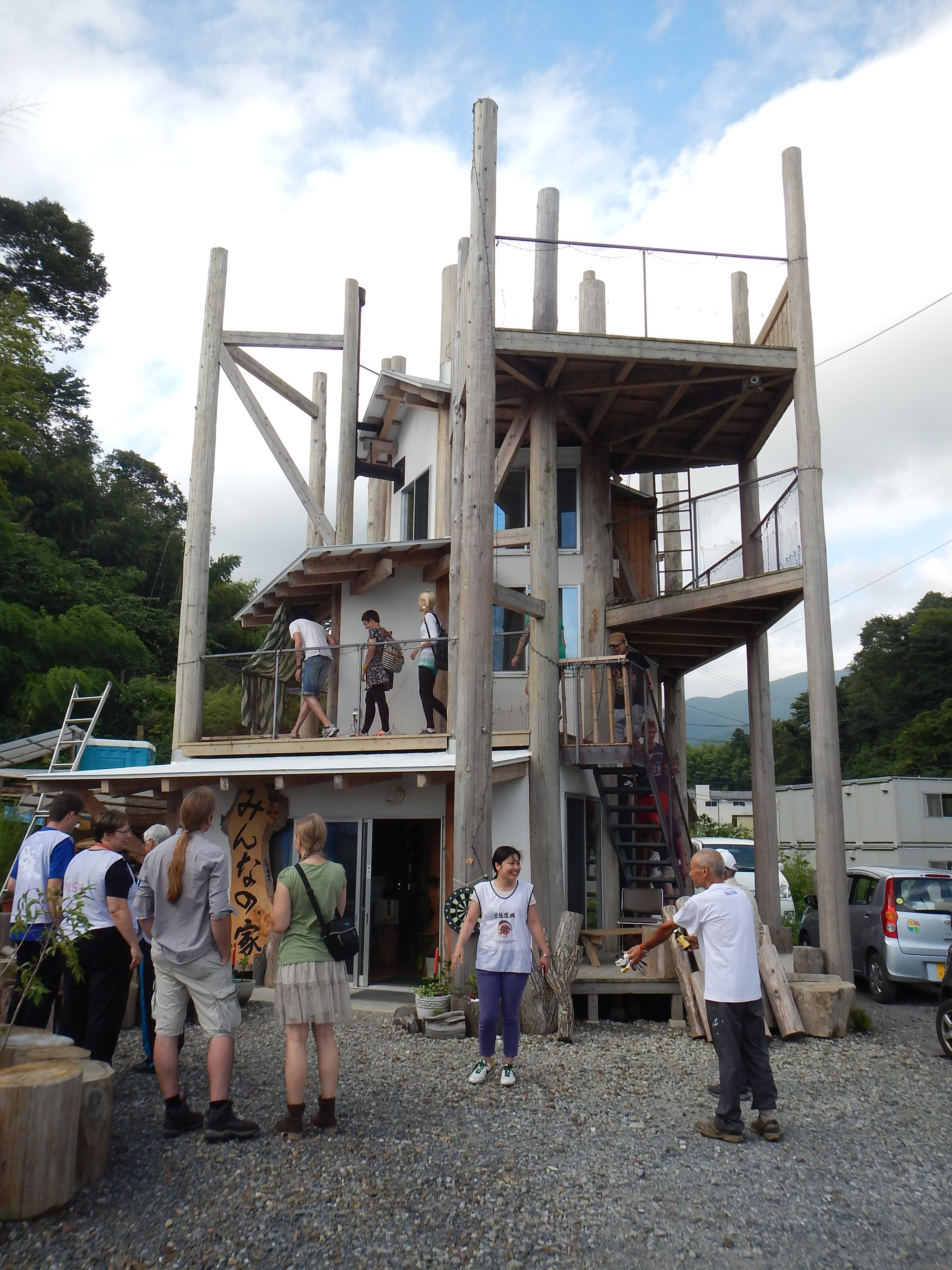
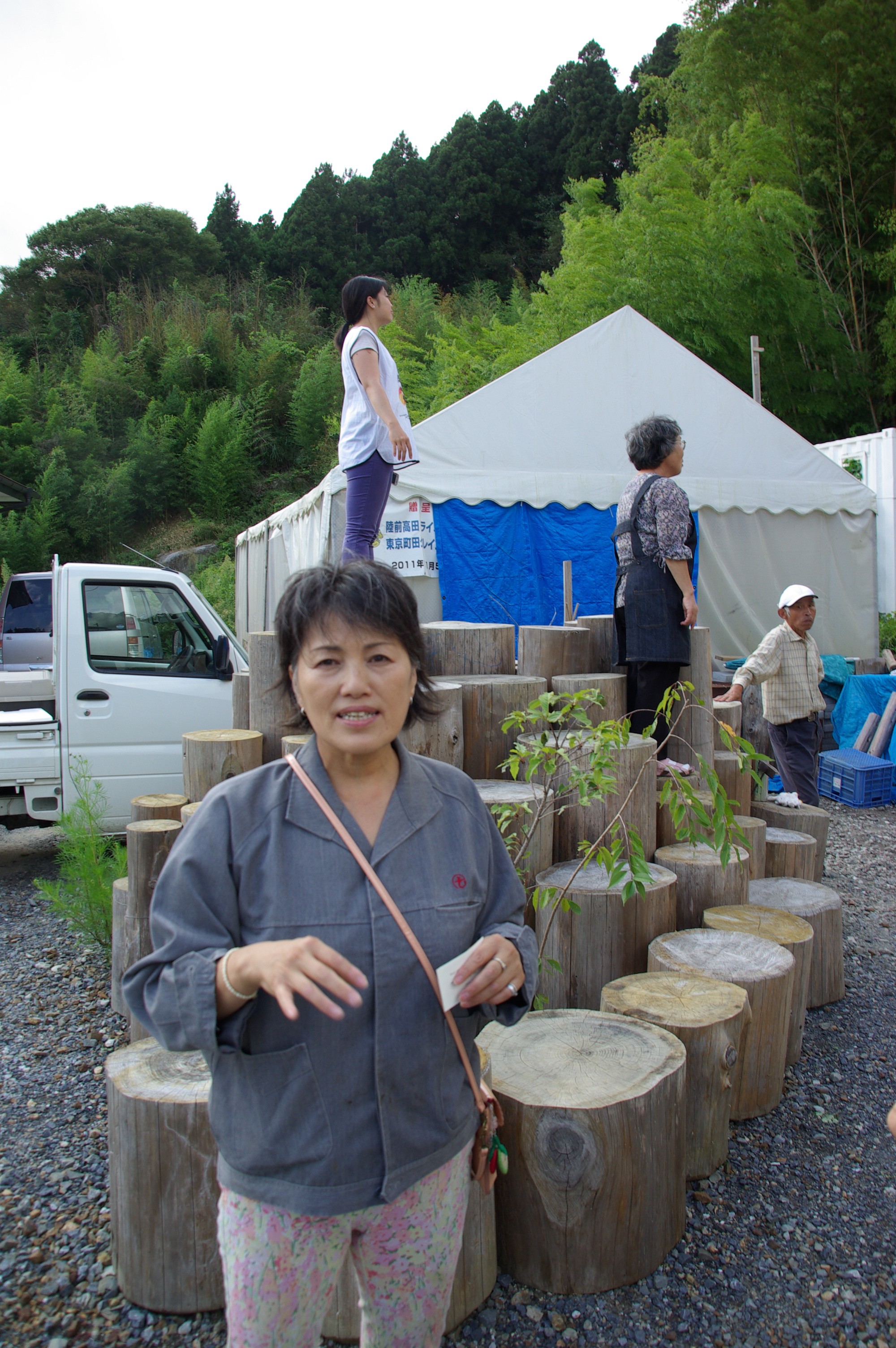
Am 10.9.2014 empfing die Initiatorin des Projekts Frau Mikiko Sugawara die Studentengruppe der Summer School Sanriku Fukkou im Gemeinschaftshaus: „Minna no ie“ in Rikuzentakata. Frau Sugawara berichtete von ihren persönlichen Erlebnissen während des Tsunamis und der darauf folgenden schweren Zeit. Sie war so aktiv in der Versorgung der Evakuierten, dass sie ihr eigenes Leid zurückdrägen konnte. Das Haus ist im November 2012 eingeweiht worden, nachdem es auf der Biennale in Venedig einen Preis bekommen hat. Es wurde von der Bevölkerung gut aufgenommen. Viele Menschen kommen dorthin, um die besondere Gemütlichkeit dieses Ortes zu genießen und sich in Gesellschaft auszutauschen. Vor allem kommen aber auch viele Ausländer, da dieses Haus von sehr bekannten japanischen Architekten gebaut wurde: Siehe Artikel:

IMGP9211 summerschool05 IMGP9196 IMGP9195 IMGP9203 IMGP9198 IMGP9200 IMGP9201

Klicke, um auf bw_2013_4_0006-0009.pdf zuzugreifen

Nach der Flut

Text: Murielle Hladik Fotos: Naoya Hatakeyama

Am 18. November 2012 wurde im japanischen Küstenstädtchen Rikuzentakata ein Gemeindehaus eingeweiht, das auf Initiative von Architekten als „Minna no ie“ (Haus für alle) entstanden ist. Es ist Teil einer Serie partizipatorisch entwickelter Bauten, die den Bewohnern der durch Tsunami und Erdbeben verwüsteten Tohoku-Region als Gemeinschaftseinrichtungen und Begegnungsstätten dienen sollen. Nachdem das Projekt auf der Biennale in Venedig den Goldenen Löwen erhalten hatte, wurde die Einweihung vor Ort mit Spannung erwartet.

Gleich nach der Flutkatastrophe im März 2011 hatten sich die Architekten Toyo Ito, Riken Yamamoto, Kengo Kuma, Hiroshi Naito und Kazuyo Seijima zusammengesetzt, um über konkrete Hilfsmaßnahmen nachzudenken. Von Ito kam der Vorschlag, eine Gemeinschaftseinrichtung zu bauen, um den Mangel an öffentlichen Räumen zu beheben, der in den notdürftig zusammengeschobenen Containerdörfern allenthalben vorherrscht. Dieser akute Mangel an Orten der Begegnung ist umso bedrückender, als insbesondere in der Wiederaufbauphase ein hohes Maß an kollektiver Anstrengung, Interaktion und Koordination gefordert ist. Zusammen mit seinen jüngeren Kollegen Kumiko Inui, Sou Fujimoto und Akihisa Hirata entwickelte Ito die Idee, neue Gemeindehäuser, die einem prototypischen Entwurf folgen, auf das verwüstete Küstengebiet zu verteilen. Nachdem die Planergruppe international zur Einreichung von Entwürfen aufgerufen hatte, war die Resonanz enorm. Architekturstudenten, aber auch Kinder aus aller Welt reichten mehr als 900 Projektvorschläge ein, von denen eine Auswahl auf der Biennale in Venedig gezeigt wurde. Das neue Gemeindehaus von Rikuzentakata entstand auf dringenden Wunsch der lokalen Bevölkerung, die in der Flutkatastrophe alles verloren hat. Das neue „Haus für alle“ steht als ein Zeichen der Hoffnung, ein Anstoß für die Revitalisierung der ganzen Region auf einem Hügel inmitten einer verwüsteten Landschaft. Der Bau verdankt seine Existenz insbesondere Frau Mikiko Sugawara, die gemeinsam mit BürgervereinigunIn der von Tsunami und Erdbeben 2011 ausgeräumten Landschaft steht das neue Gemeindehaus in Rikuzentakata für einen tastenden Neuanfang gen das Projekt vorangetrieben hat. Zur Einweihung am 18. November kamen fast 300 Menschen. Auf dem Höhepunkt der Festveranstaltung warfen Frau Sugawara und die Architekten glücksbringende Reiskuchen in die Menge der versammelten Einwohner, Handwerker, Unternehmer und Sponsoren. Zuvor gab es einige Redebeiträge: Während Frau Tae Mori von der Japan Foundation, die das Projekt finanziell unterstützt hat, die gebaute Umsetzung der in Venedig ausgestellten Idee begrüßte, lobte Toyo Ito das Engagement der lokalen Bevölkerung und den Mut zum Neubeginn nach der Naturkatastrophe. Der Entstehungsprozess von „Minna no ie“, einem durch freiwillige, kollektive Anstrengung zustande gekommenen Gemeindezentrum, verlief nicht in herkömmlichen Bahnen: Die vier Architekten haben Größe bewiesen, und ihre individuellen Gestaltungsansprüche den Fragen des lokalen Bedarfs und des Gemeinsinns unterordneten, die Handwerker und die am Bau beteiligten Unternehmen haben nur einen Teil der tatsächlich aufgewendeten Arbeitszeit in Rechnung gestellt. Kollektive Identität und Erinnerungen Nachdem die Trümmer beseitigt waren, kamen in den verwüsteten Landstrichen Fragen nach dem Wert der verschwundenen Architektur auf. Was soll wiederhergestellt werden? Welche Bauten haben eine besondere Bedeutung für die Erinnerung? Welche der zerstörten Bauten werden schon bald ganz vergessen sein? Außer den zahlreichen Menschenleben ist tatNach der Flut Text: Murielle Hladik Fotos: Naoya Hatakeyama Am 18. November letzten Jahres wurde im japanischen Küstenstädtchen Rikuzentakata ein Gemeindehaus eingeweiht, das auf Initiative von Architekten als „Minna no ie“ (Haus für alle) entstanden ist. Es ist Teil einer Serie partizipatorisch entwickelter Bauten, die den Bewohnern der durch Tsunami und Erdbeben verwüsteten Tohoku-Region als Gemeinschaftseinrichtungen und Begegnungsstätten dienen sollen. Nachdem das Projekt auf der Biennale in Venedig den Goldenen Löwen erhalten hatte, wurde die Einweihung vor Ort mit Spannung erwartet. 6 betrifft Nach der Flut Bauwelt 4| 2013 Bauwelt 4| 2013 7 ächlich nicht nur der Verlust menschlicher Artefakte zu beklagen, sondern auch der Verlust des Grundes, auf dem sie einst errichtet wurden. Die gesamte wirtschaftliche, geistige und soziale Landschaft der Küstenregion hat sich radikal ver- ändert. Dieser Wandel wurde von dem Fotografen Naoya Hatakeyama eindringlich festgehalten. Hatakeyama stammt aus Rikuzentakata und fotografierte immer wieder die Landschaft seiner Kindheit, bevor der Tsunami die Hafenstadt, in der 23.000 Einwohner lebten, fast vollständig dem Erdboden gleichmachte. Die fotografische Arbeit von Hatakeyama, einem der Akteure von „Minna no ie“, förderte den Dialog der am Projektbeteiligten Gruppen und Verbände. Die Bilder der Erinnerung unterstützten die Wiederherstellung sozialer Bindungen. Der Neubau Das Projekt nahm bereits im Verlauf der ersten Treffen im Oktober 2011 Gestalt an. Im Dezember wurden Entscheidungen vor Ort bezüglich des Grundstücks und seiner Zugänge getroffen. Im Juni 2012 begann die Phase der Realisierung, die das Team der Zimmerleute aus der Präfektur Yamagata vier Monate lang in Anspruch nahm. Für die Tragstruktur des Gemeindehauses wurden vom Tsunami entwurzelte rote Zedern verwendet. Die grobschlächtigen Tragglieder wirken wie archaische Säulen und erinnern an die monumentalen Holzpfeiler japanischer Shinto-Schreine. Von großer Bedeutung ist auch die sinnliche Materialität des Holzes, dessen Geruch die Innenräume des Baus ganz ausfüllt. Das Gemeindehaus, dessen vielseitig nutzbaren Räume in ein Bündel von aufragenden Holzsäulen eingefügt sind, vermittelt den Eindruck eines unfertigen, lebendigen und offenen Kunstwerks. Außer den Volumina des Hauses tragen die massiven Stämme auch die Treppenanlage, die den Bau spiralförmig umfängt. Auf dem Weg nach oben laden großzügige Plateaus zum Verweilen ein. Schon jetzt dienen sie als Treffpunkt, aber auch als Aussichtsplattform mit Blick in eine offene Landschaft, in der nichts mehr so ist, wie es einmal war. Schließlich muss noch die zentrale, sehr einfache Herdstelle erwähnt werden: In der alles umhüllenden Wärme des Holzfeuers wird diskutiert, gekocht und gegessen. In elementarer und archaischer Weise entsteht in der Gemeinde Rikuzentakata die Architektur neu. Es wäre völlig verfehlt, ihre spröde Qualität mit dem Fetischcharakter der publizistisch gewürdigten Bauproduktion unserer Tage zu vergleichen. An der Architektur des „Minna no ie“ sind auch nicht die formalen Ambitionen begnadeter Entwerfer abzulesen. Es verkörpert vielmehr den einfühlsamen und tastenden Versuch, den traumatisierten Menschen zu entsprechen, denen der Rahmen ihrer alltäglichen Rituale so tragisch abhanden gekommen ist und die an ihrem kaum mehr wiederzuerkennenden Ort aufs Neue heimisch werden wollen.

Some Tohoku disaster areas on fast track to rebuilding while others stuck in slow lane

|

Es wird noch zwei Jahre dauern, bis hier – in Rikuzentakata – am Meer Geschäfte gebaut werden können  – mithilfe dieser gigantischen Transportanlage wird die Erde, die auf einem Berg abgetragen wird, auf die Ebene gefördert. Mit LKWs hätte es ca. 10 Jahre gedauert. – Aber ist dieser auf 10 – bzw auf 14 m angehäufte Grund so stabil, dass er bebaut werden kann – wie viel Zeit muss er sacken und wie häufig verdichtet werden? Auf der Ebene dürfen nur Geschäftshäuser errichtet werden – das bedeutet für die Menschen zwei Mieten – einmal für die Wohnung auf dem Berg, einmal für das Geschäft. In den temporären Einkaufszentren sind viele Händler schon über 65 Jahre – sie können sich die beiden Mieten nicht leisten, müssen aber irgendetwas weiter arbeiten – immer noch viele Probleme, die man auch mit High Tech nicht lösen kann.

BY SHUSUKE MURAI

STAFF WRITER

This is the first of a five-part series on the lingering impact of the March 2011 earthquake, tsunami and nuclear disaster on the three hardest-hit prefectures in the Tohoku region.

“Bridge of Hope” is the name of a temporary span over the Kesen River in Rikuzentakata, Iwate Prefecture.

It connects a hill where construction is underway to create a residential area on high ground and to raise a low-lying coastal zone where 4,045 dwellings were destroyed by gigantic tsunami on March 11, 2011.

The bridge is not for people. Built in front of the city’s symbolic “miracle pine tree” that survived the tsunami when the rest of its grove was swept away, the temporary bridge is a link in a 3-km-long conveyor belt system that carries 40,000 tons of soil and gravel — the equivalent of 4,000 10-ton truckloads — from the hill every day.

Four years ago, 18-meter-high tsunami hit the coastal city and killed 1,556 residents; 207 are still listed as missing.

The waves also devastated the city’s famous oyster farms and a pine forest the government had designated as one of 100 locations nationwide of special scenic beauty.

Rikuzentakata is one part of the Tohoku region aiming to fast-track its rebirth and become a safer place to live.

To that end, the city is building two seawalls 1.8 km long, one 3 meters high and the other 12.5 meters, as part of efforts to mitigate the threat of future tsunami. It is also elevating the land in the coastal zone by some 10 meters.

Thanks to the conveyor belt system built in March 2014 by general contractor Shimizu Corp. at a cost of ¥12 billion, the city can shorten the time it will take for the reconstruction work from an initially planned nine years to two.

Besides being efficient, the conveyor system offers hope to the tsunami survivors waiting to get back to a semblance of normalcy, Rikuzentakata Mayor Futoshi Toba said.

“Thanks to the eye-catching machine that symbolizes the reconstruction by operating every day, survivors can experience step-by-step progress,” he said, adding that the conveyor system, which has rarely been used for ordinary construction work, has also drawn sightseers.

Seeing the progress with their own eyes is “much more encouraging for people” than what officials can do behind closed doors, the mayor said.

Rikuzentakata’s progress represents Tohoku’s hopes — and struggles — to reconstruct life as usual.

With most of the tsunami debris disposed of by last March, except for in some no-go-zone and evacuation areas in Fukushima Prefecture where radioactive decontamination work is still underway, Tohoku has finally started full-scale building of permanent dwellings, both detached houses and condominiums, for survivors who lost their homes in the disaster.

Many survivors, however, are still in limbo as municipalities face delays in providing permanent housing units.

Iwate Prefecture had constructed 1,049 publicly funded replacement homes for survivors as of January — just 18 percent of the 5,933 units planned to be built by September 2018. The deadline was initially March 2018.

Miyagi is also experiencing construction delays.

As of January, the prefecture had built 2,692 housing units, or 17.4 percent of 15,484 units planned to be completed by March 2018.

In Fukushima, only 261 units, or 5 percent of the 4,890 units planned by March 2018, were available for nuclear disaster evacuees as of January. Also, just 1,190 replacement houses, or 44 percent of the 2,702 units planned, were constructed for tsunami and earthquake survivors in the prefecture.

The delay is due to the rising cost of labor and construction materials, Iwate Gov. Takuya Tasso said.

Meanwhile a vast number of people continue to live in temporary housing units.

In Iwate, 22,300 people were still in prefab temporary housing as of January, down a mere 13 percent from 25,619 last March.

Miyagi in January still had 35,332 people living in temporary shelters, down 16 percent from the 42,310 listed 10 months earlier.

The situation in Fukushima also remains problematic, with 24,098 people still living in temporary housing in January, even though 15 percent of 28,367 had moved away from such units as of last March.

The number of temporary shelter dwellers is surprisingly high, considering that all displaced survivors of the 1995 Great Hanshin Earthquake had moved out of similar housing five years after that disaster. The Hanshin temblor caused greater structural damage than the 2011 Great East Japan Earthquake, but there were no huge tsunami.

Industries in the Tohoku region are also suffering from slumping sales and manpower shortages.

Seafood production in Tohoku remains low. According to a survey by the Fisheries Agency between November and January, just 53 percent of facilities in Iwate Prefecture were operating at 80 percent or above of their pre-disaster levels. In Miyagi and Fukushima prefectures, the number is even lower, at 50 percent and 25 percent, respectively.

Worse, the percentage of facilities at or above the 80-percent production threshold hasn’t changed much since last year’s survey, which recorded 57 percent in Iwate, 49 percent in Miyagi and 24 percent in Fukushima.

A recovery in seafood sales has also foundered, with this year’s survey showing just 58 percent of firms in Iwate reaching 80 percent or above pre-disaster levels. The figure is 40 percent in Miyagi and a mere 21 percent in Fukushima.

Iwate Gov. Tasso said the slumping sales in Tohoku fisheries is due to delays in the recovery of factories to process fish products, and radiation fears stemming from the Fukushima nuclear disaster.

Despite abundant job opportunities, the three hardest-hit prefectures are suffering a labor crunch.

Local industries, especially fish processing, construction and nursing care, are suffering from the shortage of human resources. Specialists who can take the lead in constructing infrastructure for community development are also in short supply, Tasso said.

Some Rikuzentakata residents don’t hide their anxiety about life after reconstruction.

Taxi driver Haruyuki Sato doubts people want to return to live in areas where they lost their homes to the tsunami.

“I can’t foresee how the city will turn out (after all the reconstruction ends),” he said.

Some citizens oppose the city’s planned seawalls, which will mar the traditional coastal scenery and the planned 70,000-tree pine forest to be planted on land between the embankments.

Midori Murakami of sightseeing promoter Marugoto-Rikuzentakata said that as the construction progresses, there is an emotional gap between locals who lost loved ones in the disaster and those who didn’t.

“Some people complain about creating a (raised-ground zone) on land where about 200 missing people may be buried,” she said. “But otherwise we can’t move ahead. . . . I feel both excitement and concern while the reconstruction advances.

“But local people are looking forward. . . . Thanks to the reconstruction, I get to know many new people and we work together,” she added.

Fiscal 2015, which starts next month, will mark the fifth year of Iwate’s eight-year reconstruction plan and the second year of its three-year “full-fledged” effort to rebuild housing, lives and industries for survivors. The estimated reconstruction budget will reach ¥1.1 trillion, the highest since the disasters if not counting past debris disposal, the governor said.

“When thinking about disaster victims . . . I feel it’s a mission for us survivors to reconstruct a city filled with smiles . . . (so) that even the most depressed people come here and become encouraged by finding diverse people at work and full of pride,” said Rikuzentakata Mayor Toba, who lost his wife in the disaster.

Fiscal 2015 will also be the final year of the government’s ¥25 trillion five-year reconstruction budget, which Toba said is the biggest concern for those hoping the rebuilding work won’t grind to a halt.

The administration of Prime Minister Shinzo Abe has not made an official plan on whether or how to distribute the reconstruction budget after March 2016.

Toba is worried that the apparent waning sense of crisis among the public may lead to policymakers placing less priority on reconstruction.

“If possible, I want as many people as possible to visit the reconstruction sites — not necessarily Rikuzentakata — while the damage from the great earthquake still remains. Then, I want them to revisit after five, 10 years (to see the dramatic changes after the reconstruction),” he said.

“All bereaved families have something unforgettable inside them . . . but I think even that sorrow may turn to become an unbeatable energy (to generate positive effects).”

Ihre Freude ist unsere Freude

Konzert „Ihre Freude ist meine Freude“

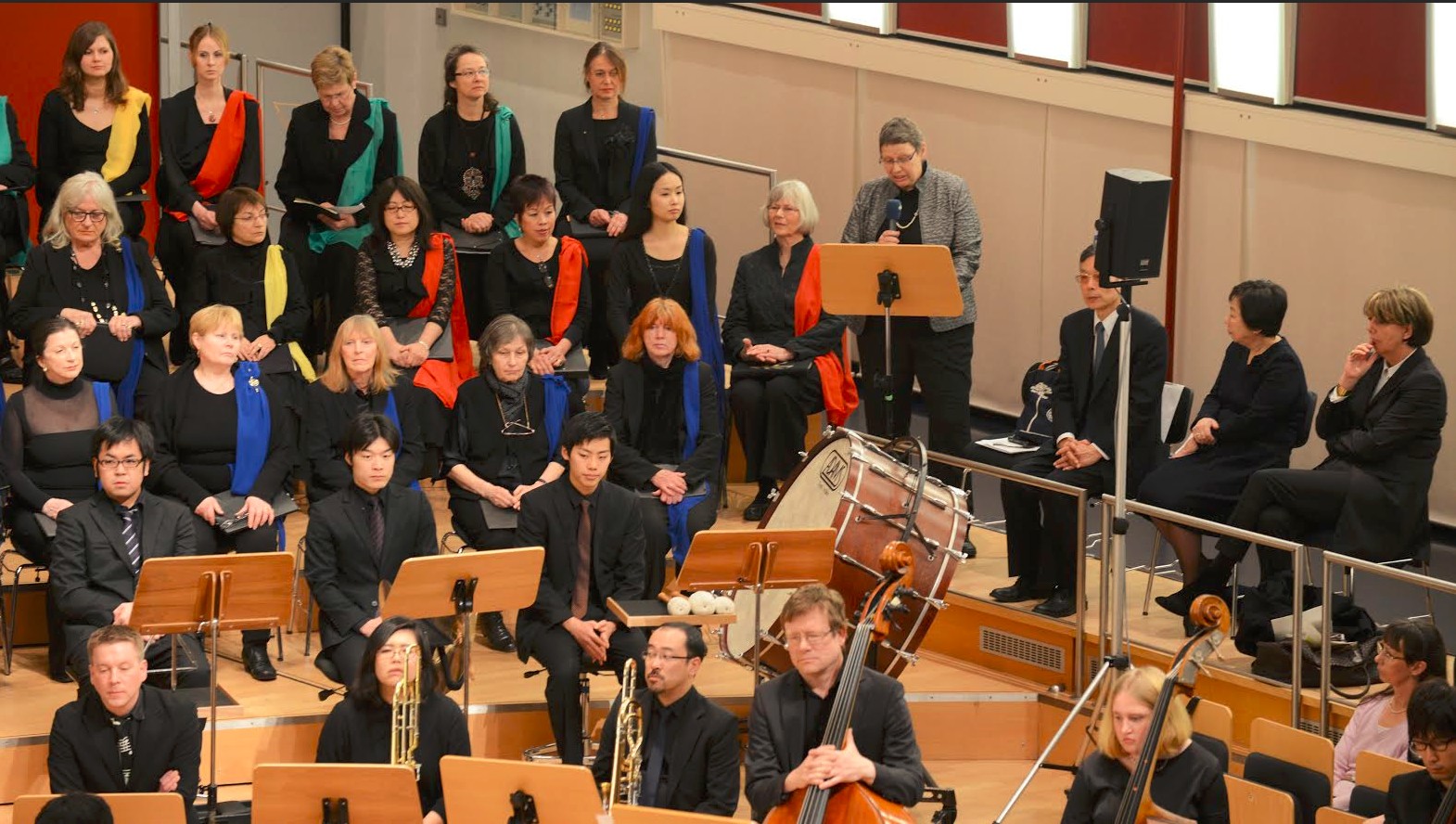
Konsul Yasushi Fukagawa lud am Sonntag 15. März 2015 aus Anlass des vierten Jahrestages der gigantischen Naturkatastrophe im Nordosten Japans vom 11. März 2011 eine Vielzahl von Institutionen und Privatpersonen ein, die sich auf verschiedenste Art und Weise für die betroffenen Regionen eingesetzt hatten und mit großem Engagement japanische Landsleute in der schweren Zeit unterstützten.

Ein Bericht über die Veranstaltung mit einer Kurzfassung des Berichtes von

Frau Gesa Neuert zu Spendenprojekten in Tohoku finden Sie hier:

Ihre Freude ist unsere Freude

Untitled 26

Untitled 13Untitled 12

Little progress in clarifying areas in danger of tsunami

The Yomiuri Shimbun

7:54 pm, March 13, 2015

The Yomiuri ShimbunTokushima is the only at-risk prefecture to have designated “tsunami warning areas,” and more than half of the prefectures legally required to estimate how much land is at risk of flooding by tsunami have yet to do so, a Yomiuri Shimbun investigation has found.

Failure to conduct this work stems from deep-rooted concerns among local governments and residents that such designations could deflate land prices and tarnish the image of these areas, but some experts have warned that acting quickly must take priority, because there will be no time to put safeguards in place after a disaster has struck.

After the experience of the Great East Japan Earthquake and ensuing tsunami that devastated the Sanriku coast in the Tohoku region on March 11, 2011, the Law on Making Local Areas Resistant to Tsunami was fully enacted in June 2012. Based on the law, prefectures where tsunami are expected to cause significant damage can designate tsunami warning areas.

However, the Yomiuri investigation revealed that only Tokushima has earmarked such areas, and that 20 of the 39 prefectures required to survey which areas could become inundated have not done so.

The law requires local governments to estimate and take countermeasures against “a maximum-class tsunami generated in a worst-case scenario, including at high tide.” Based on this research, prefectural governments are to estimate how much land could be submerged and designate tsunami warning areas where major damage is expected, and “tsunami special warning areas” where there is even greater danger.

The Yomiuri surveyed the 39 prefectures in Japan with a coastline. Nineteen prefectures, including Ibaraki, Tokushima, Kochi and Miyagi, had prepared such estimates, although some were completed only for certain areas.

Tokushima had predicted that a massive earthquake in the Nankai Trough running south of Honshu could generate a tsunami more than 20 meters high that could strike the prefecture and kill 31,300 people. In March 2014, Tokushima Prefecture established warning areas covering about 200 square kilometers.

“We wanted to ensure that awareness of this danger was reliably passed on to future generations,” a prefectural government official explained.

Although none of the other prefectures have completed such designations, Yamaguchi Prefecture is scheduled to do so this month, and Shizuoka Prefecture “has compiled proposals for designated areas, and is requesting that local governments consider them.”

However, at this stage, not a single special warning area has been designated by any prefecture. In these areas, local government ordinances can restrict home construction, and prefectural authorities can even recommend residents move to another area. Tokushima Prefecture said it had delayed making any such designation because “we are making efforts on this as a long-term matter, while we keep in step with town-building plans.”

Many reasons were given for not having specified special warning areas. A representative of the Osaka prefectural government said, “Many residents are worried that this could cause land prices to fall,” while a Kochi prefectural government representative said, “Placing restrictions on the construction of homes and hospitals would have a huge impact on urban development.”

The prefectures of Miyagi, Iwate and Fukushima were hit hardest by the March 2011 disaster, which generated “unexpectedly large” tsunami and left more than 18,000 people dead or missing. In these areas, too, estimates on which areas would be submerged have been put off until more progress is made on reconstruction work. “We can’t make an accurate forecast until the construction of seawalls and work to elevate ground has been completed,” a spokesman for the Miyagi prefectural government said.

The Tokyo metropolitan government said it was already implementing countermeasures based on estimates it had calculated independently of the tsunami law.

In August 2014, the central government predicted the height of tsunami that could hit prefectures facing the Sea of Japan coast. However, many prefectures along this coast have been slow to respond and address the potential danger, the Yomiuri investigation found.

“Each region has its own conditions and circumstances, so we can’t impose a uniform time frame on them to make these designations,” an official of the Land, Infrastructure, Transport and Tourism Ministry said.

Yoshiaki Kawata, a member of the government’s Central Disaster Prevention Council who has been involved in estimating the damage that could be caused by a major earthquake along the Nankai Trough and other quakes, is urging prefectural governments to give this work greater priority.

“Many people died in the Great East Japan Earthquake because the dangers of tsunami had been forgotten,” said Kawata, who is a professor at Kansai University. “If warning areas aren’t designated, I fear this danger will be forgotten as the generations change. Worries about falling land prices and population outflows are understandable, but I want local government leaders to remember the catastrophe that happened four years ago and make even a little progress with designating these areas.”

Local governments in tsunami warning areas are obligated to compile tsunami hazard maps, and operators who buy, sell or lease out land in these areas must explain to customers about this designation

http://the-japan-news.com/news/article/0002002348

FOUR YEARS AFTER: Blood problems continue to plague residents at temporary housing

March 05, 2015

Temporary housing for evacuees from the Great East Japan Earthquake and tsunami, in Yamamoto, Miyagi Prefecture, on Dec. 31, 2014 (Asahi Shimbun file photo)

Temporary housing for evacuees from the Great East Japan Earthquake and tsunami, in Yamamoto, Miyagi Prefecture, on Dec. 31, 2014 (Asahi Shimbun file photo)

By SHINGO FUKUSHIMA/ Staff Writer

Cases of blood clots among evacuees living in temporary housing units in Iwate and Miyagi prefectures have risen significantly in the past four years, research shows.

Local doctors and a team from Niigata University have been examining the health of evacuees who lost their homes in the March 2011 earthquake and tsunami disaster.

The researchers include Shinsaku Ueda, a doctor at the Japanese Red Cross Ishinomaki Hospital, Kazuhiro Sasaki, a doctor at the Morioka Municipal Hospital, and Kazuhiko Hanzawa, a lecturer at Niigata University’s School of Medicine.

Diagnoses via ultrasound made shortly after the disaster in the city of Ishinomaki, Miyagi Prefecture, revealed that 7.1 percent of evacuees had blood clots in veins in their calves. The rate continued to rise for those who subsequently moved into temporary housing, hitting 18.4 percent in 2014.

However, the rate remained stable at 8.1 percent for those who were able to return home, suggesting a lack of exercise among those who lost their jobs and homes played a major factor in the increase.

In Iwate Prefecture, the ratio of residents with blood clots in 2014 was 12.7 percent, up nearly three-fold from 4.3 percent in autumn 2011. In the coastal town of Otsuchi, the rate tripled to 13.1 percent during the period.

Blood clots often form due to a lack of physical activity, and can result in sudden death if blood vessels in the lungs become blocked, known as pulmonary embolism and commonly called „economy class syndrome.“

The study was published on the Japanese Association for Disaster Medicine forum.

Referring to the phenomenon of „lonely deaths“ among the elderly at temporary housing communities where there is nobody there to look after them, Ueda said, „The risk of ‚kodokushi‘ and declining health will most certainly be increasing.“

http://ajw.asahi.com/article/0311disaster/quake_tsunami/AJ201503050078

Schutz vor Tsunamis? Japan baut 400 Kilometer lange Betonmauer

Von

Japan: Die zweite große MauerFotos
AP

Es ist ein gigantisches Bauprojekt: Für sechs Milliarden Euro will Japan einen 400 Kilometer langen und bis zu 14 Meter hohen Tsunami-Schutzwall errichten. Der Bau der Mauer hat bereits begonnen – gegen alle Proteste.


Die Menschen in Sendai wähnten sich in Sicherheit. Bis zu vier Meter hohe Flutwellen hatten Forscher im Falle eines Tsunami für die Millionenstadt 80 Kilometer nördlich von Fukushima prognostiziert. Ein sechs Meter hoher Wall sollte ausreichenden Schutz bieten. Doch am 11. März 2011 rollte ein zehn Meter hoher Tsunami auf Sendai zu – vier Meter höher als die Mauer an der Küste. Wer sich nicht rechtzeitig in Sicherheit gebracht hatte, hatte keine Chance.

Die Menschen kennen die Gefahr seit Jahrhunderten. Mal haben sie ihre Häuser auf Hügel gebaut, mal Schutzwälder gepflanzt, mal Mauern errichtet. Zu der Katastrophe von 2011 kam es trotzdem. Nun will Japan die Menschen an seiner Küste mit einem bis zu vier, fünf Stockwerke hohen Betonwall schützen.Die Ausmaße des Projekts sind gigantisch: 400 Kilometer lang werden soll die Mauer – und meist 10, aber mitunter auch 14 Meter hoch. Sie würde 23 Prozent der 1700 Kilometer langen Küste der besonders gefährdeten Präfekturen Iwate, Miyagi und Fukushima abdecken.

Die Kosten werden mit 820 bis 850 Milliarden Yen beziffert – das sind etwa sechs Milliarden Euro. Die Planungen begannen bereits kurz nach der Katastrophe von 2011, nun hat die Umsetzung begonnen. Teils werden alte, vom Wasser beschädigte Schutzmauern ausgebaut und erhöht, teils wird neu gebaut. Das Ziel der Regierung in Tokio: Niemand soll mehr sterben, wenn der Seeboden bebt und ein Tsunami auf die Küste zurollt.

„Ohne Mauer wäre Fudai verschwunden“

Im Fischerhafen von Osabe 140 Kilometer nördlich von Sendai steht die neue Mauer bereits. Sie ist 12,5 Meter hoch und raubt die Sicht aufs Meer. „Das sieht aus wie eine Gefängnismauer“, schimpft ein Anwohner.

Dass Beton Menschenleben und Häuser retten kann, zeigt das Beispiel Fudai. Der Ort mit 3000 Einwohnern im Norden von Japans Hauptinsel Honshu überstand den Tsunami von 2011 praktisch unbeschadet – dank eines 15 Meter hohen Schutzwalls und eines ebenso hohen Flusswehrs.

Der Bau dauerte Jahrzehnte und galt in den Siebzigerjahren sogar als nutzlos. Allein das Sperrwerk kostete mehr als 25 Millionen Euro. „Das war viel Geld“, sagte der Algen-Fischer Satoshi Kaneko in einem Interview kurz nach der Katastrophe. „Aber ohne die Mauer wäre Fudai verschwunden.“ Der Tsunami habe zwar sein Geschäft zerstört, aber seiner Familie und seinem Haus sei nichts passiert.

Video abspielen...Video
DPA

Keine Frage: Das nach der Katastrophe von 2011 von der Regierung in Tokio angestoßene Projekt der „großen Mauer“ bringt Arbeit in die Krisenregion. Doch viele kritisieren, dass vor allem Bauunternehmer von dem Mammutvorhaben profitieren.Mancher fragt sich, ob immer größere Mauern tatsächlich mehr Sicherheit bieten. „Wir müssen die Wälle nicht erhöhen“, sagt etwa Tsuneaki Iguchi, Ex-Bürgermeister einer Kleinstadt bei Sendai. „Wir müssen vielmehr sicherstellen, dass bei Gefahr alle evakuiert werden.“

Bäume gegen Flutwellen

Iguchi hat die alte, beschädigte Tsunami-Mauer in seinem Ort nur reparieren lassen, aber nicht erhöht. Zusätzlich ließ er Bäume in einem Streifen hinter der Mauer auf künstlich angelegte Hügel pflanzen. Ein grüner Schutzwall, der dem Wasser Widerstand bietet, falls die Mauer nicht hält. Die Idee geht zurück auf Japans früheren Premier Morihiro Hosokawa.

Dass Bäume die Gewalt des Meeres lindern können, hat sich auch 2011 gezeigt. Sie verhindern beispielsweise, dass losgerissene Fischerboote mit der Flut in Siedlungen gespült werden und dort noch mehr Zerstörung anrichten. Zugleich bilden Waldstreifen eine Barriere für schwimmende Holzteile, Autos und andere große Objekte aus Siedlungen, die deshalb mit dem sich zurückziehenden Wasser nicht hinaus aufs Meer gelangen.

„Technik wird überschätzt“

Bedenken gegen die Betonierung von Japans Küste kommen auch von Biologen. Die hohe Mauer trenne das Meer vom Land und bilde eine für Tiere und Pflanzen unüberwindliche Barriere, lautet der Vorwurf. Der natürliche Wasserabfluss vom Land Richtung Ozean sei unterbrochen.

Auch die Risikoforscherin Margareta Wahlstrom zweifelt an der Idee, das Meer mit einer extra hohen Mauer bezwingen zu können. „Technik wird immer ein wenig überschätzt“, sagt die Chefin des Office for Disaster Risk Reduction der Uno. Es habe sich immer wieder gezeigt, dass ein vermeintliches Mehr an Sicherheit die Menschen verwundbarer mache.

„Die gefühlte Sicherheit kann so groß sein, dass Menschen nicht mal mehr wissen, was sie im Falle einer Katastrophe tun müssen“, warnt Maarten van Aalst, Direktor des Klimazentrums vom Internationalen Roten Kreuz. Er kennt das Problem aus den Niederlanden, wo Menschen unterhalb des Meeresspiegels leben und den Deichen blind vertrauen.Unterhalt ist teuer

Mit der prominentesten Kritikerin der gigantischen Tsunami-Mauer hat Japans Ministerpräsident Shinzo Abe fast täglich zu tun. Es ist seine Frau Akie Abe. „Bitte verfolgt das Projekt nicht weiter, auch wenn es schon beschlossen ist“, sagte sie in einer Rede im September 2014 in New York. Anwohner könnten anrollende Tsunamis wegen der Mauer gar nicht mehr sehen. Zudem sei der Unterhalt für die ohnehin von der Krise gebeutelten Küstengemeinden teuer.

„Ist eine hohe Mauer wirklich die beste Lösung?“, fragt Akie Abe. Statt nur auf ein einziges Schutzkonzept zu setzen, empfiehlt sie ein flexibleres Vorgehen.

Zusammengefasst: Japans Regierung will einen möglichst hundertprozentigen Schutz vor Tsunamis. An der Küste sollen deshalb bis zu 15 Meter hohe Mauern mit einer Gesamtlänge von 400 Kilometern errichtet werden. Der Bau hat bereits begonnen. Doch Risikoforscher warnen davor, dass sich Menschen in falscher Sicherheit wiegen könnten. Biologen kritisieren die Mauer als unüberwindliche Barriere für Tiere und Pflanzen.

Mit Material von AP

http://www.spiegel.de/fotostrecke/tsunami-schutzmauer-in-japan-fotos-fotostrecke-125020-7.html

Japan opts for massive, costly sea wall to fend off tsunamis

Mar 22, 2015 by By Elaine Kurtenbach
Japan opts for massive, costly sea wall to fend off tsunamis
In this March 5, 2015 photo, a Shinto shrine gate remains standing on a hill as sea walls are being built in the waterfront area in Rikuzentakata, Iwate Prefecture, northeastern Japan. Four years after a towering tsunami ravaged much of Japan’s northeastern coast, efforts to fend off future disasters are focusing on a nearly 400-kilometer (250 mile) chain of cement sea walls, at places nearly five stories high. (AP Photo/Eugene Hoshiko)

Read more at: http://phys.org/news/2015-03-japan-opts-massive-costly-sea.html#jCp

Four years after a towering tsunami ravaged much of Japan’s northeastern coast, efforts to fend off future disasters are focusing on a nearly 400-kilometer (250-mile) chain of cement sea walls, at places nearly five stories high.

Opponents of the 820 billion yen ($6.8 billion) plan argue that the massive concrete barriers will damage marine ecology and scenery, hinder vital fisheries and actually do little to protect residents who are mostly supposed to relocate to higher ground. Those in favor say the sea walls are a necessary evil, and one that will provide some jobs, at least for a time.

In the northern fishing port of Osabe, Kazutoshi Musashi chafes at the 12.5-meter (41-foot)-high concrete barrier blocking his view of the sea.

„The reality is that it looks like the wall of a jail,“ said Musashi, 46, who lived on the seaside before the struck Osabe and has moved inland since.

Pouring concrete for public works is a staple strategy for the ruling Liberal Democratic Party and its backers in big business and construction, and local officials tend to go along with such plans.

The paradox of such projects, experts say, is that while they may reduce some damage, they can foster complacency. That can be a grave risk along coastlines vulnerable to tsunamis, storm surges and other natural disasters. At least some of the 18,500 people who died or went missing in the 2011 disasters failed to heed warnings to escape in time.

Tsuneaki Iguchi was mayor of Iwanuma, a town just south of the region’s biggest city, Sendai, when the tsunami triggered by a magnitude-9 earthquake just off the coast inundated half of its area.

A 7.2-meter (24-foot) -high built years earlier to help stave off erosion of Iwanuma’s beaches slowed the wall of water, as did stands of tall, thin pine trees planted along the coast. But the tsunami still swept up to 5 kilometers (3 miles) inland. Passengers and staff watched from the upper floors and roof of the airport as the waves carried off cars, buildings and aircraft, smashing most homes in densely populated suburbs not far from the beach.

The city repaired the broken sea walls but doesn’t plan to make them any taller. Instead, Iguchi was one of the first local officials to back a plan championed by former Prime Minister Morihiro Hosokawa to plant mixed forests along the coasts on tall mounds of soil or rubble, to help create a living „green wall“ that would persist long after the concrete of the bigger, man-made structures has crumbled

„We don’t need the sea wall to be higher. What we do need is for everyone to evacuate,“ Iguchi said.

Japan opts for massive, costly sea wall to fend off tsunamis
In this March 5, 2015 photo, workers build sea walls in Rikuzentakata, Iwate Prefecture, northeastern Japan. Four years after a towering tsunami ravaged much of Japan’s northeastern coast, efforts to fend off future disasters are focusing on a nearly 400-kilometer (250 mile) chain of cement sea walls, at places nearly five stories high. (AP Photo/Eugene Hoshiko)

„The safest thing is for people to live on higher ground and for people’s homes and their workplaces to be in separate locations. If we do that, we don’t need to have a ‚Great Wall,'“ he said.

While the lack of basic infrastructure can be catastrophic in developing countries, too heavy a reliance on such safeguards can lead communities to be too complacent at times, says Margareta Wahlstrom, head of the U.N.’s Office for Disaster Risk Reduction.

„There’s a bit of an overbelief in technology as a solution, even though everything we have learned demonstrates that people’s own insights and instincts are really what makes a difference, and technology in fact makes us a bit more vulnerable,“ Wahlstrom said in an interview ahead of a recent conference in Sendai convened to draft a new framework for reducing disaster risks.

In the steelmaking town of Kamaishi, more than 1,000 people died in the 2011 tsunami, but most school students fled to safety zones immediately after the earthquake, thanks to training by a civil engineering professor, Toshitaka Katada.

The risk is not confined to Japan, said Maarten van Aalst, director of the Red Cross/Red Crescent Climate Center, who sees this in the attitudes of fellow Dutch people who trust in their low-lying country’s defenses against the sea.

„The public impression of safety is so high, they would have no idea what to do in case of a catastrophe,“ he said.

Despite pockets of opposition, getting people to agree to forego the sea walls and opt instead for Hosokawa’s „Great Forest Wall“ plan is a tough sell, says Tomoaki Takahashi, whose job is to win support for the forest project in local communities.

„Actually, many people are in favor of the sea walls, because they will create jobs,“ said Takahashi. „But even people who really don’t like the idea also feel as if they would be shunned if they don’t go along with those who support the plan,“ he said.

Japan opts for massive, costly sea wall to fend off tsunamis
In this March 5, 2015 photo, a woman walks near sea walls being built in Rikuzentakata, Iwate Prefecture, northeastern Japan. Four years after a towering tsunami ravaged much of Japan’s northeastern coast, efforts to fend off future disasters are focusing on a nearly 400-kilometer (250 mile) chain of cement sea walls, at places nearly five stories high. (AP Photo/Eugene Hoshiko)

While the „Great Forest Wall“ being planted in some areas would not stave off flooding, it would slow tsunamis and weaken the force of their waves. As waters recede, the vegetation would help prevent buildings and other debris from flowing back out to sea. Such projects would also allow rain water to flow back into the sea, a vital element of marine ecology.

Some voices in unexpected places are urging a rethink of the plan.

Prime Minister Shinzo Abe’s wife, Akie, offered numerous objections to cementing the northeast coast in a speech in New York last September. She said the walls may prevent residents from keeping an eye out for future tsunamis and would be costly to maintain for already dwindling coastal communities.

„Please do not proceed even if it’s already decided,“ she said. Instead of a one-size-fits-all policy, she suggested making the plan more flexible. „I ask, is building high sea walls to shield the coast line really, really the best?“

Japan opts for massive, costly sea wall to fend off tsunamis
In this March 12, 2015 photo, local residents Kazutoshi Musashi, left, and Shigeru Chiba look at the 12.5-meter (41-foot)-high concrete barrier under construction in the northern fishing port of Osabe, in Rikuzentakata, Iwate Prefecture, northeastern Japan. Four years after a towering tsunami ravaged much of Japan’s northeastern coast, efforts to fend off future disasters are focusing on a nearly 400-kilometer (250-mile) chain of cement sea walls, at places nearly five stories high.(AP Photo/Koji Ueda)

Rikuzentakata, a small city near Osabe whose downtown area was wiped out by the tsunami, is building a higher sea wall, but also moving many tons of earth to raise the land well above sea level.

Local leader Takeshi Konno said no construction project will eliminate the need for coastal residents to protect themselves.

„What I want to stress is that no matter what people try to create, it won’t beat nature, so we humans need to find a way to co-exist with nature,“ Konno said. „Escaping when there is danger . the most important thing is to save your life.“

Japan opts for massive, costly sea wall to fend off tsunamis
In this March 13, 2015 photo, a woman and a boy walk up a hill, 11-meter (36 feet) above sea level, with a tsunami evacuation sign standing at the „Millennium Hope Hills“ park in Iwanuma, Miyagi prefecture, northeastern Japan. Four years after a towering tsunami ravaged much of Japan’s northeastern coast, efforts to fend off future disasters are focusing on a nearly 400-kilometer (250 mile) chain of cement sea walls, at places nearly five stories high. (AP Photo/Koji Ueda)
Japan opts for massive, costly sea wall to fend off tsunamis
In this March 13, 2015 photo, a 7.2 meter (23 feet 7 inches) high concrete sea wall is seen along the shore at the „Millennium Hope Hills“ park in Iwanuma, Miyagi prefecture, northeastern Japan. Four years after a towering tsunami ravaged much of Japan’s northeastern coast, efforts to fend off future disasters are focusing on a nearly 400-kilometer (250 mile) chain of cement sea walls, at places nearly five stories high. (AP Photo/Koji Ueda)
Japan opts for massive, costly sea wall to fend off tsunamis

In this March 12, 2015 photo, local leader Takeshi Konno points at a construction site in Rikuzentakata, Iwate Prefecture, northeastern Japan. Four years after a towering tsunami ravaged much of Japan’s northeastern coast, efforts to fend off future disasters are focusing on a nearly 400-kilometer (250-mile) chain of cement sea walls, at places nearly five stories high. Konno said no construction project will eliminate the need for coastal residents to protect themselves. (AP Photo/Koji Ueda)

IMGP9242 IMGP9238 IMGP9239

Während der 2. Deutsch Japanischen Summer School hat Herr Konno deutschen Studenten die Meinung der Bürger in Rikuzentakata erklärt.

Vacant temporary housing worrisome

Immer mehr temporäre Wohneinheiten stehen leer, die verbleibenden Bewohner vereinsamen und sterben allein.

The Yomiuri Shimbun

More and more units for temporary housing of disaster victims have become vacant in Unosumai in Kamaishi, Iwate Prefecture.

4:00 am, March 09, 2015

By Yuichi Kobayashi and Shinsuke Yasuda / Yomiuri Shimbun Staff WritersMORIOKA — More and more disaster victims are moving into permanent public apartments as the fourth anniversary of the Great East Japan Earthquake approaches, but the resulting rising vacancy rates in temporary housing units are a cause for concern.

Fears are growing that temporary housing communities will collapse, more people among remaining residents will die alone and security will worsen.

A temporary housing complex in Unosumai in Kamaishi, Iwate Prefecture, has a total of 43 units in eight buildings, each with four to six units. However, only 24 of the units are occupied. The remaining 19 are unoccupied or contain only the belongings of former residents.

“I have to shovel snow and cut grass single-handedly in an area large enough for eight to 10 households,” complained Kiyomi Sawada, a 68-year-old resident who lives alone in one of the units.

  • The Yomiuri Shimbun

Rei Miura, another resident, 73, with a walking problem, said, “I have nobody to call for help in case of emergency.” Miura lives alone in a unit without any neighbors on either side.

Iwate, Miyagi and Fukushima prefectures, which were affected by the March 11, 2011, disaster, have a total of 52,000 units of temporary housing for disaster victims. As of the end of January, however, their vacancy rate was 26 percent. The rate is expected to increase further with more residents moving to permanent residential facilities dubbed “restoration housing.”

For instance, about 30 percent of temporary housing units are vacant in Kamaishi city. City officials supporting the lives of disaster victims visit the facilities every day to keep an eye on senior residents. “A high vacancy rate poses a security problem,” an official of the city also said.

In spite of such efforts not only in Iwate Prefecture but also in the other two prefectures, a total of 44 residents died alone in housing units last year, according to police headquarters of the three prefectures.

Residents associations not viable

Due to the declining number of residents in temporary housing, it is becoming more and more difficult to maintain residents associations. In Iwate and Miyagi prefectures, 27 residents associations in temporary housing have been dissolved or become inactive. Since their leaders are often among the first residents to move out, management of the associations is becoming less and less viable.

For example, the residents association of Toyonema Daini Kasetsu Danchi, a temporary housing facility in Yamada, Iwate Prefecture, is to dissolve at the end of March because its residents have decreased to 70 percent of the peak and nobody wants to lead the association. After the association is dissolved, daily group activities such as weaving will be held only once a month, and publication of the association’s newsletter, which announces events and offers daily life-related information, will be terminated.

Each resident will have to remove snow, cut weeds and deal with other problems such as frozen water taps by themselves.

Ayako Kon, 66, who has chaired the association since its inauguration, recently announced her intention to resign because she will start preparations to reconstruct her home.

“It’s sad to see dissolution of the association,” Kon said. “But moving out from temporary housing is proof of restoration.”

Consolidation difficult

Some local governments are trying to consolidate temporary housing facilities to deal with the vacancy problem.

The Iwate prefectural government last year asked municipalities along the Pacific coast that are running temporary housing units to draft plans to consolidate the facilities. As the temporary housing facilities are becoming older, the prefecture intends to renew only some of them that are expected to be used for a long time and consolidate residents of temporary housing in them.

However, only two cities in the prefecture — Kamaishi and Ofunato — have drafted consolidation plans.

After the 1995 Great Hanshin Earthquake, the Kobe city government did not force consolidation of temporary housing facilities because it decided to respect opinions of the residents. However, the Ashiya city government started consolidating such facilities, with those built on school premises consolidated first.

In the case of the 2004 Chuetsu Earthquake that struck in the middle of Niigata Prefecture, residents of temporary housing facilities, who had difficulty removing snow due to a decline in population, volunteered to consolidate facilities.

Private landowners force relocation issues

The prefectural governments of Iwate, Miyagi and Fukushima are experiencing difficulties in renewing contracts signed with the owners of private land on which temporary housing complexes were built in the wake of the 2011 Great East Japan Earthquake.

In some cases, disputes have arisen between the authorities and residents of such temporary housing over the need for them to vacate their provisional residences under post-quake reconstruction projects.

About 46 percent of temporary homes for quake-hit residents in the three prefectures were built on privately owned property. Of the temporary housing complexes built on private land, at least 261 will be subject to contract renewal by the end of the current fiscal year.

There likely will be an increase in the number of cases in which private landowners demand their properties be returned to them at the time the contracts expire, forcing the local governments to make difficult decisions in this respect, according to observers.

A 63-year-old landowner in Rikuzen-Takata, Iwate Prefecture, for example, signed a contract with the municipal government just after the disaster to rent an 800-square-meter plot of land on high ground for two years. His house was destroyed by the tsunami, and his family of five has been living in separate temporary housing units.

“I’m wondering when we can live together,” the landowner said.

He agreed to extend the contract when it first expired in March 2013, but did not agree to another extension. The contract expires at the end of this month.

The Rikuzen-Takata municipal government has decided to close four of the temporary housing complexes the city runs — including the one that sits on the plot of land owned by the 63-year-old man — and asked residents in 68 units to move to other complexes.

Even some complexes built on plots of public land have faced closure.

The Yamada town government in Iwate Prefecture, for example, last year decided to remove seven buildings on its Yamada No. 4 temporary housing complex and asked 27 households to move to other buildings. The plot of land on which the complex sits was originally reserved as a site for building a sewage treatment facility, which would serve an area on high ground to which disaster victims will build their new houses.

In Natori, Miyagi Prefecture, meanwhile, a plan to close a temporary housing complex caused some trouble.

The city’s Medeshima Tobu temporary housing complex sits on a plot of land owned by a local organization. After receiving a request from the landowner to return the plot, the municipal government asked 98 households in May last year to move to other facilities. However, that only caused fierce rejections from residents, which then led the city to decide to buy the plot from the landowner for about ¥860 million.

http://the-japan-news.com/news/article/0001989269

FOUR YEARS AFTER: Many schools still not rebuilt due to rising costs, other priorities

March 08, 2015

Students of Unosumai Elementary School in Kamaishi, Iwate Prefecture, attend classes in prefabricated school buildings as reconstruction of school buildings are delayed. (Eiichiro Suganuma)

Students of Unosumai Elementary School in Kamaishi, Iwate Prefecture, attend classes in prefabricated school buildings as reconstruction of school buildings are delayed. (Eiichiro Suganuma)

1506054_442104815936861_980876299505605577_n

10931404_442104825936860_1999070638446819330_n

the broken buildings of the Schools in Usunomai are gone, the new buildings will stand up the hill – but it will take three more years that pupils can enter it.

THE ASAHI SHIMBUN

For students who entered Unosumai Elementary School in Kamaishi, Iwate Prefecture, after the March 2011 Great East Japan Earthquake, they will attend classes in prefabricated buildings for six years until graduation.

The school, located near the sea, was swallowed up by the ensuing tsunami, although all the 350 students were safely evacuated to a hillside.

Unosumai is among the many elementary and junior high schools damaged in the earthquake and tsunami that have experienced delays in rebuilding.

The large number of public works projects currently ongoing in the disaster-hit areas have resulted in a rise in the costs of construction materials and a serious shortage of workers.

Priorities have also been placed on large-scale projects, such as construction of roads ordered by the central government. Subsequently, reconstruction of school buildings has been put on the back burner.

At Unosumai Elementary, 182 students are studying in prefabricated buildings, as reconstruction of their school has yet to be started.

As prices of concrete and labor costs of workers have jumped in a short period of time, the costs of the reconstruction plan worked out in spring 2014 ballooned. As a result, the central government did not approve the plan.

In a process that took six months, the Kamaishi city government decreased the construction budget by making changes, including scaling back the school buildings. It also introduced a special bidding process that selected contractors from the design stage.

Despite those efforts, the school buildings are not expected to be completed until 2017, which means classes will continue in the prefabricated buildings.

“Though the school buildings are prefabricated ones, children are enjoying their school lives,” said Chizuko Kobayashi, 41, whose three daughters are attending Unosumai Elementary School.

The school bus that transports children from temporary housing facilities to the school passes through districts that were devastated by the tsunami. Because of that, when a tsunami warning is issued, students sometimes have to stay at the prefabricated school buildings until late at night.

“I hope that the school buildings that children can attend safely are constructed as early as possible,” Kobayashi said.

According to the Iwate prefectural government, of the 15 schools damaged by the tsunami, Funakoshi Elementary School in Yamada completed reconstruction of its school buildings in spring 2014.

The school buildings of Takata High School in Rikuzentakata are also scheduled to be completed late this month.

However, students in the remaining 13 elementary or junior high schools in five municipalities are still studying in prefabricated buildings or using buildings of former schools.

The reconstruction of Otsuchi Elementary School and Otsuchi Junior High School in Otsuchi, Takata-Higashi Junior High School in Rikuzentakata, and Okirai Elementary School in Ofunato are likely to be delayed for six months or more as municipal governments have failed to secure contractors in the bidding process.

In neighboring Miyagi Prefecture, 15 elementary and junior high schools are still using prefabricated buildings or other facilities. It is taking time for many of them and two public high schools to choose new sites for their schools or complete reconstruction of their buildings.

Completion of the new Yuriage Elementary School and Yuriage Junior High School in Natori are likely to be delayed until April 2018. A relocation site for Okawa Elementary School in Ishinomaki also has yet to be determined.

(This article was written by Eiichiro Suganuma and Masataka Yamaura.)

THE ASAHI SHIMBUN

No Nuclear Fuel Left, Fukushima Daiichi Reactor Unit 1. Revealed by the remote sensing using a cosmic ray.

JAPAN ADMITS; DAIICHI UNIT 1 CORE COMPLETELY MELTED DOWN


Lalaland March 19th, 2015

REACTOR CORE GONE AWOL ON UNIT1

福島第一原発1号機原子炉に、核燃料なし。
スッカラかん、スッカラあかん。
”No Nuclear Fuel Left, Fukushima Daiichi Reactor Unit 1.
Revealed by the remote sensing using a cosmic ray. ”

unit1_muon_2

Let’s pretend this is fresh news and that no one would have thought that the core reactor of the Fukushima Daiichi Unit 1 had officially and entirely gone AWOL  *”absent without official leave” as I like to imply for this missing Corium

Actually, it took 4 years for authorities to relay such information to the public (us). It went from;  “no meltdown”, to “partially melt down”, to “melt down” and finally “completely melt down”.

Did they just say “complete melt down” ?

つまり、全部、キレイすっきり出てしまったということだ。

最大のテーマは、核燃料がどこにあるのか、どれだけ、原子炉の外に、
環境中に出てしまったのか。

事故の規模は、残存している、核燃料の量以外では測れない、
とさんざん言ってきました。

答えが、1号機については出ました。
「原子炉には、全く残っていない。すっからかん。全部出た」

ということが、4年かかって、やっと判明した。

unit 1 empty

Back in January 2015, TEPCO was introducing the use of the “muon” detectors for the imaging of cosmic rays coming from outer space as they pass matter like the concrete and steel of Fukushima and absorbed in high-density molecular materials like uranium in an effort to locate the destroyed radioactive reactor cores.  Muon imaging for Units 2 and 3 is still underway.

The x-ray like imagery indicates that the center portion of the bottom of the reactor pressure vessel appears to be missing and that the melted reactor core material has exited and relocated outside of the reactor vessel.

The exact location of the destroyed reactor cores for Fukushima Daiichi Unit 1, Unit 2 and 3 remain unknown.  TEPCO is attempting to probe beneath the wreckage for missing reactor core material with advanced robotics.

2011年秋頃のニュースで、1号機の格納容器の線量が極めて低いことが報道されたことがあった。(要確認)
推定ではあるが、格納容器は破れており(1、2、3号機、全て1億年に一回しか壊れない格納容器は、損壊している。)、全て環境中に漏出している可能性が高いのではないか。

方法論は、非破壊検査以外ないことはわかっていた。今回は、ミューオン(宇宙船の一種)でやったということだ。

It is more than likely, authorities at hand will have to re evaluate “one more time” the inventory of isotopes that spewed out of Daiichi (keep on spewing) since 311. We all know that Dr Yamashita and the rest of the clowns at the FMU had it wrong a few times and it is unlikely they will get it right anytime soon.

11002701_872587096168230_4205607337436076625_o

So while PM Shinzo Abe and the rest of the Nuclear Mafia keeps on telling the entire world that Fukushima is safe, I can’t stop shaking my head in disbelief, knowing that thousands of innocent souls are being rushed back to contaminated areas … not so far from 3 MISSING totally melted down reactor cores. Consequently this will also call for re assessing inventories of isotopes from Unit 2 and 3 as well.

東京電力福島第一原子力発電所で行われている、レントゲン写真のように建屋を透視して溶け落ちた核燃料を捜す調査で、1号機では原子炉の中に核燃料が見あたらないことが分かりました。

高エネルギー加速器研究機構などのグループは、先月から、さまざまな物質を通り抜ける性質がある「ミューオン」と呼ばれる素粒子をとらえる特殊な装置でレ ントゲン写真のように原子炉建屋を透視し、核燃料のありかを突き止めようという調査を進めてきました。その結果、1号機では、使用済み燃料プールにある核 燃料は確認できましたが、原子炉の中には核燃料が見あたらないことがわかりました。

bottomhead_muon

 by YUTAKA SUGANUMA

http://www.evacuate-fukushima.com/2015/03/unit-1-core-completely-melted-down/

「廃炉の厳しい現実」

そういう問題じゃなくて・・・
全核燃料がどこにあるのかわからないのであるから・・・
地域住民の避難が先なのではないか。

一番地味な、1号機がそうなのだから、
2号機、3号機もそうなのではないか?
溶け落ちているのか、空中に爆発拡散しているのか、
2011年から世界中のエクスパート達が心配しているのは、
その一点である。
(今までわかっている事実、2号機のヨウ素は、ドライで(ウェットベント、フィルターベントではなく)全部出た。
山下俊一氏らは、1000倍以上、読み間違えている。読み間違えたので、ヨウ素剤を摂取させなかった(除く、自分たち+福島県立医大関係者)。超詳細紹介済み)