三陸復興 | Sanriku Fukkou

Deutsch-Japanisches Synergie Forum (DJSF) Sanriku Fukkou e.V.

三陸復興 | Sanriku Fukkou

The ‚Great Wall‘ of Japan – a shield against tsunamis


Aminath Shifleen, Taro, Japan, Haveeru Online
Oct 02, 2015 – 07:18
  • News reporters on top of the massive seawall in Taro District, Miyako City: great sections of the wall had been destroyed in the 2011 Pacific Ocean tsunami. HAVEERU PHOTO/AMINATH SHIFLEEN

In spite of the tsunamis, great and small, that the people of Taro District in Miyako City have to face almost every year, most of the residents harbour no thoughts of leaving the area.

Taro Kanko Hotel is situated some 100 metres away from the coastline in Miyako City, the easternmost point of Japan’s main island Honshu. Manager Satoshi Ito was awaiting his guests in the fourth floor of the hotel. It was the aftermath of a great earthquake in the area; by then, the meteorological centres had already issued possible tsunami warnings. However, for the people of Miyako, tsunamis are a norm of life.
 
Such disasters are almost annual incidents in the area, where residents seek shelter and protection from tsunamis behind gigantic seawalls constructed several years ago for that purpose. That was the reason why Satoshi remained calm as he waited for his visitors, despite the tsunami warnings.
 

A building in Taro District to indicate the height of tsunami waves: the highest wave to hit Japan was the 2011 tsunami. HAVEERU PHOTO/AMINATH SHIFLEEN


However, the tsunami triggered by the massive Pacific Ocean earthquake on March 11, 2011 turned out to be the greatest tsunami catastrophe to hit Japan in its history. The immense wave washed across the region, taking 20,000 lives and Japan’s economic strength with it.
 
 
March 11, 2011 – the Pacific Ocean tsunami
  • The fourth biggest tsunami in recorded world history. The third biggest was the 2004 tsunami triggered by the mega earthquake in Sumatra, Indonesia, which hit Asia.
  • Time of the earthquake – 2:46 p.m.
  • Richter magnitude of the earthquake – 9.0
  • Height of the tsunami wave – 128 feet (39 metres)
  • The wave reached 10 kilometres inland from the coastline
  • Tsunami affected 561 kilometres in Japan
  • Effects of the tsunami also reached some areas of the US West Coast
“The Great Wall of Japan”
 
In spite of the tsunamis, great and small, that the people of Taro District in Miyako City have to face almost every year, most of the residents harbour no thoughts of leaving the area. The people of Taro had faced another massive tsunami several years ago as well. The district is now popularly known among locals as “Tsunami Taro”.
 

The massive seawall built along the Taro District coastline: it was constructed half a century ago to protect the district from tsunamis. HAVEERU PHOTO/AMINATH SHIFLEEN


The livelihood of this seaside district revolves around fishing, and the harvest and trade of seaweed. 
 
The population of 4500 strongly believes in the reliability of the “Great Wall of Japan” constructed around the district to protect them from tsunamis.
 
This massive seawall is popularly nicknamed after the iconic Great Wall of China. First constructed around half a century ago, the wall was shaped like a giant “V”, with the converging point of the V facing inland. Built from boulders, the wall had stood five metres above ground, ten metres above sea level, and stretched on for 2.4 kilometres. Its V shape had served as a buffer to lower the pressure and impact of incoming tsunami waves.
 
With the fear that one seawall would not be enough to hold back a tsunami, two more identical walls were constructed along the first. The people of Taro District had then lived behind those walls, under their shelter and protection.
 
While the first wall was made with boulders, the latter dual walls were constructed with cement and concrete, using more modern technology. The doors cut into these high seawalls are always left open, except in the case of an earthquake in which they are immediately closed. This is done manually by volunteer firefighters stationed at the district.
 
When the Japan Meteorological Agency (JMA), incessantly on alert for natural disasters, issued the tsunami warning after recording the mega quake in 2011, the people of Taro and other coastline districts of Japan did not anticipate a tsunami of so gigantic a scale. 
 
The incoming wall of water was first spotted by Satoshi Ito, who had been on the fourth floor of Taro Kanko Hotel. Even then, he had seen people walking along the roads and milling about their houses without a worry. The towering seawalls had veiled the impending danger from their sight.
 
The moment he saw the colossal wave on the horizon, Satoshi had yelled the warning at the top of his voice. Knowing there was no survival were he to descend, he had instead climbed to the sixth floor of the hotel. The wave, measuring some 17 metres in height, only took bare seconds to reach the hotel located 100 metres away from the coastline. The tsunami had reached as high as the fourth storey of the hotel, which had fortunately been empty of guests at the time.
 

Houses of Taro District destroyed in the 2011 tsunami: majority of Taro’s residents lost their lives in this incident


Satoshi had begun to record a video of the tsunami wave on his phone almost as soon as he saw it. (He still has the video, but is not permitted to publicise it. However, he showed the video to the gathering of international news reporters who arrived to observe the damages of the tsunami’s aftermath.)
 
The video depicted that most of the residents remained unaware of the wave even by the time it reached the seawall. However, people on the coast had witnessed the incoming wave and run to take refuge on rocks and higher ground.
 
Hence, the highest amount of casualties was among the people living in the shelter of the first seawall. The impact of the tsunami had destroyed a part of that massive structure. The seawalls had also prevented victims’ bodies from being washed out to see by the receding wave.
 
Satoshi witnessed one of the greatest tragedies to ever hit Japan first-hand. There had been no way for him to escape the hotel as the wave flooded the streets and wrecked houses. He had also been the only person at Taro Kanko Hotel at the time.
 
Speaking to reporters at his new hotel, which is built on a hill overlooking the area devastated by the tsunami, Satoshi said that, from the first moment, he had realised that the tsunami would be bigger than usual, but he had not anticipated how dangerous it would be. 
 
With no way of escaping, Satoshi had spent that night in the hotel, which had been flooded up to its fourth floor and greatly damaged. Surrounded by the demolished remains of his livelihood, Satoshi had had no choice but to wait, in hopes that his family was still alive.
 
People of Taro during the tsunami
 
Those who witnessed the incoming tsunami had immediately run for the roads leading to higher ground. Since Japan frequently experiences earthquakes and tsunamis, nearly every city of the country has “Evacuation Route” signs indicating the directions with arrows. The residents of Taro district had run for these higher grounds, along narrow roads cut into the hillsides.
 

News reporters climb one of the Evacuation Route roads leading from Taro: around 300 Taro residents had fled for higher ground using these route during the 2011 tsunami. HAVEERU PHOTO/AMINATH SHIFLEEN


A school is located not too far away from the Taro seawall on higher ground. The survivors of the tsunami had taken refuge there, but was forced to evacuate and go even higher when the wave began to reach the school. However, 300 people running for safety along tiny, narrow roads was a huge ordeal.
 
Students from the school had taken the initiative to carry the elderly on their own backs. The survivors of Taro were saved by the efforts and support of those young teenagers.
 

One of the Evacuation Route roads leading from Taro: around 300 Taro residents had fled for higher ground using these routes during the 2011 tsunami. HAVEERU PHOTO/AMINATH SHIFLEEN


Still behind the walls!
 
Taro has begun to inhabit again after the calamity of that day. The broken seawall has been restored and projects are underway to increase the heights of the rest. As for the people of Taro District, they still desire to live behind the shelter of those walls, in their own homes.
 
Mayor Masanori Yamamoto of Miyako City, where Taro District is located, declared that was not a good decision as they may not be able to estimate the scale of the next tsunami to hit the region.
 
The mayor explained that while some residents of Taro had moved to the new housing units built on higher ground by the government, there were still some locals who refuse to relocate – the reason being that most of them are elderly folks who cannot challenge the difficult walk up and down the hills. Relocation would also remove them farther from the train station and stores.
 
Yamamoto said he respects the decisions of people who do not want to leave the only homes they have known from the very beginning, and that he would not force them to relocate. He is prepared to offer all the services they require as they see fit.
 

An ancient stone tablet in Taro, warning people what to do during tsunamis: such stone tablets were used around Japan before the era of media facilities. HAVEERU PHOTO/AMINATH SHIFLEEN


The 2011 tsunami caused damages worth billions of dollars to Miyako City. However, the city is being rebuilt and inhabited again with the financial aid of international benefactors and the Japanese government.
 
Though the tsunami washed away the homes of Taro’s residents living in the shelter of the seawalls, the Taro Kanko Hotel is still standing. It now remains only as a memorial of the tragedy that struck Japan that day. A new hotel has been built for Satoshi, on a high hill not too far from the old hotel. However, it presents Satoshi with a view overlooking his district devastated by the tsunami only a few years ago.
 

Taro District in Miyako City, Iwate Prefecture, Japan: an area boasting of natural beauty. HAVEERU PHOTO/AMINATH SHIFLEEN


Bittersweet, Satoshi commented that despite the destruction of his home, he is grateful that his life was spared.

Gefälschte Daten in Japans Bauwirtschaft – Auf Sand gebaut

Die Baufirma Asahi Kasei hat bei Hunderten von Bauten die Testdaten von Pfählungen gefälscht. In einem so erdbebengefährdeten Land wie Japan erschüttert dies das Vertrauen in die ganze Bauwirtschaft.

Verbreitete Praxis

Vorgefallen sind die Schummeleien bei Asahi Construction Materials, einer Tochterfirma des Mischkonzerns Asahi Kasei, mit so unterschiedlichen Geschäftsbereichen wie Chemie, Fertighäuser, Fundament-Systeme und Gesundheit. Die Sparte «Häuser und Baumaterialien» trug im ersten Halbjahr 2015 (bis Ende September) je rund 30% zum Gesamtumsatz von 957 Mrd. Yen (7,8 Mrd. Fr.) und operativen Gewinn von 84 Mrd. Yen bei. Seit die ersten Probleme publik wurden, hat die Aktie von Asahi Kasei einen Fünftel eingebüsst.

Schwer wiegt für das Unternehmen, dass es sich bei den Fälschungen nicht wie zuerst angenommen um das Vergehen eines Einzelnen handelt; laut Bericht haben 50 Arbeiter Daten gefälscht oder sie von anderen Projekten kopiert. Und die Praxis scheint selbst in anderen Unternehmen gang und gäbe: Ebenfalls am Freitag erklärte Japan Piling, dass man 18 Fälle von falschen Daten zu Pfählungen entdeckt habe. Dies gibt dem Skandal eine neue Dimension. Laut der Wirtschaftszeitung «Nikkei» beherrscht Japan Piling einen Viertel des Markts; Asahi Kasei kommt auf 2%.

Asahi Kasei meint, es seien Lappalien wie Druckerprobleme dafür verantwortlich, dass die Testdaten fehlten. Der Vorarbeiter von Yokohama hat ausgesagt, dass er die Tests nicht wie in solchen Fällen angezeigt wiederholt habe, weil er sich keine Verzögerungen bei den Projekten leisten konnte. Der Zeitdruck in der Baubranche ist zurzeit gross; die Unternehmer melden eine so hohe Auslastung wie schon lange nicht mehr. Viele Bauarbeiten, etwa jene an Schutzwällen in der Region des Tsunami von 2011, sowie die Vorbereitungen auf die Olympischen Sommerspiele in Tokio 2020 füllen die Auftragsbücher.

Die Baukonzerne Shimizu und Taisei − sie sind nach jetzigem Stand nicht in den Pfählungsskandal verwickelt − haben dieser Tage ihre Gewinnprognosen fürs laufende Jahr kräftig nach oben revidiert. Die Gewinne sollen soll so hoch ausfallen wie seit den frühen neunziger Jahren nicht mehr. Taisei warnte aber davor, dass es sowohl bei Material als auch den Arbeitern Engpässe gebe. Damit haben skrupellose Bauunternehmer einen Anreiz, laufende Projekte so rasch als möglich fertigzustellen.

Gefahr bei Erdbeben

Die Schummeleien bei der Erdbebensicherheit sind in den japanischen Medien ein grosses Thema, denn die Auswirkungen sind potenziell riesig. Die japanischen Grossstädte liegen fast alle am Meer, ganze Stadtteile sind auf aufgeschüttetem Land gebaut. Dieses kann sich bei schweren Erdbeben verflüssigen; in Tokio war das letztmals beim Erdbeben vom März 2011 in grösserem Stil zu sehen. Daher müssen die Pfähle, auf denen die Gebäude stehen, sicher auf dem darunterliegenden festen Grund abgestützt sein. Verschlimmert wird die Lage dadurch, dass sich unter den Gebäuden mit zweifelhaften Fundamenten auch Spitäler, Schulen öffentliche Verwaltungen befinden. Ihr Funktionieren ist bei Katastrophen von grösster Bedeutung. 602 solche Gebäude hat Asahi Kasei in den letzten zehn Jahren gebaut, in 63 Fällen entpuppten sich die Pfählungsdaten als falsch.

Abgesehen vom Gebäude in Yokohama, das sich zur Seite neigt und abgerissen werden muss, sind bis anhin keine statischen Probleme bekannt. Ob die betroffenen Gebäude wirklich unsicher sind und ob sie allenfalls repariert werden können, ist noch unklar. Dasselbe gilt für die Haftung − Asahi Kasei war als Auftragnehmer mehrerer Generalunternehmer tätig.

Japan als eigenes Ökosystem

First_Japanese_Embassy_to_Europe_Fukuzawa (1)

erste japanische Delegation in Europa: 1862

12. November 2015

Tokio (JAPANMARKT/fr) – Japan gibt vielen westlichen Beobachtern immer wieder Rätsel auf. Die Nation verhält sich oft nicht so wie erwartet, weil Japan vom westlichen Denken nicht so stark beeinflusst wurde (und wird) wie andere Kulturen.

Wo Japan sich unterscheidet

Die Japaner haben große Probleme, den Rest der Welt zu verstehen, schreibt der US-Amerikaner Robert Dujarric von der Temple-Universität in einem Artikel für “The Diplomat”. Dafür zählt der renommierte Japan-Experte einige Gründe auf, die wir hier als seine Meinungsäußerung zusammengefasst wiedergeben.

1. Japan ist weniger offen für das westliche Denken als China und der Nahe Osten. Die Eliten in vielen Ländern, darunter vielen ehemaligen Kolonien von westlichen Ländern, sind zumindest teilweise verwestlicht. Aber Japan wurde nie kolonisiert, nicht einmal halb kolonisiert wie Hongkong und Macau.

2. Japan ist außerhalb von Japan sprachlich nur schwach vertreten. Sein eigenes kleines Reich in Asien dauerte nur kurz. Englisch, Spanisch, Portugiesisch und Arabisch hat mehr Muttersprachler außerhalb der Ursprungsländer als es japanische Muttersprachler außerhalb von Japan gibt. Japanisch wird nur in Japan gesprochen.

3. Japanische Religion – ob Shinto oder Buddhismus – wurde nie aus Japan exportiert, wie es bei Christentum und Islam der Fall war. Nur eine kleine Minderheit in Japan schloss sich diesen Glaubensrichtungen an. Japan ist daher mit dem interkontinentalen Netzwerk dieser Religionen nicht verbunden.

4. Japan hat sich sich zwar in der Meiji-Zeit extrem modernisiert, aber seine Inselhaltung aufrecht erhalten. Die westlichen Lehrer wurde nach einigen Jahren nach Hause geschickt. Eine akademische Ausbildung an westlichen Universitäten ist unter Chinesen und Südkoreanern heute weit verbreiteter als unter Japanern.

5. In der internationalen Diplomate hat Japan nur die USA als Verbündeten, aber für die USA war Japan nie ein wichtiger Partner. Japans Militär hat nie an der Seite der USA gekämpft – anders als die US-amerikanischen NATO-Verbündeten, Australien und Kanada.

6. Die politischen Beziehungen von Japan zum übrigen Asien sind unterentwickelt. Die multilateralen Beziehungen zur EU, NATO, NAFTA, ASEAN und anderen regionalen Organisationen sind schwach ausgebildet. Es gibt nur wenige Japaner in internationalen Organisationen an herausgehobener Stelle.

7. Dank einer Wirtschaftsleistung, die ein Fünftel größer als die von Deutschland, und mit doppelt so viel Einwohnern wie Italien kann Japan innerhalb des eigenen Ökosystems existieren. Außer für den Außenhandel benötigt es keine internationalen Kontakte. Die Japaner brauchen kein Englisch, weil vieles übersetzt wird und nur wenige direkt mit Ausländern zu tun haben.

8. Die meisten Japaner besuchen eine japanische Universität und werden danach von einer japanischen Firma beschäftigt. Sie arbeiten zusammen mit anderen Japanern, die in den letzten drei, vier Generationen alle hundertprozentige Japaner waren. Die geringe Einwanderung verstärkt diese Isolation und dieses Inseldenken.

Japaner sind überall im Ausland

Dujarric schreibt: “Japaner leben in einer Welt, in der sie zu Ausländern werden, sobald sie ihr Land verlassen. Das ist für viele andere Nationalitäten nicht der Fall: Ein Neuseeländler kann nach London fliegen und sich dort gleich “zuhause” fühlen. Jeder EU-Bürger kann in jedem anderen Land arbeiten. Ein Schwede, der nach Kalifornien geht, befindet sich immer noch in einer von westlichen Werten bestimmten Gesellschaft. Inder und Chinesen können in vielen Ländern Mitbürger finden, die sich im Ausland angesiedelt und dort beruflichen Erfolg haben. Japaner jedoch sind überall im Ausland.”

Die Schlussfolgerung des Experten: Diese Situation sei in der Geschichte, der wirtschaftlichen, akademischen und sozialen Struktur eingebettet. Man dürfe daher nur einen langsamen Wandel erwarten. Um so überraschender seien die herausragenden kosmopolitischen Japaner, die es eben auch gebe.

http://www.japanmarkt.de/2015/11/12/wirtschaft/japan-als-eigenes-oekosystem/

Stand der Baumaßnahmen in Rikuzentakata

東日本大震災:高田松原に復興の兆し 海岸復旧工事が順調

毎日新聞 2015年11月09日 11時09分

http://mainichi.jp/feature/20110311/news/20151109k0000e040116000c.html

かさ上げ工事が高さ10メートルを超えた防潮堤から望む「奇跡の一本松」。市街地跡の盛り土のために稼働していたベルトコンベヤーの解体も進む=岩手県陸前高田市の高田松原跡地で2015年10月、根本太一撮影

東日本大震災で甚大な被害を受けた岩手県陸前高田市の高田松原跡で、県が進める海岸復旧工事が順調だ。高さ3メートルの防潮堤第1線堤は完成し、第2線堤も高さ約10メートルになり、残り約2メートルとなっている。砂浜再生の試験施工も近く始める予定で、ハード面に限れば復興の兆しは見えてきた。

重機で固めた第2線堤に立った。約10メートルの高さから見ると、目の前の「奇跡の一本松」に集う観光客は点のよう。堤の両側面では、重さ約2トンのコンクリート片を並べて盛り土を覆い固める作業が続いている。

かつては約7万本の松が生い茂り、海水浴シーズンには約17万人が訪れた高田松原。この国の名勝を、大船渡土木センターなど県は向こう50年で再生する事業に挑んでいる。

震災前、高さ5.5メートルの防潮堤があったが、津波で壊滅。復旧工事は海側に第1線堤、約100メートル内陸側に第2線堤(幅約2キロ)を設け、二重の堤防で津波から守る計画だ。第2線堤は12.5メートルにまで上げるため、長さ20メートルのクイを2万6000本打ち込んで地盤を強固にし、土を盛る。

砂浜再生は、自然復活が困難なため、他県から砂を購入して人工的によみがえらせる。この冬、第1線堤の外側幅30メートルの区間に敷き詰め、風と波による浸食の度合いを確認するという。

また、両線堤の間には来年度中、NPO法人「高田松原を守る会」が育成する松の苗木を移植し、一帯には「復興祈念」公園も整備される計画だ。担当者は「一刻も早く県と市民の期待に応えたい」と話す。

県は10月末、松原の復旧工事現場を初めて一般市民に公開した。参加者らは、防潮堤を覆うブロック片に「君の愛した街が今、よみがえるよ!」などと思い思いの寄せ書きをしていた。【根本太一】

Design of Densho and Joucho – narrating Japanese wisdom and emotions: Masahiro Kawatei at TEDxTohoku

https://www.youtube.com/watch?v=7vpmI7Vd6Us

Hello everyone.

My name is Masahiro Kawatei. Today, I hope we could share the feeling of “being grateful to be raised up in Japan”, and also share the idea of us taking on the important role, as someone who grew up in this country.  So I would like to start off with introducing myself. This is me, 50 years ago. Anyone, even a middle-aged man like me, has his childhood days of course. It’s somewhat embarrassing to show this photo in front of you, but I will start off with this.  This is a photo of my parents, 50 years ago. My father passed away this summer. His death made me realize how much I owe what I am today to him. In that sense, this year was my turning point. Now, why am I here, talking in front of you? I will explain why, one by one. There are two experiences I want to share with you. The first is my experience as a photographer. I was on a journey of self-discovery, taking photos of my hometown, Ashiya city. I was walking around, recalling my childhood days when encountering little boys on the street. However, on January 17th, 1995. In seconds, my hometown became a town of debris. I was underneath the fallen wardrobe. What exactly is “photograph”? What am I taking for? The true meaning of “recording” ? No idea. With no clear answer, I was walking around this city. Then, someone hit me from behind. “What’re you doin’ here? That’s my house you’re talking photos of!” “Wait, I am also the victim of this earthquake. I must record this somehow!” …obviously, we’re not getting anywhere. I was completely helpless, at a loss for what to do. After that, at a sunset road, seeing water and clean sand bursting out of the water pipe, I was trying to take a photo, conveying my emotion then. Something similar happened. I heard someone’s voice from behind. Perhaps he was there because he was temporarily dispatched; he was walking with his household goods in his hands. I looked around, and saw a man: at a glance, he doesn’t seem to be a nice, kind of person. I might be rude to say that. He said: “What you’re doing is significant, and meaningful. Please continue, and stick with it.” I was already in tears when I stood up, saying “Thank you!” Then, it came to me. Photographs are meaningful, as long as someone even a single person could find value in them. Yet, I was still heart-broken. Later, I came across a pine grove in the park where I often played in. This photo was taken there. It’s a root of a pine tree. I stared at it. Pure nature. I understood what it is to be healed, and empowered by nature. Then I came up with something. It’s sakura, cherry blossom. “Right, we see quite a lot of sakura trees in Ashiya…” In the year when the earthquake occurred, I was too obsessed with doing other things that I did not have time to see Sakura. I decided to take photos of the sakura a year later. Japanese people like sakura. Sakura might be one’s turning point, or someone might be resting in peace under a sakura tree. I can feel the “joucho” (emotional feel of the atmosphere) inside, and its underlying narrative. I thought “Perhaps I can find an answer to my question”, and took photos of it. Sakura, blooming on a town of debris. Sakura, blooming on a plain field. I think I received countless stories and messages from them. At first, photographs were means of recording. But from them, I received a story, a narrative. This experience led me to publish a photo collection titled “Sakura, Blooms One Year After”. That was my first experience. The second is, my experience at the international conference held in Nagoya, Japan. Well, honestly speaking, I cannot speak English at all. Therefore, I made up my mind to go to an English conversation school for two months, translated my proposal paper with my English teacher, and earned the opportunity to make a speech there. As a result, I succeeded in being involved in the final resolution. However, I somehow felt out of place, as if I am in the opponent’s home ground. But it’s Nagoya. In the conference, indigenous people and tribes from all over the world were also participating. They were claiming that “It is our wisdom, that can protect the earth’s resources”. This is it. Why don’t Japanese people speak out such opinion on this occasion? This feeling of “doing one’s best on making a speech, but failing to grab people’s attention”. Japanese people should know that themselves, of course. But this international conference was facilitated in a western-style. This awkwardness, might be the reason why I felt out of place. I believe, that every human is a citizen of this planet earth. We are equal. We just happened to be born in a place, which just happened to be under a certain country’s administration. That’s why we have a certain nationality, and speak in that country’s language. But the fact that we are using the earth’s resources is the same. The wisdom ought to be nurtured in each region. It’s only that, the language they speak is different. We are devoting ourselves too much, to overcome that language barrier, and to understand and share language with different cultural backgrounds.  It hit me that, we might be too obsessed with such language conversion. That was my second experience. My two experiences might be too unique, but I believe these became the foundation of what I am today. By chance, we live in this island country. It is an archipelago of small islands, with rich mother nature. From ice floes to coral reef; something truly distinctive to Japan.  And in such an environment, we are raised by mother nature. Of course there might be people who were not born in this country, but were allured with it, and came to live here. Perhaps they might know more about Japan than others who were actually born in this country. In this way, Japan is a fascinating country. “Densho” (narrative of traditional wisdom), wisdom, language, dialect and many others which were fostered in Japan, should be the coolest, and something extremely fascinating on earth. However, due to the influx of various words from other countries in international conferences and in business fields, we are concentrating too much on translating them, and trying to understand the concept; given that it’s something completely new. Hard-working, and very diligent people. But I have come to think now, “why not treasure the Japanese language a little more?” Perhaps that same wisdom or concept might be expressed in a better and rich way through Japanese language. I want to stop and think that, there are many other expressions that are unique to Japan. I read this book, “Last Speakers”. This book tells us that, the languages spoken by indigenous people around the globe are disappearing, as the elderly speaker of the language dies. Not only language, but also its wisdom -wisdom to utilize the earth’s resources also vanish. The book showed the author’s effort to preserve them. Having over hundred million speakers of Japanese, we might not need to fear Japanese language extinction. I guess this language, originated here in Japan, is very traditional in one way, but at the same time, it’s a deep language: meaning, flexible enough to accept words from foreign languages. Therefore, I think various wisdom are included in our Japanese language. Not only one, but wide varieties of them. At least, this language is part of the important “densho” in the world. Based on that, I would like to give thought to three key words:  “Biodiversity”, “CSR”, and “resilience”. I personally think, these are words brought here from foreign language. Biodiversity is short for “Biological Diversity”. “Biological diversity” was commonly used in the scientific field. Then, in 1980s, the contracted form “biodiversity” was coined by an American scientist. Again, the term was widely used basically in scientific field. Even in English, this word took time until it achieved widespread use. But thanks to the nuance of “biodiversity”, people deeply understood that all living creatures are supporting each other on this dynamic planet. In Japanese, the direct translation of “biodiversity” is being used. It sounds like a proper noun, like a word that shows relatively new, unfamiliar concept. But actually Japan has “the Basic Act on biodiversity”. Let’s look at the preamble of this paper. Human beings are living through enjoying benefits from biodiversity. Biodiversity thus serves as a basis of the survival of human beings.   In addition, and in fact it’s the important part: biodiversity, as the particular assets of each region,also supports the diversity of unique regional culture. Very well explained. This means, our lifestyle, festivals, traditional events, and clothings are part of biodiversity: the process of all creatures supporting one another. We learn, gain wisdom, and enjoy benefits from them, to add color to our life. Therefore, biodiversity in Japan might be something that adds spice to people’s lifestyle. Moreover, it might be the basis of Japanese people’s spirit. In other words, I might put it in a rather abstract way, that biodiversity is merely the “experience” and “imagination” for people like us, whom live in Japan.  For example, there is a phrase in Japanese that acknowledges the living organisms’ lives before having a meal. Yes, it’s “itadakimasu”. This phrase is to express gratitude for life, and for the nature that nurtured life. Another gratitude for all people’s labour of cultivating, delivering, and cooking, and for their wisdom. What’s more, eating together with your families and friends will make your meal even more tasty and enjoyable. So the final gratitude goes to families and friends around you. With just a single phrase of “itadakimasu”, we can expand our imagination. Something very unique to Japanese. Personally, I guess I can sum up this sophisticated concept by saying: it’s the “design of densho and joucho”.  The next is CSR, Corporate Social Responsibility. The first version of CSR was about coping with pollution. Then, it moved on to the version 2.0 focusing on marketing strategy. The next version 3.0 focused on contributing to the society while securing profit in their business field.  Now, it is the era of “Creating shared value”, or CSV. The current aim is to create value that can be shared with the society. It’s a term originally from the United States. But my logic is this: “No no, Japanese people have been advocating this since 100 years ago.” This man is Eiichi Shibusawa, an industrialist from Meiji era, who was actively involved in founding many companies. In his book, he advocated “the principle of harmony between morality and economy”. His main idea is this: “What makes the origin of wealth is humanity and ethics;  the wealth without righteous reason could not be eternal.” What I am trying to say here is, that his idea is about sustainability, and about CSV. Thus, I believe Japanese language has been adding color to people’s lifestyle with deep, rich expressions.  Same can be said for companies. The meaning of CSR might not be about specific division, or about business area, but rather about ethics and morals as a businessperson. It’s something that’s already in our mindset. I want to state that, the concept of CSR3.0 and CSV is, the standard equipment for businessperson. Finally, “resilience”. Examples of resilience might be, the ability of nature, society, computer software to bounce back. I think the time period needed for recovery and resistance or durability are also included in this concept. It has been said that the word “sustainability” is strongly connected with natural environment on earth, but some says it imposes an image of “development”. So it’s currently being said that, the word “resilience” is much more important for the earth. I want to think about this word, together with the reconstruction support of Tohoku. I am now involved in the Tohoku University Green Renaissance Project. Professors of Tohoku University Ecosystem Adaptability Global COE are the core contributor, supported by Ministry of Environment, municipalities and organizations. In this project, we are not just aiming to retrieve our long-held memories of our hometown, but we want to rebuild the region’s economy by utilizing technologies and wisdom of tomorrow, so that people can get a job and live a happy, rich life. We are discussing how to design such society.  Recently, the Reconstruction Agency designated this project as the New Tohoku Leading Model Project. Now that we got the national budget reserved for us, we can put our plans and projects forward. What we are treasuring the most is to face the nature from the front, and learn from each other. Tsunami, for example, crashes and stirs up the current nature, but actually creates a new chain of life and new ecosystems. To tell the truth, people of Tohoku knew that from the past. They accepted the fact, and decided to live there. Not dividing the nature and living by constructing a huge seawall, rather, people have always been together with nature, as living things. Lifestyle unique to Tohoku, elegant way of life, elegance of Japanese language. I believe these embodies the idea of resilience. CSR, biodiversity, resilience. These words imported from abroad might be giving us an opportunity to recall something we have forgotten during the period of high economic growth. We might be able to cast our view to the future, with the wisdom fostered in Japan. That is “densho of today”. Your experience of hearing stories from your grandpa or grandma, the good-old origami-lessons from them might be part of the “densho of today”, and the process of picking up what we have left behind from the era of high economic growth. Then let’s think: What is “densho of tomorrow”, or the narratives taking part in the future? Through “densho of today”, we became aware of many, and now we should be moving forward to narrating the wisdom to protect nature of the world, of the mother earth. I strongly believe that today, the cry for our narratives nurtured with our experiences and imaginations can be heard from all over the world. Especially, Tohoku is like a treasure box, filled with sparkling stories inside individual people’s heart. We want to narrate them to the world, but we will not be able to get across our messages in Japanese. Therefore, “translation skill” from Japanese to English, and “communication competence” to make ourselves heard will be highly valued. Just like “eitaiwa” (English communication competence), as opposed to “eikaiwa” (English conversation), we must think of how we should hand down the wisdom of Tohoku. And my main message is, I want everybody here to treasure your OWN unique story inside your heart.  What I have shared with you is MY personal story. Similarly, if every one of you could narrate your story, I think we can foster a great amount of happiness. In the company where I work, our motto is to each treasure our individuality, rather than to each be the same.  We believe that each person’s effort will become a seed for happiness, and will grow to become a rich and large society. Everyone raised up in Japan, is the narrator of tomorrow. That is what I think. Design of “densho” and “joucho”, the important role we have as being Japanese.  Rather, we might have the responsibility as being Japanese. That is, utilizing the wisdom fostered in such global, local, Japanese local, and Tohoku local society. The cry for new changes in our social system are being heard for decades. Yet, nothing has changed. Why? Perhaps the society, or the earth is waiting for you to take action. I believe in that. I believe that there are much more to do. Japan, is a developed country. It is an economic giant, with outstanding technology of high reputation. But at the same time, Japan is a country with a myriad of spiritual forces and creatures, it is a polytheism country, and a country of “densho”. There are more that can be done from this country, which is filled with wide varieties of wisdom, distinctive to each people. That is exactly what I mean by “design of densho and joucho”: my core message I shared with you today.

Thank you.

Veröffentlicht am 27.10.2013

(English follows Japanese)
「伝承と情緒のデザイン」

「伝承と情緒のデザイン」で、人をつなぎ、想いをつなぎ、世代をつなぐ。伝承の国であ­る日本、その日本に育まれたからこそ大切な役割がある。

川廷昌弘
株式会社博報堂広報室CSR部長

1963年兵庫県芦屋市生まれ。一般社団法人CEPAジャパン代表、国連生物多様性の­10年日本委員会委員、グローバル・コンパクト・ジャパン・ネットワーク広報委員長、­東北大学生態適応センター「海と田んぼからのグリーン復興プロジェクト」事務局メンバ­ーなど。
1986年、博報堂入社。テレビ番組「情熱大陸」などの立ち上げに関わり、地球温暖化­防止国民運動「チーム・マイナス6%」のメディアコンテンツを統括。2008年に環境­コミュニケーション部を創部。2012年から現職。生物多様性条約締約国会議(COP­10)の教育とコミュニケーション(CEPA)決議で提言し成果を挙げ、「国際自然保­護連合教育コミュニケーション委員会(IUCN-CEC)」メンバーとなった。また、­「公益社団法人日本写真家協会」の会員でプロの写真家でもある。

Masahiro Kawatei
CSR Manager, Public Relations Office, Hakuhodo Inc.

Born in Ashiya city, Hyogo in 1963. Representative of CEPA Japan, member of the Japanese Committee of COP10, PR chairman of Global Compact Japan Network, society member of Tohoku University Ecosystem Adaptability GCOE „Green Renaissance Project“, and much more.
Mr. Kawatei entered Hakuhodo Inc. in 1986. He was one of the founding members of a popular TV documentary program „Jonetsu Tairiku“, and was in charge of the media contents for „Team Minus 6%“: a national campaign against global warming. In 2008, he established the Environmental Communication Department in Hakuhodo Inc., and has been working at his current position as a CSR manager since 2012. Mr. Kawatei also successfully made a proposal at the Tenth Meeting of the Conference of the Parties (COP 10) Communication, Education and Public Awareness (CEPA) discussion as the member of the International Union for the Conservation of Nature and Natural Resources Commission on Education and Communication (IUCN-CEC). He is also a professional photographer and is a member of Japan Professional Photographers Society (JPPS).

Japanese Society from the Perspective of the Seawall Issue

Society

Avoiding a “Secondary Disaster” Due to Recovery Plans:
Japanese Society from the Perspective of the Seawall Issue

Takeshi Hiroshige
Assistant Professor, Faculty of Social Sciences, Waseda University

The nationwide issue of seawall plans

In the coastal areas ravaged by the 2011 Tohoku earthquake and tsunami, current consensus-building between the government-driven construction of giant seawalls and local residents calling for a review of these plans has become bogged down. This seawall issue is concerning massive public works projects into which about one trillion yen of taxes will be pumped, but it is also about the future shape of the coastline of a large portion of Japan, since the improvement policy will become the model of a countermeasure to a Nankai Trough earthquake. Viewed from these aspects, the problem goes beyond the disaster-stricken areas. Furthermore, considering this seawall issue also provides another major issue that needs to be addressed by post-disaster Japanese society.

The origin and problems of seawall plans

The problem stems from the Japanese government’s very broad post-disaster classification of tsunami into two sizes, “frequent tsunamis,” commonly called level 1 (L1) tsunamis, which occur roughly once every several decades to one hundred years plus several decades, and “maximum class tsunamis” like the one in 2011, commonly called level 2 (L2) tsunamis, which occur about once every one thousand years, and its notification to local governments on how to set the height of their seawalls to deal with L1 tsunamis.

Nevertheless, the planned seawall to defend against L1 tsunamis at Kesennuma in Miyagi Prefecture is a gigantic concrete wall with a maximum height of about 15 meters and a width of around 100 meters, extending several hundreds of meters along the seashore (Nakajima coast in Koizumi District.) As the plan became known, some residents, researchers and supporters have begun to voice a range of worries and concerns, such as its adverse effect on tourism and inshore fishing, reduced disaster awareness due to being unable to see the ocean, a decline in seaside lifestyle and culture, and its negative impact on the ecosystem.

Local communities and the seawall issue

Having listened to these voices, the government is making changes such as lowering the height in some places where they decide there are no assets behind the seawall that should be protected. But opinions on what should be protected vary even among fellow residents depending on where they live, how they make a living, and so on. Also, creating a pleasant community where people will want to live and visit in the future requires an overall perspective of what kind of town to build, including the use of land behind the seawall.

In this way, solutions to the seawall issue should address both urban planning and the future of local communities. Local residents would, under normal circumstances, discuss the future of their town thoroughly and decide the location, height, shape, and the like of a seawall taking into account the opinions of experts, neighboring communities, and other parties concerned. Not only is it the wrong way round for the government to unilaterally draw up blueprints for a seawall and then ask residents for their consent, it is also likely to harm personal relationships in the earthquake-hit region by creating intra-community conflict between supporters and opponents of the plan.

The seawall issue and the modern day

If we consider the direct damage caused by an earthquake as a “primary disaster,” we can call the above difficulties facing residents in a planned region a “secondary disaster” created by the process of recovery and restoration work. Behind this, we can see two very modern politico-economic ideologies, one-dimensional economism which disregards the real circumstances of communities and believes that prioritizing development leads to human happiness, and centralism which emphasizes top-down decision-making.

There is no doubt that, since World War Two, Japan has pursued economic growth while aiming for both a market economy founded on the principle of freedom and a welfare policy founded on the principle of equality, from which we have all reaped many benefits. The flip side of this is our social vulnerability, which has been exposed by the destruction of regional communities and the natural environment and especially when large-scale natural disasters have hit urban areas. Today, out of regret for this, volunteers guided by the principle of solidarity and mutually supportive local communities are expected to supplement the limitations of our government and the market. Looking at this historical course, it is easy to predict that seawall plans led either by a national government or a quake-hit local municipality with limited public finances will eventually become difficult to sustain and place an excessive burden on communities.

Setting up a committee by the national government

To resolve the seawall issue, therefore, it is important to create a forum led by residents and incorporating concerned parties to discuss, even at this late stage, a comprehensive future regional vision including seawalls. In fact, the Maehama District of Motoyoshi-cho, Kesennuma, an area buzzing with community activities since before the tsunami, decided at the end of this July to set up its own tsunami defense plan independently from government proposals.

Regarding the law, too, a revision of the Coast Act in June of this year has permitted the establishment of a committee to discuss coastal disaster prevention and mitigation measures if deemed necessary by the state minister in charge and prefectural governors. To strengthen national resilience, it is important before we build concrete walls to cultivate regional personal relations that will enable a more flexible response to disasters. If the new Abe cabinet inaugurated in September positions earthquake reconstruction and regional revitalization as priority issues for Japan, they should give positive consideration to setting up such a committee.

12042770_546037545547120_1095839906468419767_n
12065820_546037468880461_1719878491411439805_n
12046649_731086820357997_6904473058828646320_n (1)Photo 2: Planned site for seawall construction along the Nakajima coast in the Koizumi District of Motoyoshi-cho, Kesennuma (planned to be 14.7m above sea level)

Takeshi Hiroshige
Assistant Professor, Faculty of Social Sciences, Waseda University

[Profile]
Professor Hiroshige was born in 1976. He graduated from the Faculty of Business and Commerce, Keio University before earning a PhD from the Graduate School of Social Sciences, Waseda University. From 2012 until the present, he has been coordinator of the “Coastal Laurel Forest and Community-Building Support Program,” a Great East Japan Earthquake reconstruction aid project organized by the Hirayama Ikuo Volunteer Center, Waseda University (WAVOC). He served as Assistant at Takasaki City University of Economics before taking up his position as Assistant Professor on the Faculty of Social Sciences, Waseda University in 2014. His area of specialization is social philosophy.
He is the coauthor of Volunteer Theory: The Principles and Practice of Coexistence [Borantia ron: Kyosei no Rinen to Jissen] (editor: Masakatsu Tamura, Minerva Shobo, 2009). His published papers include “A Study on the Phase of “Life‐World” : Examining Environmental Volunteer and Nature from the Perspective of Phenomenology [‘Seikatsu Sekai’ no Iso ni kansuru Kosatsu: Genshogaku no Shiten kara mita Kankyo Borantia to Shizen]” (2013) and “A Study on the Recovery Process from the Great East Japan Earthquake:The Case of Maehama Area of Motoyoshi town, Kesennnuma city and its Support Activity [Higashi Nihon Daishinsai kara no Fukkokatei ni kansuru Ichikosatsu: Kesennumashi Motoyoshicho Maehama chiku no Torikumi to sono Shienkatsudo o Jirei toshite]” (2014).

海の見えない復興でいいの 総延長400キロの「巨大防潮堤」は総事業費1兆円

建設進む「万里の長城」

木村正人  | 在英国際ジャーナリスト2015年8月11日 11時30分配信

http://bylines.news.yahoo.co.jp/kimuramasato/20150811-00048361

[福島県、宮城県、岩手県]岩手県から宮城県、福島県まで総事業費約1兆円、計約600カ所、総延長400キロメートルの防潮堤が建設される。400キロメートルと言えば直線距離にして東京―大阪間に匹敵する。そこに最大高さ15.5メートルの防潮堤を築く計画だ。

福島県南相馬市の海岸で進む防潮堤の建設工事(筆者撮影)

津波で1万8466人(警察庁調べ、7月10日現在)の死者・行方不明者を出した東日本大震災を受け、内閣府の中央防災会議は数十年~百数十年に一度の津波をレベル1とし、海岸防潮堤や海岸防災林で防ぎ、東日本大震災のような数百年から千年に一度の巨大津波をレベル2とし、避難を軸とする津波対策をまとめた。

津波で防潮堤がすぐには壊れない「粘り強い構造」を持たせるため、人工的に大きな台形の土手を造るよう国から指示が出された。

レベル1の1896年の明治三陸地震、1933年の昭和三陸地震、1960年のチリ地震の津波からそれぞれの地域ごとにシミュレーションを実施して、津波を防げる防潮堤の高さを算定した。

津波が防潮堤にぶつかった際のせり上がりを想定して、防潮堤の高さを設定する。岩手県では高さ6.4~15.5メートル、宮城県で2.6~14.7メートル、福島県では7.2~8.7メートルの防潮堤が造られることになった。

被災3県の防潮堤計画

岩手県

画像

宮城県

画像

福島県

画像

日本建築学会の資料より

水色が被災前の堤防の高さ(岩手県は被災前の計画の高さ)を示しており、赤線で囲まれた枠が新しく建設される堤防の高さを示している。黄色の丸印は東日本大震災の津波の高さ(堤防付近で測定)だ。

福島県南相馬市の建設会社「石川建設工業」の石川俊社長と海岸線を見て歩いた。「福島県では新しい巨大防潮堤の計画はなく、以前の堤防に1メーターのかさ上げ(原発周辺は2.5メーター)が計画され、6.2メートルから7.2~8.7メートルになりました」

「福島の場合、地域住民も避難者も防潮堤に反対や懸念を示す人はいません。もともとあったものの改良だからです。相馬の漁港地区や沿岸部の住民はむしろ『低すぎる』という人も多くいます。どちらかというと、防潮堤裏側の防災林・防災緑地の工事について本当に必要なのと思っている人の方が多いと思います」と石川社長は言う。

360億円の巨大防潮堤で守られるのはわずか37億円

しかし、岩手県や宮城県ではそれぞれ事情が異なる。岩手県では最大2.4倍、宮城県では最大6.5倍というかさ上げとなることや一部の地域で住民との合意が十分でなかったことが背景にある。

宮城県七ヶ浜町の編み物クラブ「ヤーン・アライブ」でメンバーの主婦、星まゆみさん(54)らから話をうかがった際、「防潮堤で逆に海が見えなくなって、怖い」という不安の声が聞かれた。

宮城県気仙沼市の小泉海岸。松原の前に白い砂浜が広がり、絶好の海水浴場だった。サーフィンにも最適で、「白砂青松100選」や環境省の「快水浴場百選」に選ばれたこともある。しかし東日本大震災の影響で現在も休業している。

小泉海岸は東日本大震災で高さ20メートルもの津波に襲われた。同地区の小泉海岸では海岸線が200メートルも後退し、松原や砂浜が消失した。そこに高さ14.7メートル、底辺90メートルの巨大防潮堤を建設する計画が進んでいる。

宮城・小泉海岸の防潮堤計画見直しを訴える阿部さんのツイート

しかし、「総工費226億円をかけて巨大防潮堤を建設しても、守ることができるのは国道や農地など約37億円だ」という問題点が東京大学公共政策大学院のレポートで浮かび上がった。住宅は高台に移転されるため、防潮堤で何を守ろうというのかはっきりしない。建設費は建設資材や人件費の高騰でさらに6割増し(約360億円)になるという。

「小泉海岸及び津谷川の災害復旧事業を学び合う会」の阿部正人事務局長(47)はこう振り返る。

「防潮堤をつくらなければ住宅の高台移転は進まないと思い込んで、防潮堤計画に賛成した人もいます。とにかく目の前の自分の生活や家をどうするかが先になって、10年先、100年先より、どうでも良いから早くやってくれという流れになってしまいました」

大規模な公共工事では費用対効果が分析されるが、復旧・復興の一環として行われる防災事業では安全が最優先され、費用対効果は二の次だ。

阿部事務局長はこれから建設される盛り土構造の三陸自動車道や国道45号を防潮堤代わりに使用する代替案を出した。が、宮城県の地元説明会では阿部事務局長ら少数の慎重派を押し切る形で議事が進行され、地元の多数形成が優先された。

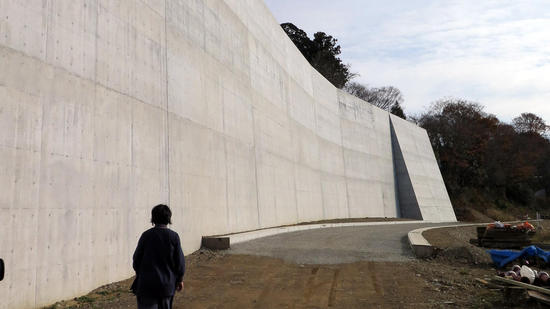
壊れた「万里の長城」

岩手県宮古市田老地区では1934年から陸側の防潮堤が建設され、その後、海側の防潮堤も78年ごろまでに完成した。総延長2433メートル、海面からの高さ10.45メートルというX字型、二重の防潮堤は「万里の長城」と呼ばれた。

チリ地震の津波は防潮堤を越えず、世界中から注目を集めた。しかし、東日本大震災の津波は海側と陸側の防潮堤を越えて田老地区をのみ込んだ。海側の防潮堤は破壊された。今回は巨大津波だったとは言え、防潮堤をつくるだけでは万全ではないということだ。「万里の長城」に安心し切って、逃げなかった人もいる。

田老地区ではどこにいても山に向かって真っ直ぐ避難できるよう避難経路がつくられ、誘導標識が整備されていた。「万里の長城」は巨大津波を防ぐことはできなかったが、住民が避難する時間を稼いだという指摘もある。

田老地区の人口に対する死亡率でみると、明治三陸地震は83.1%、昭和三陸地震は32.5%、東日本大震災は3.86%と最も低くおさえられた。

1993年の北海道南西沖地震による津波で被災した北海道・奥尻島には津波対策として最高10メートル、総延長14キロの防潮堤が築かれた。しかし、風光明媚な海岸線が一変し、観光業が打撃を受けた。漁業も高齢化や後継者不足に苦しめられている。このままでは「限界集落」になる恐れがある。

「海が見えない復興でいいの」

安倍晋三首相の妻、昭恵夫人は2013年12月、自民党の環境部会で「防潮堤で覆われた海が見えない復興でいいんだろうか」と発言。「必要ないところはやめればいい。景観が崩れ、海の生態系が変わって環境も破壊され、漁業にも影響するかもしれない」と巨大防潮堤の建設に慎重論を訴えた。

昨年3月の参院予算委員会で、安倍首相も「景観も重要で、震災直後とは住民の意識も相当変わってきた」と答弁した。国は海岸法を改正し、防災を検討する際、住民や識者を加えた「協議会」を都道府県が設置できるようにした。

小泉海岸を指し示す阿部さん(阿部さん提供)

しかし…。「宮城県の村井嘉浩知事はとにかく安全第一で、海岸をコンクリートで固めようという考えです。行政と住民がきちんと話し合ってやろうというスタンスがありません」と阿部事務局長は言う。「もう地元だけではダメです。小泉海岸を利用する人はたくさんいるわけです。もっと幅広い声を集めていかなければ」

被災3県以外でも、津波対策として防潮堤の建設が進められている。大震災から約4年半。景観や環境、地元の産業と暮らし、住民の安全と財産保全のバランスをもう一度考えてみる必要がある。コンクリートの海岸構造物は寿命が50年程度。半世紀後、被災3県では老朽化した総延長400キロの巨大防潮堤の建て直しや保全を迫られる。

(おわり)

木村正人在英国際ジャーナリスト

在ロンドン国際ジャーナリスト(元産経新聞ロンドン支局長)。憲法改正(元慶応大学法科大学院非常勤講師)や国際政治、安全保障、欧州経済に詳しい。産経新聞大阪社会部・神戸支局で16年間、事件記者をした後、政治部・外信部のデスクも経験。2002~03年、米コロンビア大学東アジア研究所客員研究員。著書に『EU崩壊』『見えない世界戦争「サイバー戦」最新報告』(いずれも新潮新書)。masakimu50@gmail.com

Mauern gegen das Meer

2-format2010
Schutzbauten im Nordosten Japans
An der japanischen Pazifikküste werden 400 Kilometer Schutzwälle gebaut. Die Betonmauern verstellen die Aussicht. Ob sie die Bevölkerung vor Tsunamis schützen, ist umstritten.
Acht Milliarden Franken sollen die Schutzmauern kosten. Das Grossprojekt kurbelt die japanische Wirtschaft an.Fudai

Es ist ein scheussliches Monster aus Stahl und Beton, 200 Meter breit, 15,5 Meter hoch. Die Tsunami-Schutzmauer von Fudai in der Provinz Iwate verbarrikadiert den Eingang in das kleine Tal. Als am Nachmittag des 11. März 2011 der Tsunami auf die Nordostküste Japans zuraste, hofften die 3000 Einwohner von Fudai bangend, dass die Schutzmauer Baujahr 1984 sie vor der Zerstörung schützen werde.

Der Tsunami, ausgelöst durch ein gigantisches Beben der Stärke 9,0 auf der Richterskala, türmte sich in der Bucht mehr als 20 Meter hoch auf. Er schwappte über die Schutzmauer, zerschlug die Fensterscheiben der Kontrollräume, von denen aus die Fluttore abgesenkt werden. Doch während andere Gemeinden dem Erdboden gleichgemacht wurden, waren in Fudai die Schäden gering. Eine einzige Person kam ums Leben. In ganz Tohoku, wie Nordostjapan genannt wird, waren hingegen fast 18 500 Tote und Vermisste zu beklagen. Das Betonmonster von Fudai bewies seine Nützlichkeit.

Baukonzerne profitieren

1933 hatte ein Tsunami in der Gemeinde Fudai mehr als 300 Tote gefordert. In den siebziger Jahren trieb der langjährige Bürgermeister Kotoku Wamura den Bau der Schutzmauer voran. Viele Bürger hielten die mehreren Dutzend Millionen Franken, die der Bau kostete, für verschwendetes Geld. «Doch die Mauer war unsere Rettung», meint Yasuhiko Morita von der Gemeindeverwaltung von Fudai. Aber, so wendet er ein, was in seiner Gemeinde funktioniert habe, können nicht einfach auf andere Orte übertragen werden. Der Bau der Mauer sei nur möglich gewesen, weil der Taleingang von Fudai sehr eng sei. In breiteren Tälern stiegen die Kosten ins Unermessliche.

Genau das hat die japanische Regierung vor: Sie glaubt, das Modell Fudai kopieren zu können. Wenn es nach ihrem Willen geht − und in Japan geht es meist nach dem Willen der Regierung in Tokio −, verschwindet die Pazifikküste von Tohoku hinter insgesamt 400 Kilometern Schutzmauern. Kostenpunkt für das gigantische Unterfangen: 1 Billion Yen, rund 8 Milliarden Franken.

Beton ist seit Jahrzehnten das Allheilmittel der regierenden Liberaldemokratischen Partei (LDP) für regionale Probleme, sei es die lahmende Wirtschaft oder der Bevölkerungsschwund. Auch wenn durch Grossbauprojekte kurzfristig lokal Arbeitsplätze entstehen – Hauptprofiteure sind die grossen Baukonzerne, welche die Pläne umsetzen. Sie sind mit der LDP und der Regierung eng verbandelt und darauf bedacht, dass es immer wieder neue Projekte gibt. Das Tsunami-Mauer-Projekt ist eines von vielen, aber bereits in vollem Gang: Eine Fahrt entlang der Küste von Hachinohe nach Ishinomaki führt von einer Baustelle zur anderen. Auf vielen Strassen sind mehr Lastwagen als Autos unterwegs, Bagger versetzen hier die sprichwörtlichen Berge. Vielerorts wachsen die Schutzwälle schon in die Höhe.

Doch die Pläne der Beamten in Tokio stossen auf Kritik. Fischer beklagen, dass sie vom Meer abgeschnitten werden, von dem sie leben. Gemeinden, die über etwas Tourismus verfügen, befürchten, dass niemand mehr kommt, wenn eine Betonwand die Aussicht versperrt. Die erst wiedereröffnete Senseki-Bahnlinie zwischen Ishinomaki und Sendai illustriert das Problem. Der Zug fährt an der Bucht von Matsushima vorbei. Mit den unzähligen mit Kiefern bewachsenen Inselchen wird sie als eine der schönsten Naturlandschaften Japans gehandelt und ist eine beliebte Touristendestination. Doch vom Zug aus sieht man heute streckenweise nur noch Beton.

Auch wird hier die Wirksamkeit der Mauern hinterfragt. Die Mehrheit der Schutzwälle stürzte am 11. März 2011 durch die Wucht des Erdbebens ein oder wurde so geschwächt, dass der Tsunami sie wegfegte. Andere waren schlicht zu wenig hoch. Yoshiaki Kawata, ein Experte für Katastrophenvorsorge, sagt, man müsse unterscheiden zwischen verschiedenen Stärken und Häufigkeiten von Tsunamis. Die Schutzmauern, die nun gebaut würden, sollten Tsunamis standhalten, die alle 100 bis 150 Jahre zu erwarten seien. Gegen stärkere Tsunamis, die deutlich seltener aufträten, könne man sich mit einer Mauer aber nicht schützen. Vielerorts ist auch nicht klar, was die Mauern schützen sollen. Die Gebiete, die vom letzten Tsunami betroffen waren, dürfen nicht mehr bebaut werden. Die Wohnquartiere werden auf höher gelegene Gebiete verlegt. Auch haben die meisten Gemeinden viele Einwohner verloren. «Wer weg kann, zieht weg», meint eine Geschäftsfrau in Kamaishi ernüchtert. Wenn niemand mehr in der Ebene wohnt, werden die milliardenschweren Mauern noch fragwürdiger.

Kritiker sehen auch die Gefahr, dass sich die Menschen hinter den Schutzwällen zu sicher fühlen. «Tsunami-Mauern werden da gebaut, wo es gefährlich ist», argumentiert Morita, der Gemeindevertreter in Fudai. Da die Stärke eines Tsunamis kaum vorausgesagt werden könne, müssten sich die Menschen bei einer Tsunami-Warnung immer in Sicherheit bringen. «Doch wenn sie sich hinter der Mauer zu sicher fühlen, dann fliehen sie nicht», mahnt Morita. Vor vier Jahren hat er beobachtet, dass sich nach dem Beben die älteren Leute eher als die jüngeren in Sicherheit gebracht hätten. Sie wuchsen zu einer Zeit auf, als die Erinnerung an die Verheerungen von 1933 noch lebendig war und es in Fudai keine Mauer gab. Viele Anwohner der Baustellen fragen sich zudem, ob das Geld für den Wiederaufbau nicht anders investiert werden sollte. «Wäre es nicht sinnvoller, breite Strassen zu bauen, über die man im Katastrophenfall schnell fliehen kann?», fragt etwa ein Angestellter eines Hotels in Minamisanriku. Viele Menschen blieben 2011 auf der Flucht mit ihren Autos im Stau stecken und kamen ums Leben.

Einen alternativen Weg hat man auch an der Südküste von Shikoku eingeschlagen. Diese liegt ausserhalb des Katastrophengebiets von 2011 und erhält keine Gelder aus Tokio. Teure Mauern sind für diese Gemeinden unerschwinglich. Darum wurden seither Hunderte von Treppen angelegt, die die Hügelflanken hinaufführen. Gut ausgeschildert führen sie die Fliehenden häufig auf weiter oben gelegene Bahnlinien oder Schnellstrassen. Andernorts wurden spezielle Fluchtorte planiert. Wo es kein höher gelegenes Gebiet gibt, wurden Stahltürme errichtet, die als Fluchtorte dienen. Die beiden Türme von Kure-Nakatosa haben breite Rampen, die auch ältere Leute besteigen können. Zusätzlich gibt es einen handbetriebenen Notfallaufzug. Im obersten Stock sind Decken und Nahrungsmittel gelagert, so dass man ausharren kann, bis Rettung kommt.

Eine mehrstufige Stadt

Dass es auch ohne Mauern geht, zeigt das Beispiel der Gemeinde Onagawa, die knapp 300 Kilometer südlich von Fudai liegt. Die Stadt mit einst 10 000 Einwohnern verzichtet auf eine Tsunami-Schutzmauer, obwohl sie im März 2011 rund 1000 Opfer zu beklagen hatte. «Wir leben vom Meer und mit dem Meer», sagt die Verkäuferin in einem vor kurzem eröffneten Laden, der nur rund 100 Meter vom Ufer entfernt liegt. Vom neu erbauten Bahnhof, entworfen vom Stararchitekten Shigeru Ban, führt eine kleine Allee auf den Hafen zu. Links und rechts entstehen Läden, überall wird noch gehämmert. Die offizielle Eröffnung ist auf den fünften Jahrestag des Tsunamis im kommenden März geplant. Von der Terrasse des kleinen Bahnhofs, wo die Touristen ankommen, eröffnet sich ein prächtiger Blick über die Bucht von Onagawa. Eine Mauer würde das verunmöglichen.

Darauf, dass die Pazifikküste Japans wieder von Tsunamis getroffen werden wird − die Frage ist einzig wann und wie hoch −, bereitet sich Onagawa vor. Man setzt auf eine «mehrstufige» Stadt. Hafenanlagen und fischverarbeitende Betriebe lassen sich kaum schützen. Sie befinden sich notgedrungen am Wasser und werden dort wieder aufgebaut, im Bewusstsein, dass ein künftiger Tsunami sie erneut zerstören wird. Das Gebiet, auf dem sich der Bahnhof und die Ladenstrasse befinden, ist um mehrere Meter aufgeschüttet worden. Hoch genug, um vor kleineren Tsunamis geschützt zu sein; doch bei einem der Grössenordnung von 2011 würden sie überschwemmt, vielleicht gar zerstört. Wohnhäuser sind nur noch auf deutlich höher gelegenen Gebieten zugelassen. Die Erdarbeiten sind noch im Gang, um die nötigen Flächen zu schaffen.

Onagawa ist verhältnismässig reich. Als Standortgemeinde eines Atomkraftwerks erhält sie vom Betreiber saftige Zuschüsse. Man hatte riesiges Glück, nicht dasselbe Schicksal erlitten zu haben wie die Gemeinden rund um das Kraftwerk von Fukushima. Sie werden wegen der Verstrahlung noch lange unbewohnbar bleiben. Die gut gefüllte Gemeindekasse Onagawas macht es möglich, eigene Lösungen zu entwickeln, die den lokalen Vorstellungen entsprechen – und nicht unbedingt jenen der Beamten in Tokio, die auf die Befindlichkeiten der Einflüsterer aus der mächtigen Baubranche Rücksicht nehmen.

NZZ-Ostasienkorrespondent Patrick Zoll auf Twitter:

Vom Katastrophengebiet zum Naturpark

paz. Hachinohe ⋅ Wo sie nicht mit Beton verschandelt ist, gilt die Pazifikküste im Nordosten als einer der schönsten Küstenstreifen Japans. Zu den Sehenswürdigkeiten zählen die Naturwiesen von Tanesashikaigan, die wenige Kilometer südlich von Hachinohe liegen, das felsige Kap von Kamiwarisaki bei Minamisanriku oder die bekannte Bucht von Matsushima, die sich etwas ausserhalb von Sendai befindet. Zwar hat der Tsunami von 2011 auch der Natur zugesetzt, doch die Spuren sind dort heute viel weniger deutlich sichtbar als in den zerstörten Dörfern und Städten.

Als Massnahme zur Wiederbelebung der Region wurde der Sanriku-Fukko-Nationalpark gegründet. Er umfasst ein Grossteil der Pazifikküstengebiete der Präfekturen Aomori und Iwate, eine südliche Erweiterung nach Miyagi wird geprüft. Gemeinsam mit der Bevölkerung vor Ort sollen der Nationalpark und der damit verbundene Tourismus zur Revitalisierung der Region beitragen, schreibt das federführende Umweltministerium . Im Rahmen des Nationalparks wird auch erforscht, wie sich der Tsunami auf Flora und Fauna ausgewirkt hat und wie sich diese regenerieren. Noch weiträumiger als der Nationalpark ist derMichinoku-Küstenweg . Er führt über 700 Kilometer von Hachinohe in der Präfektur Aomori bis nach Minamisoma in Fukushima. Der Endpunkt liegt damit gleich nördlich der Evakuierungszone rund um das zerstörte Atomkraftwerk Fukushima Daiichi. Bis jetzt bestehen die ersten 70 Kilometer des Weges am nördlichen Ende zwischen Hachinohe und Kuji. Der Weg führt durch eine wunderschöne Landschaft und ist hervorragend ausgebaut. Mehrere hundert Blumensorten blühen zu verschiedenen Jahreszeiten. Eine parallel dazu verlaufende Zuglinie macht das Wandern in Etappen einfach. Dass das Umweltministerium grosse Budgets hat, zeigt sich an den tadellosen WC-Anlagen und an brandneuen Besucherzentren wie in Tanesashikaigan.

Südlich von Kuji ist der Weg noch in Bau, bis 2019 soll er durchgehend begehbar sein. Bis dann sollten auch viele der riesigen Baustellen der Vergangenheit angehören − derzeit ist die Wanderung zwischen Baggern und Lastwagen, umhüllt von Staubwolken kein Vergnügen. Auch fehlt vielerorts die Bahnlinie, die vor 2011 praktisch der ganzen Küste entlangführte. Die Instandstellung der schwer beschädigten Infrastruktur dauert noch an, Busse füllen die Lücken.

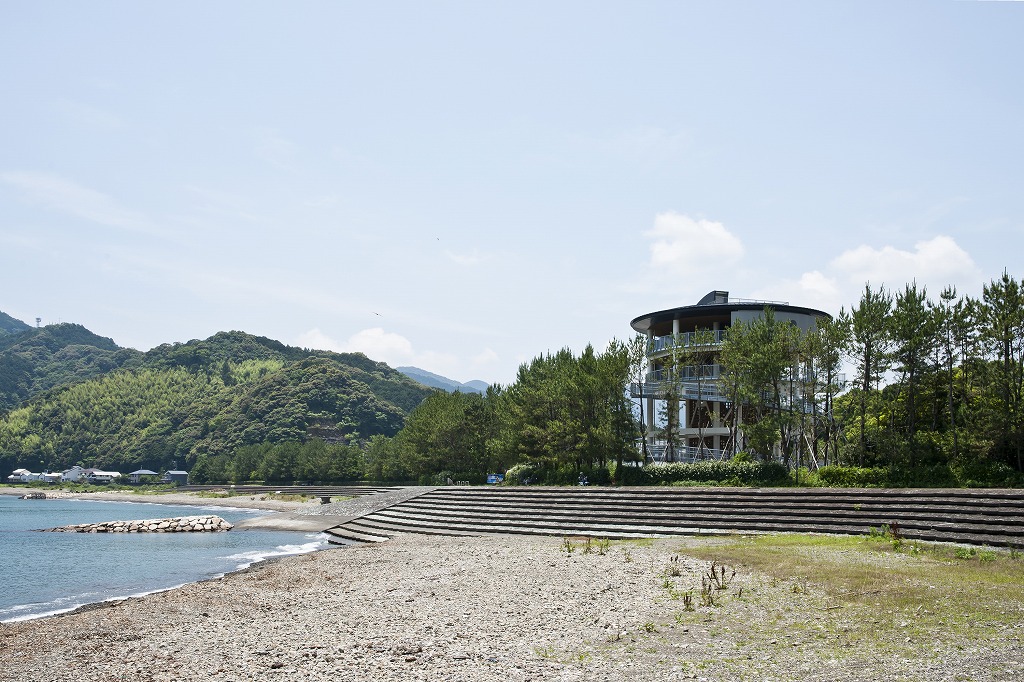
Tsunami Schutzturm in Nakatosa in der Präfektur Kochi

Ein Tsunamirettungsturm am Meer in Kochi, der Platz für 400 Personen hat.

【エコ・防災システム部門 津波避難タワー】

http://wakatake-machi.com/works-nakatosa-tower.html

中土佐町第1号津波避難タワー

中土佐町第1号津波避難タワー
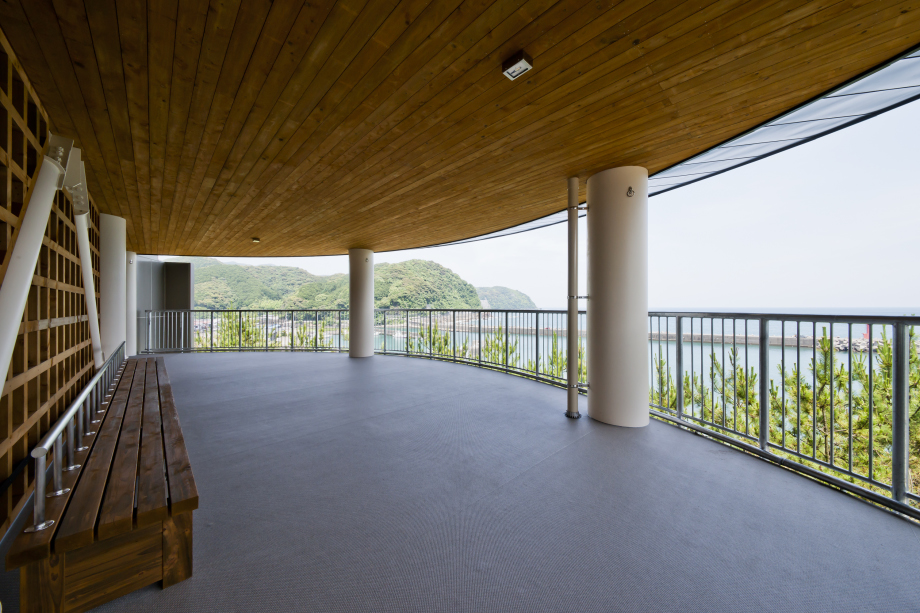
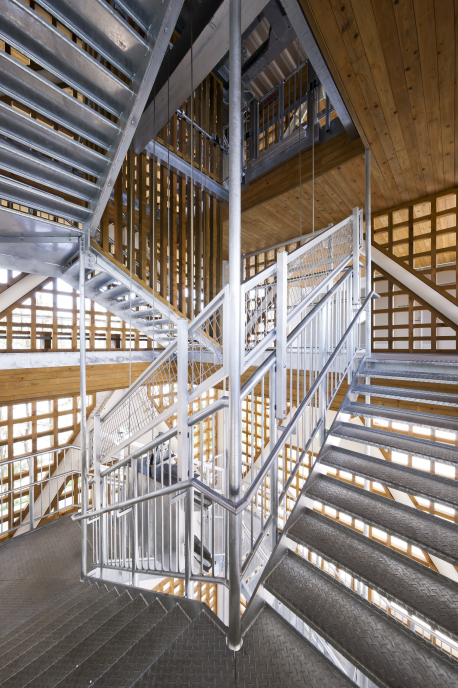
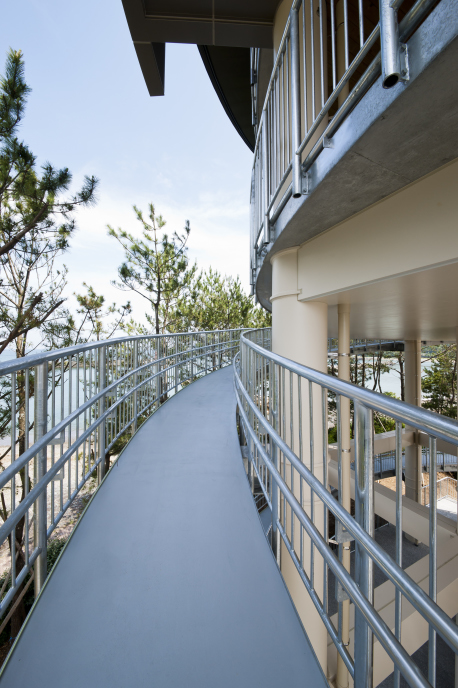
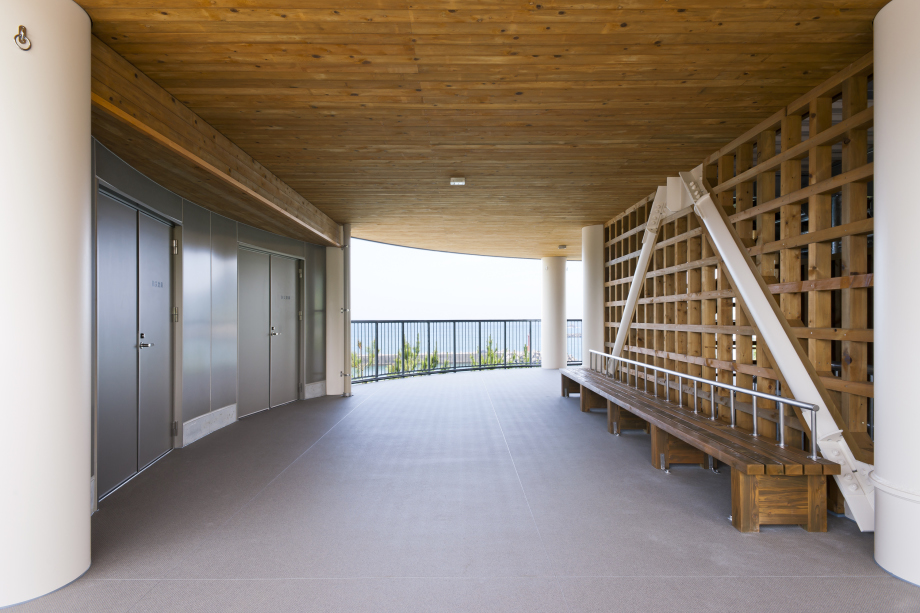
南海トラフ巨大地震に備えて、どの方向から津波が来ても耐えられる円柱形の津波避難タワーを設計しました。この地域は文化的景観重要地区に指定されており、周囲の景観と調和するようなデザインにしました。避難階は2層になっており400人ほどが避難可能となっています。また、高齢者や障害者の方が利用しやすいように、らせん型のスロープや階段、避難ゴンドラを設置しており、全ての人が円滑に避難できるような設計になっています。
また、この津波避難タワーは普段は展望台としても利用することができます。近隣の人や観光客に普段から慣れ親しんでもらうことで、地震時に円滑に避難ができるようにしました。

・避難階は、浸水深さ約7mの津波が来ても、3.7mの余裕がある高さ設定
・太陽光発電による照明灯を設備
・簡易トイレ、雨水利用の給水設備
・防災倉庫、ヘリコプターによる救助スペースを設置
・普段は展望台として利用可能

津波避難タワーの概要

津波避難タワーの概要
中土佐町第1号津波避難タワー 外観1 中土佐町第1号津波避難タワー 内観1
外観 内観
中土佐町第1号津波避難タワー 内観2 中土佐町第1号津波避難タワー 屋上 中土佐町第1号津波避難タワー 外観2 中土佐町第1号津波避難タワー 内観3

Ein Augenschein im Katastrophengebiet – Unwirkliche Augenblicke in Fukushima

Ein Augenschein im Katastrophengebiet
Unwirkliche Augenblicke in Fukushima
Die japanische Regierung und die von ihr kontrollierte Tokyo Electric Power Co. tun sich schwer, in Fukushima die havarierten Reaktorblöcke zu entsorgen. Es fliesst kontaminiertes Wasser ins Meer.
  • von Patrick Welter, Fukushima
  • 16.10.2015, 17:52 Uhr
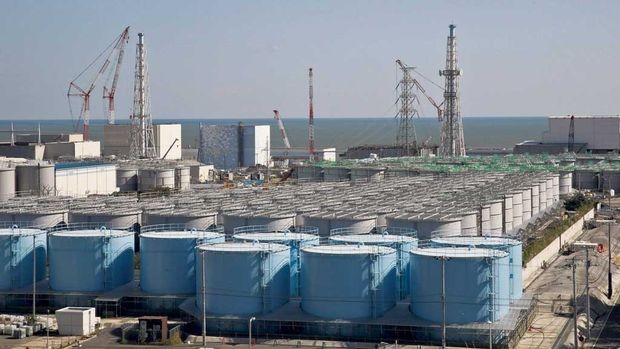
Fukushima WassertanksIn Fukushima stehen Tanks mit radioaktiv kontaminiertem Wasser dicht gedrängt auf dem Reaktorgelände. (Bild: Kimima Sa Mayama / EPA)

Um Platz für Wassertanks zu schaffen, ist auf dem Gelände des havarierten Kernkraftwerks Fukushima Daiichi ein Wäldchen abgeholzt worden, das Vögeln als Refugium diente. Die Kirschbäume an der Sakura-Strasse aber blieben erhalten. Schliesslich hätten Kirschbäume eine besondere kulturelle Bedeutung in Japan, erklärt ein Sprecher des Kraftwerkbetreibers Tokyo Electric Power (Tepco). Im neuen siebenstöckigen Betonbau, in dem die Arbeiter essen und sich erholen können, gibt es zum Strahlenschutz bis auf wenige Ausnahmen keine Fenster. Mit Stolz präsentiert Tepco in der Kantine Getränkeautomaten und Snacks, die für die Arbeiter seit August ein kleines Stück japanische Normalität bedeuten.

Mit Eis gegen Wasser kämpfen

Es sind diese unwirklich anmutenden Gegensätze, die dem Besucher des Unglücksreaktors ins Auge stechen. Vielleicht dreihundert Meter von den Reaktorruinen entfernt schneidet ein Arbeiter in Schutzkleidung mit einer grossen Heckenschere fein säuberlich das Gras von der Bordsteinkante. Und als ob es auf einer ganz normalen Strasse in Japan wäre, achten seine Kollegen darauf, dass vorbeifahrender Verkehr Abstand hält. Doch rollt an diesem frühen Nachmittag auf dieser Strasse fast gar kein Fahrzeug.

Im vierten Jahr nach dem Tsunami, der die Kühlsysteme in Fukushima Daiichi wegspülte und zur Kernschmelze in Reaktoren führte, ist das drängendste Problem in dem havarierten Kraftwerk immer noch das Wasser. Rund 300 t Grundwasser drücken täglich aus dem Abhang in die Reaktorgebäude und vermischen sich dort mit verstrahltem Kühlwasser, während an anderer Stelle leicht belastetes Wasser in den Ozean fliesst. 1000 Wassertanks zu je 1000 m³ hat Tepco auf dem Gelände errichtet; in ihnen ist verstrahltes Wasser gelagert, die Zahl der Tanks steigt und steigt.

Mit Verspätung steuert Tepco auf einige Meilensteine zu, um das Wassermanagement endlich in den Griff zu bekommen. Man habe in den vergangenen Monaten grosse Fortschritte gemacht, sagt Akira Ono, der Leiter des Kraftwerks. Vor den Olympischen Spielen 2020 sollte das Wasserproblem gelöst sein, meint er hoffnungsvoll. Im Dezember will Tepco den Boden rund um die Reaktorblöcke auf minus 30 Grad Celsius einfrieren, 30 Meter tief, auf einer Länge von 1500 Metern. Das soll verhindern, dass sich kaum belastetes Grundwasser mit verstrahltem Kühlwasser in den Reaktoren mischt. Fachleute beobachten aufmerksam, ob die in dieser Dimension einzigartige Operation reibungslos verlaufen wird. Frühere Tepco-Versuche, mit Eis Gräben auf dem Gelände abzuschotten, waren gescheitert.

Schon Ende Oktober soll am Hafenbecken eine undurchlässige Spundwand geschlossen werden, die das Kraftwerkgelände 30 Meter tief vom Pazifik abschottet. Damit will das Unternehmen erreichen, dass kein radioaktiv verstrahltes Wasser mehr aus dem Reaktor in den Pazifik dringen kann. Zugleich pumpt Tepco regelmässig Grundwasser rund um das Kraftwerk ab. Auch dieses Wasser wird auf dem Gelände gelagert.

Strontium, Cäsium, Tritium

Viel Aufmerksamkeit erregt in der japanischen Öffentlichkeit, was mit all dem verseuchten Wasser geschehen soll. Mehr als zwei Jahre verhandelte Tepco mit umliegenden Gemeinden und lokalen Fischern um die Zustimmung, Wasser in den Pazifik zu leiten. Die Fischer fürchten, dass die Skepsis der Verbraucher gegenüber ihrem Fang noch stärker zunehmen wird. Seit September nun gibt Tepco mit dem Plazet der Fischer regelmässig und kontrolliert Wasser in den Pazifik ab, bisher mehr als 7000 t. Dabei handelt es sich um Grundwasser, das abgepumpt wird, bevor es in den Reaktor eindringt. Nach der Reinigung der Filter sei dieses Wasser sauberer, als es die Vorgaben der Weltgesundheitsorganisation für Trinkwasser festlegten; Tepco verweist auch auf Messergebnisse externer Unternehmen.

Doch all das löst das Wasserproblem nur zum Teil. Völlig offen ist, was mit dem Wasser geschieht, das in den Reaktoren verstrahlt wurde und auf dem Gelände lagert, in Filteranlagen von Strontium und Cäsium und Nukliden gereinigt, aber noch mit Tritium belastet. Bis Ende März 2016 sollen dafür 800 000 t Lagerkapazität zur Verfügung stehen. Regierung und Tepco wissen nicht, wie sie mit diesem Wasser umgehen sollen. Manche Fachleute halten es für unvermeidlich, auch dieses Wasser verdünnt in den Ozean abzulassen.

Der Fortgang der Arbeiten in Fukushima Daiichi zeigt sich in den Farben. In japanisch-typischem Beige stehen auf dem Kraftwerkgelände alte Bürogebäude mit Fenstern leer, während rund 800 Tepco-Angestellte im Grau eines flachen Sichtbetonbaus ohne Fenster arbeiten. Wassertanks, die nach dem Unglück schnell aufgestellt wurden und oft rostig sind, weichen nun verschweissten Tanks in Blau (Toshiba), Beige (IHI) oder Grau (Mitsubishi). Tepco will mit den besseren Tanks Lecks vorbeugen.

Skurrile Messresultate

Am kleinen Hafen des Reaktorgeländes fliesst aus einem grossen Rohr Wasser in das abgeschirmte Becken. Es stammt laut Tepco aus Drainageleitungen, die Oberflächenwasser abführen. Neunmal sei dieses Jahr nach heftigen Regenfällen das Entwässerungssystem überlastet worden und «leicht verunreinigtes» Wasser unkontrolliert in den Pazifik geflossen, sagt eine Sprecherin. Bis März 2016 soll das Drainagesystem umgebaut sein, um solche Zwischenfälle zu verhindern. Tepco schiebt in den Vordergrund, dass ausserhalb des Hafenbeckens keine erhöhte Strahlung gemessen wurde. Abgesehen vom Problem mit verseuchtem Wasser weiss Tepco nicht, wie der wohl geschmolzene Brennstoff aus den Reaktoren 1 bis 3 entfernt werden soll. Der Abbau der Reaktoren ist auf 30 bis 40 Jahre angesetzt.

Nach jahrelanger Stilllegung beginnt Japan wieder mit der zivilen Nutzung der Kernkraft. Am Donnerstag schaltete Kyushu Electric Power im Süden des Landes im Kraftwerk Sendai den landesweit zweiten Reaktor wieder an. Weitere Reaktoren stehen vor der Freigabe durch die Aufsichtsbehörden, nachdem sie verschärfte Sicherheitsvorschriften erfüllt haben. Der nächste Atommeiler wird wohl 2016 ans Netz gehen.

Ein letzter fast unwirklicher Moment beschliesst die Besichtigung von Fukushima im «J-Village», dem früheren Trainingszentrum der Fussballnationalmannschaft, 20 km südlich des havarierten Kraftwerks. Am gläsernen Eingang des Haupthauses strahlt neben Bildern des Samurai-Teams ein Adidas-Werbespruch: «Nichts ist unmöglich», wird verkündet. In einem Zeltbau im J-Village erfährt der Reporter als Ergebnis der Kontrollen, seine radioaktive innere Belastung sei vor der Besichtigung von Fukushima Daiichi grösser gewesen als nachher. Die Werte könnten schwanken, meint eine Tepco-Sprecherin. Es sei möglich, dass es während der Tour keine innere Belastung gegeben habe.

Spektakulärer Tepco-Absturz

Die 1951 gegründete Tokyo Electric Power Co. (Tepco) brach nach der Nuklearkatastrophe in Fukushima unter ihren Schuldenlasten zusammen. Der Regierung blieb nichts anderes übrig, als die einst so stolze Tepco wegen ihrer Rolle als exklusiver Lieferant von Elektrizität im Grossraum Tokio zu retten. Es waren ausserdem, auch im Ausland, Bonds im Gegenwert von rund 100 Mrd. $ ausstehend. Vor dem Tohoku-Erdbeben im März 2011 erwirtschaftete Tepco Jahresumsätze von umgerechnet 12 Mrd. $; im vergangenen Jahr waren es noch 6800 Mrd. Yen (5,5 Mrd. $).

Nur dank kräftigen Preiserhöhungen und Staatszuschüssen gelang es in den letzten zwei Jahren, die noch 43 000 Mitarbeiter beschäftigende Tepco zu stabilisieren. Von einer Gesundung kann keineswegs gesprochen werden, denn die Nuklearruine Fukushima Daiichi wird noch über Jahrzehnte Kosten verursachen; bis anhin wurden umgerechnet fast 40 Mrd. $. an Geschädigte ausbezahlt, was weit unter den Ansprüchen liegt. Tepco steht für den grössten Firmenkollaps Japans in der Nachkriegszeit. Deren AKW (das grösste davon in Niigata) stehen still; thermische Werke (44 000 MW) und Wasserkraft (10 000 MW) füllen die Lücke. Die Tepco-Aktie hat sich auf rund 840 Yen erholt, doch hinter die rechnerische Börsenkapitalisierung von 1350 Mrd. Yen sind grosse Fragezeichen zu setzen.

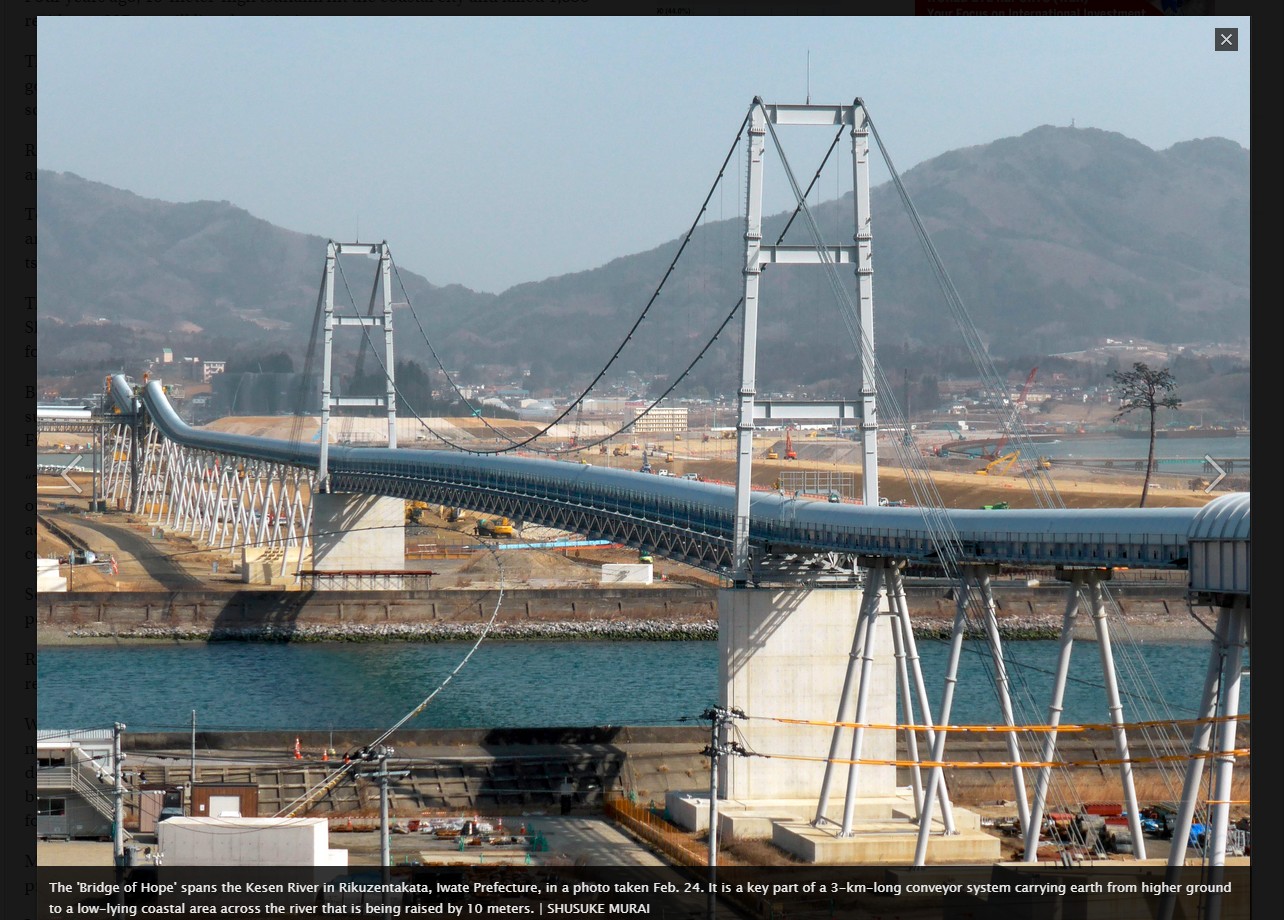
3-km conveyor belt taken out of rotation in 3/11 disaster area

Dismantling work starts Oct. 14 on a giant conveyor belt that was used to transport soil for reconstruction work in Rikuzentakata, Iwate Prefecture. (Yosuke Fukudome)

Dismantling work starts Oct. 14 on a giant conveyor belt that was used to transport soil for reconstruction work in Rikuzentakata, Iwate Prefecture. (Yosuke Fukudome)

Toggle

  • Dismantling work starts Oct. 14 on a giant conveyor belt that was used to transport soil for reconstruction work in Rikuzentakata, Iwate Prefecture. (Yosuke Fukudome)
October 15, 2015

By KAZUMASA SUGIMURA/ Staff Writer

RIKUZENTAKATA, Iwate Prefecture–A 20-meter-high conveyor belt that extends 3 kilometers over this tsunami-hit city is being dismantled after moving about 5.04 million square meters of soil for reconstruction work.

Work to tear down the huge apparatus started on Oct. 14 and is scheduled to be completed by next autumn.

The conveyor belt, commissioned by the city government and built by a joint venture that included general contractor Shimizu Corp., started operating in March 2014, about three years after the March 11 tsunami slammed into Rikuzentakata and destroyed much of the city.

The machine transported soil from the mountains to residential areas to elevate the land for protection against future tsunami. It completed its task in September.

A fleet of 10-ton trucks would have needed an estimated nine years to complete the same job.

The giant conveyor belt became a symbol of the region’s reconstruction efforts and drew curious onlookers to the city.

By KAZUMASA SUGIMURA/ Staff Writer

„Dann verlieren wir auch noch Tokio“

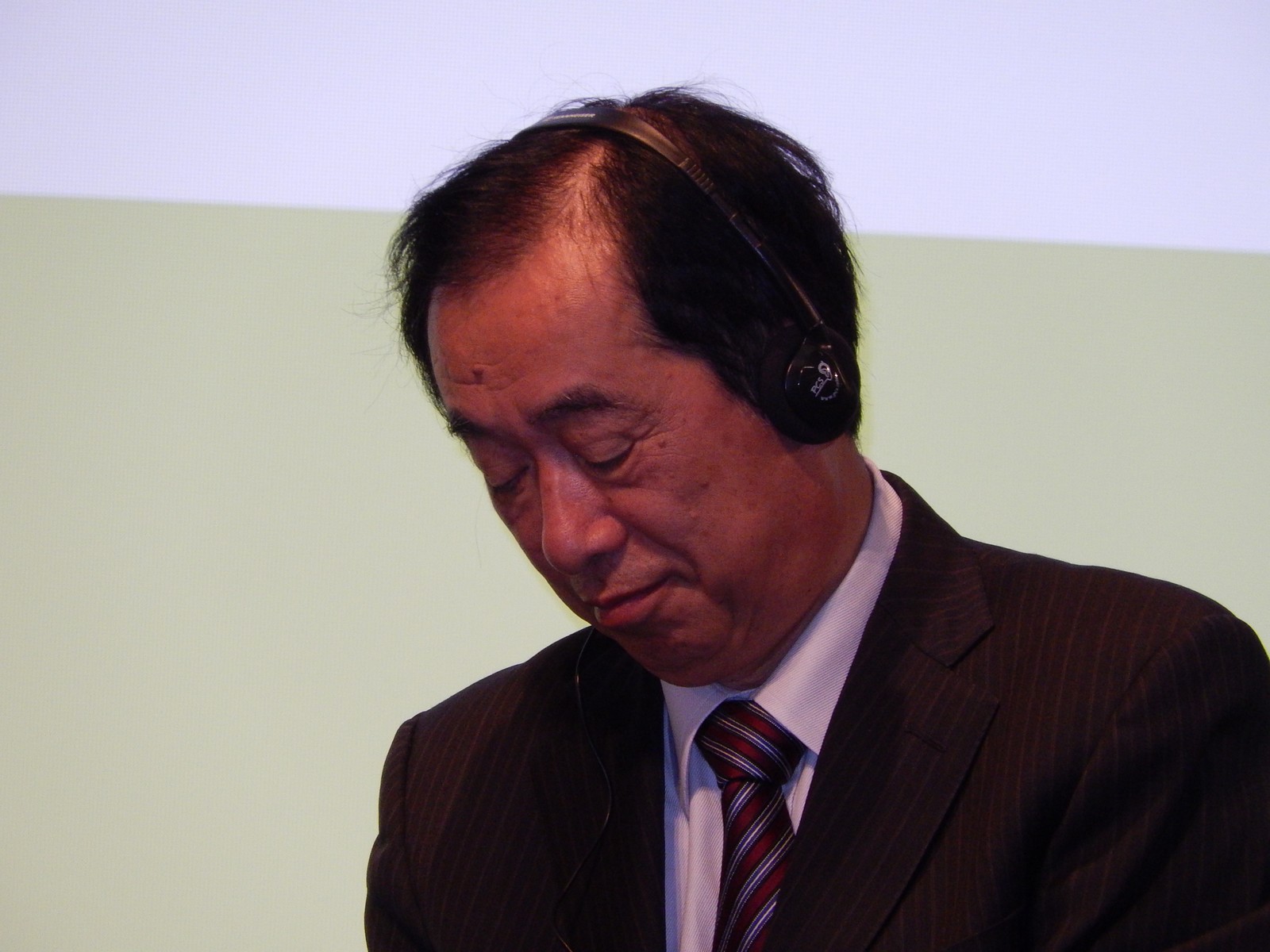
Bericht von Kan Naoto, ehemaliger Premierminister Japans in Berlin, Heinrich Böll Stiftung

Am 13.10.2015 stellte der ehemalige Premierminister Japans Kan Naoto seine Sicht der Geschehnisse vom 11.3. bis zum 16.3.2011 einer großen Zuhörerschaft dar.  Er beschreibt den nicht funktionierenden Nachrichtenweg von der Tepco Zentrale zum Büro des Ministeriums.

014 036 037 045 046 Autogramm Untitled 3 Untitled 4

Prof. Dr. Frank Rövekamp, der das Buch von Kan Naoto ins Deutsche übersetzt hat, schreibt in dem Artikel:

Der Premierminister und der Atomunfall:

Zur Bewertung des Krisenmanagements von Naoto Kan während der Fukushima Atomkatastrophe

OAI-WP_Premierminister-Atomunfall_Roevekamp (1)

Premierminister Naoto Kan – und es gibt keinen Grund für die Annahme, dass es bei jeder anderen Person in diesem Amt nicht genauso gewesen wäre – sah sich also mit der folgenden Lage konfrontiert: Auf der einen Seite geriet der Atomunfall zunehmend außer Kontrolle und drohte das gesamte Land in eine katastrophale und existenzbedrohende Krise zu stürzen. Zuverlässige Informationen gab es jedoch nicht. Die maßgeblichen Institutionen für die Unfallbekämpfung, der Betreiber des Atomkraftwerks TEPCO und die Atomaufsichtsbehörde NISA, waren ihren Aufgaben in dieser Situation wenig bis gar nicht gewachsen. Schließlich gab es weder Vorerfahrungen noch irgendein Drehbuch, wie in einer solchen Lage zu verfahren sei. Und die ganze Welt schaute zu.

2.2 Drei Schlüsselereignisse

Unter diesen Rahmenbedingungen sollen nun drei Schlüsselereignisse während der Krise herangezogen werden, die das Bild vom Krisenmanagement Naoto Kans besonders geprägt haben: Die Inspektionsreise von Kan in das Atomkraftwerk am frühen Morgen des 12. März; die Diskussion über die Zuführung von Meerwasser in einen der Reaktoren am späten Nachmittag des 12. März; die Reaktionen auf den von TEPCO möglicherweise angedachten vollständigen Rückzug aller Mitarbeiter aus der Atomanlage am 15. März .

http://www.sueddeutsche.de/politik/untersuchungsbericht-zu-fukushima-dann-verlieren-wir-auch-noch-tokio-1.1295626

28. Februar 2012, 18:26 Uhr

Untersuchungsbericht zu Fukushima-1

Panik, Verwirrung und Wutanfälle: Ein Untersuchungsbericht unabhängiger Experten zeigt, wie konfus die Kommunikation zwischen dem Fukushima-Betreiber und Japans Regierung war. Offenbar verhinderte erst das Eingreifen des damaligen Premiers Kan eine vollständige Evakuierung der Anlage – und damit noch schlimmere Folgen für das Land.

Die japanische Regierung hat nicht nur versucht, die Gefahr nach der Katastrophe im Atomkraftwerk Fukushima-1 in der Öffentlichkeit herunterzuspielen. Insgeheim war die Unsicherheit und Verwirrung unter den Verantwortlichen im März 2011 sogar so groß, dass selbst die Evakuierung Tokios erwogen wurde.

TEPCO’s workers stand near the crippled TEPCO’s Fukushima Daiichi nuclear power plant ractor buildings in FukushimaBild vergrößern
Tepco-Mitarbeiter vor der zerstörten Atomanlage Fukushima-1. Nach der Katastrophe hatte der damalige japanische Premier Kan offenbar verhindert, dass das AKW vollständig evakuiert wurde. (Foto: REUTERS)
Das geht aus einem Bericht hervor, den ein unabhängiger japanischer Think-Tank diese Woche veröffentlichen wird, berichtet die New York Times.

Die Rebuild Japan Initiative Foundation (RJIF) hatte im September 2011 eine Kommission zur Untersuchung des Nuklearunfalls in Fukushima-Daiichi eingerichtet, die anders als die Untersuchungskommission der Regierung unabhängig sein sollte. Das Gremium bestand aus 30 Experten. Die Wissenschaftler, Anwälte und Journalisten befragten mehr als 300 Personen, die mit der Katastrophe zu tun hatten, darunter Regierungsbeamte und sogar den damaligen Premierminister Naoto Kan.

Ihr Bericht belegt nun, wie konfus und teilweise sogar widersprüchlich die Informationen waren, die zwischen der Regierung, insbesondere Premier Kan, und der Führung des AKW-Betreibers Tepco und der Leitung der Atomanlage ausgetauscht wurden.

ANZEIGE

So hatte der Direktor des beschädigten Kernkraftwerks, Masao Yoshida, der Regierung versichert, er könne die Situation in den Griff bekommen, wenn seine Leute auf dem Gelände bleiben dürften. Wie der RJIF-Gründer Yoichi Funabashi der New York Times erklärte, versuchte gleichzeitig Tepcos Präsident Masataka Shimizu jedoch Premier Kan zu überzeugen, dass die Anlage vollständig evakuiert werden müsse.

Bei der Diskussion der möglichen Folgen kamen die Politiker schließlich zu einem Worst-Case-Szenario, bei dem ohne die Kühlmaßnahmen in Fukushima-1 (Daiichi) noch mehr Mengen strahlenden Materials in die Atmosphäre gelangen würde. Dies hätte die Evakuierung der benachbarten AKW Fukushima-2 (Daini) und Tokai notwendig gemacht – und dann dort möglicherweise zu Kernschmelzen geführt. Am Ende dieser „dämonischen Kettenreaktion“, so warnte dem Bericht zufolge der Leiter des Kabinettssekretariats, Yukio Edano, „wäre es die logische Schlussfolgerung gewesen, dass wir auch Tokio selbst verlieren würden“.

Premier Kan war schließlich wutentbrannt in die Tokioter Tepco-Zentrale gestürmt und hatte die Geschäftsführung angebrüllt, ein Rückzug sei undenkbar.

Geradezu Panik war der Kommission zufolge im Kabinett ausgebrochen, als den Politikern bewusst wurde, dass sich noch mehr als 10.000 abgebrannte, aber noch immer radioaktive Brennelemente in kaum geschützten Abklingbecken neben den zerstörten Reaktorblöcken befanden. Erst fünf Tage nach dem Erdbeben am 11. März zeigten Luftbilder, dass die Becken noch mit Wasser gefüllt waren. Nach Funabashis Einschätzung habe man den schlimmsten Fall gerade noch vermieden. Der Öffentlichkeit habe die Regierung dies jedoch verheimlicht, um einer Panik vorzubeugen.

Doch nicht einmal die engsten Verbündeten wie die USA wurden über die beängstigendsten Einschätzungen informiert, sagte der frühere Redakteur der Tageszeitung Asahi Shimbun der New York Times – und bestätigte so die Vermutung amerikanischer Experten. Erst vom 22. März an fanden dann tägliche Treffen von Vertretern beider Länder statt.

Der Bericht sei von historischer Bedeutung, erklärt Funabashi auf der Homepage seiner Organisation. Das Ziel der Kommission sei, zukünftigen Generationen die Lehren aus der Katastrophe zu vermitteln. Außerdem werde eine unabhängige Untersuchung des Umgangs der Regierung mit der Katastrophe helfen, die Überwachung der Verantwortlichen zu verbessern. Dies sei „essentiell für die Entwicklung einer gesunden Demokratie“, so Funabashi.

Denn die Katastrophe von Fukushima beleuchte nicht nur eine Regierungskrise, an der Unternehmen sowie verschiedene Behörden beteiligt waren. Er weist auch auf etwas Besonderes hin, „das dem Denken japanischer Bürger innewohnt“. Denn die Japaner gelten als relativ unkritisch gegenüber ihrer jeweiligen Regierung, öffentlichen Widerstand gegen die Politik gibt es kaum. Auch unabhängige Untersuchungen wie die von RJIF finden selten statt.

Zwar hatte die Regierung eine eigene Fukushima-Kommission eingesetzt. Diese stellte im Dezember ihren Bericht vor. Auch dort wurden Tepco und die Regierung heftig kritisiert. Doch die Experten hatten Tepco in einem Punkt in Schutz genommen: Premier Kan habe die Ankündigung von Tepco, Fukushima-1 zu evakuieren, falsch verstanden. Das Unternehmen hätte nur einen Teil der Belegschaft in Sicherheit bringen wollen.

Das aktuelle Papier der RJIF dagegen, für das fast alle an der Krise beteiligten Beamten befragt wurden, sagt nun etwas anderes. „Seine (Kans) Entscheidung, bei Tepco hineinzustürmen und zu verlangen, (Fukushima-1) nicht aufzugeben, hat Japan gerettet“, stellt Funabashi klar.

大槌、復興の道どこに 8月、震災後2度目の町長選 東日本大震災5年目

2015年6月22日05時00分

 東日本大震災の津波と火災で市街地が壊滅し、町民の約1割が犠牲になった岩手県大槌町で8月、被災後2度目の町長選(4日告示、9日投開票)がある。かつての町並みは更地で、町民の4人に1人は今も仮設住宅に暮らす。町の復興の進め方をめぐり、現町長と元町職員の2氏が、舌戦を繰り広げている。

■現職「工事進み始めた」 新顔「待つにも限度」

大槌町の山あいの仮設住宅集会所。再選を目指して立候補を表明した、町長の碇川豊氏(64)の集会に住民約30人が詰めかけた。町長選の投開票日を2カ月後に控えた6月9日のことだ。

「町長さん、(復興工事は)早くなんねのか」。80代の女性が問いかけた。

「もう少しだけ待ってけれ」。そうかわした碇川氏に、女性は「あと2年か、3年か」とたたみかけた。「ようやく工事が進み始めたところだ。いまかじ取りを代えたら、復興が立ち止まる」と碇川氏は返した。「仮設はもうボロボロだ」「町長は『絶対いい町になる』というが、その前に死んでしまう」と声が上がった。

町は役場を含む中心市街地が壊滅した。震災前の人口の1割近い1285人が亡くなったり、行方不明になったりしている。至る所で被災者の焦りが募る。

今年5月に立候補を表明した、前町会計管理者の平野公三氏(59)は「町内にマグマがたまっている」と表現する。

震災時は町総務課主幹。旧役場で津波に襲われたが、間一髪で助かった。約140人いた職員のうち当時の町長ら40人が亡くなり町長の職務代理を2カ月間務めた。その後、町長の碇川氏を総務部長として支えた。

毎晩のように仮設住宅を回り、被災者と車座集会を開く。「4年たっても復興が中途半端。待つにも限度がある」。遅れを碇川氏の指導力のなさのせいだとし、「事業の選択と集中が必要だ」という。

一方、碇川氏は14日、後援会事務所開きでのあいさつで、「行政お仕着せの復興では百年禍根を残す。住民の考えに基づいて丁寧に進めてきた」と話した。

■宅地不足、人口減… 町民に焦り

震災から4年半がたとうとしているが、復興は思うように進んでいない。

復興事業で町の予算は10倍以上に膨らんだ。町の幹部職員の多くが亡くなり、職員不足が深刻だ。約300人近い職員のうち、今も半数以上が全国の自治体や企業からの派遣職員だ。

山が海に迫った地形のため、町内には宅地に適した平地が少ない。高台の造成工事も、所有者不明の土地が多く、買収が難航した。

さらに、景気回復や東京五輪に伴う資材高騰、業者不足が追い打ちをかけ、町は14年11月、計画変更を余儀なくされ、宅地引き渡しが最大1年以上ずれ込むことになった。災害公営住宅の整備も4割にすぎない。

人口も減り続けている。震災前は約1万6千人だったが、今年6月には1万2千人。人口減はさらに加速し、15年後には1万人を割り、25年後には8千人を下回るという推計もある。

人口減を食い止めるためには、若者を中心に働ける場が必要だ。だが、立候補を予定している2人は多くを語らない。碇川氏は「交流人口の拡大と企業誘致」、平野氏は「農林水産業の6次化による所得増」を掲げるが、住民には具体策として聞こえない。

更地の旧市街地近くに立つ「小川旅館 絆館」の5代目おかみ、小川京子さん(54)は、2人の訴えに物足りなさを感じるという。

「この町で、私たちは何で食べていけばいいのか、そこを争ってほしい」

江戸末期創業で三陸の豊かな海の幸を生かした料理が人気だった。津波ですべて流されたが、老舗の歴史を絶やすまいと震災翌年の2012年12月、2階建てのプレハブで再開した。

だが、借金を払うので精いっぱい。震災前はビジネスマンが中心だった宿泊客も、今は被災地研修の学生や復興業務の公務員が大半だ。「復興が終わると来なくなるだろう」と覚悟している。

3人の子どもに後を継ぐ意思はない。盛岡市の専門学校に通う長男景彰(ひろあき)さん(21)に営業再開直前に話を持ちかけた。返答に困る景彰さんに「自分の人生、やりたいように生きなさい」とだけ伝えた。「この町の未来像が見えない以上、無理に継げとはとても言えない」と小川さん。「復興後はどうやって大槌に人を呼び込み、減少させないようにするかビジョンを語ってほしい。それがなければ衰退は見えている。うちも遠からず、廃業を迫られることになる」

(星乃勇介)

Some Tohoku disaster areas on fast track to rebuilding while others stuck in slow lane

Förderband

BY

STAFF WRITER

This is the first of a five-part series on the lingering impact of the March 2011 earthquake, tsunami and nuclear disaster on the three hardest-hit prefectures in the Tohoku region.

“Bridge of Hope” is the name of a temporary span over the Kesen River in Rikuzentakata, Iwate Prefecture.

It connects a hill where construction is underway to create a residential area on high ground and to raise a low-lying coastal zone where 4,045 dwellings were destroyed by gigantic tsunami on March 11, 2011.

The bridge is not for people. Built in front of the city’s symbolic “miracle pine tree” that survived the tsunami when the rest of its grove was swept away, the temporary bridge is a link in a 3-km-long conveyor belt system that carries 40,000 tons of soil and gravel — the equivalent of 4,000 10-ton truckloads — from the hill every day.

Four years ago, 18-meter-high tsunami hit the coastal city and killed 1,556 residents; 207 are still listed as missing.

The waves also devastated the city’s famous oyster farms and a pine forest the government had designated as one of 100 locations nationwide of special scenic beauty.

Rikuzentakata is one part of the Tohoku region aiming to fast-track its rebirth and become a safer place to live.

To that end, the city is building two seawalls 1.8 km long, one 3 meters high and the other 12.5 meters, as part of efforts to mitigate the threat of future tsunami. It is also elevating the land in the coastal zone by some 10 meters.

Thanks to the conveyor belt system built in March 2014 by general contractor Shimizu Corp. at a cost of ¥12 billion, the city can shorten the time it will take for the reconstruction work from an initially planned nine years to two.

Besides being efficient, the conveyor system offers hope to the tsunami survivors waiting to get back to a semblance of normalcy, Rikuzentakata Mayor Futoshi Toba said.

“Thanks to the eye-catching machine that symbolizes the reconstruction by operating every day, survivors can experience step-by-step progress,” he said, adding that the conveyor system, which has rarely been used for ordinary construction work, has also drawn sightseers.

Seeing the progress with their own eyes is “much more encouraging for people” than what officials can do behind closed doors, the mayor said.

Rikuzentakata’s progress represents Tohoku’s hopes — and struggles — to reconstruct life as usual.

With most of the tsunami debris disposed of by last March, except for in some no-go-zone and evacuation areas in Fukushima Prefecture where radioactive decontamination work is still underway, Tohoku has finally started full-scale building of permanent dwellings, both detached houses and condominiums, for survivors who lost their homes in the disaster.

Many survivors, however, are still in limbo as municipalities face delays in providing permanent housing units.

Iwate Prefecture had constructed 1,049 publicly funded replacement homes for survivors as of January — just 18 percent of the 5,933 units planned to be built by September 2018. The deadline was initially March 2018.

Miyagi is also experiencing construction delays.

As of January, the prefecture had built 2,692 housing units, or 17.4 percent of 15,484 units planned to be completed by March 2018.

In Fukushima, only 261 units, or 5 percent of the 4,890 units planned by March 2018, were available for nuclear disaster evacuees as of January. Also, just 1,190 replacement houses, or 44 percent of the 2,702 units planned, were constructed for tsunami and earthquake survivors in the prefecture.

The delay is due to the rising cost of labor and construction materials, Iwate Gov. Takuya Tasso said.

Meanwhile a vast number of people continue to live in temporary housing units.

In Iwate, 22,300 people were still in prefab temporary housing as of January, down a mere 13 percent from 25,619 last March.

Miyagi in January still had 35,332 people living in temporary shelters, down 16 percent from the 42,310 listed 10 months earlier.

The situation in Fukushima also remains problematic, with 24,098 people still living in temporary housing in January, even though 15 percent of 28,367 had moved away from such units as of last March.

The number of temporary shelter dwellers is surprisingly high, considering that all displaced survivors of the 1995 Great Hanshin Earthquake had moved out of similar housing five years after that disaster. The Hanshin temblor caused greater structural damage than the 2011 Great East Japan Earthquake, but there were no huge tsunami.

Industries in the Tohoku region are also suffering from slumping sales and manpower shortages.

Seafood production in Tohoku remains low. According to a survey by the Fisheries Agency between November and January, just 53 percent of facilities in Iwate Prefecture were operating at 80 percent or above of their pre-disaster levels. In Miyagi and Fukushima prefectures, the number is even lower, at 50 percent and 25 percent, respectively.

Worse, the percentage of facilities at or above the 80-percent production threshold hasn’t changed much since last year’s survey, which recorded 57 percent in Iwate, 49 percent in Miyagi and 24 percent in Fukushima.

A recovery in seafood sales has also foundered, with this year’s survey showing just 58 percent of firms in Iwate reaching 80 percent or above pre-disaster levels. The figure is 40 percent in Miyagi and a mere 21 percent in Fukushima.

Iwate Gov. Tasso said the slumping sales in Tohoku fisheries is due to delays in the recovery of factories to process fish products, and radiation fears stemming from the Fukushima nuclear disaster.

Despite abundant job opportunities, the three hardest-hit prefectures are suffering a labor crunch.

Local industries, especially fish processing, construction and nursing care, are suffering from the shortage of human resources. Specialists who can take the lead in constructing infrastructure for community development are also in short supply, Tasso said.

Some Rikuzentakata residents don’t hide their anxiety about life after reconstruction.

Taxi driver Haruyuki Sato doubts people want to return to live in areas where they lost their homes to the tsunami.

“I can’t foresee how the city will turn out (after all the reconstruction ends),” he said.

Some citizens oppose the city’s planned seawalls, which will mar the traditional coastal scenery and the planned 70,000-tree pine forest to be planted on land between the embankments.

Midori Murakami of sightseeing promoter Marugoto-Rikuzentakata said that as the construction progresses, there is an emotional gap between locals who lost loved ones in the disaster and those who didn’t.

“Some people complain about creating a (raised-ground zone) on land where about 200 missing people may be buried,” she said. “But otherwise we can’t move ahead. . . . I feel both excitement and concern while the reconstruction advances.

“But local people are looking forward. . . . Thanks to the reconstruction, I get to know many new people and we work together,” she added.

Fiscal 2015, which starts next month, will mark the fifth year of Iwate’s eight-year reconstruction plan and the second year of its three-year “full-fledged” effort to rebuild housing, lives and industries for survivors. The estimated reconstruction budget will reach ¥1.1 trillion, the highest since the disasters if not counting past debris disposal, the governor said.

“When thinking about disaster victims . . . I feel it’s a mission for us survivors to reconstruct a city filled with smiles . . . (so) that even the most depressed people come here and become encouraged by finding diverse people at work and full of pride,” said Rikuzentakata Mayor Toba, who lost his wife in the disaster.

Fiscal 2015 will also be the final year of the government’s ¥25 trillion five-year reconstruction budget, which Toba said is the biggest concern for those hoping the rebuilding work won’t grind to a halt.

The administration of Prime Minister Shinzo Abe has not made an official plan on whether or how to distribute the reconstruction budget after March 2016.

Toba is worried that the apparent waning sense of crisis among the public may lead to policymakers placing less priority on reconstruction.

“If possible, I want as many people as possible to visit the reconstruction sites — not necessarily Rikuzentakata — while the damage from the great earthquake still remains. Then, I want them to revisit after five, 10 years (to see the dramatic changes after the reconstruction),” he said.

“All bereaved families have something unforgettable inside them . . . but I think even that sorrow may turn to become an unbeatable energy (to generate positive effects).”

Tsunami survivors open new town on Miyagi farmland

Tsunami survivors open new town on Miyagi farmland

The town of Tamaura-Nishi is born in Iwanuma, Miyagi Prefecture, on July 19. (Provided by Takeki Izumi, assistant professor at Tokyo Metropolitan University)

The town of Tamaura-Nishi is born in Iwanuma, Miyagi Prefecture, on July 19. (Provided by Takeki Izumi, assistant professor at Tokyo Metropolitan University)

Toggle

  • The town of Tamaura-Nishi is born in Iwanuma, Miyagi Prefecture, on July 19. (Provided by Takeki Izumi, assistant professor at Tokyo Metropolitan University)
  • The Tamaura-Nishi district in Iwanuma, Miyagi Prefecture, in November 2013 (Asahi Shimbun file photo)
July 20, 2015

By HIDEAKI ISHIBASHI/ Staff Writer

IWANUMA, Miyagi Prefecture–They prayed for their lost loved ones, reminisced about their agony and despair and thanked the people who came to their rescue. And then, more than 800 survivors of the 2011 earthquake and tsunami started their new lives in a recently completed town built on nearly 20 hectares of what was once farmland.

The town of Tamaura-Nishi was born on July 19 within the city of Iwanuma, four years and four months after the Great East Japan Earthquake and tsunami slammed coastal areas of the Tohoku region.

People from six tsunami-devastated communities in Iwanuma relocated to Tamaura-Nishi. It is the first new town with more than 100 households from municipalities affected by the disaster.

The town’s inauguration ceremony was held at a citizens hall on the morning of July 19. It started with a silent prayer for the 181 residents of Iwanuma who were killed in the tsunami.

Miyu Sakurai, 15, a third-year junior high school student, talked about her optimism for the new town in a speech she gave at the ceremony.

“I am very happy because I can study in my own room. I am proud of the fact that Tamaura-Nishi is my hometown,” said Sakurai, who lived in a temporary housing facility for about four years after her house was washed away by the tsunami.

Yoko Saito, 52, also took the stage and talked about her feelings of helplessness when she saw how the tsunami had reduced her previous neighborhood of Hasegama, one of the six communities, to rubble in 2011.

“I was filled with extreme anxiety, thinking, ‘How will I live from now on?’” she recalled.

Saito was also at a loss on whether to join the group relocation to the Tamaura-Nishi district. She eventually decided to relocate there after her eldest daughter, Aya, 26, said, “We should join the relocation because we like Tamaura.”

Their new house was completed in July 2014. Showing a photo of her family taken at that time, Saito said, “This smile is a present from all of you.”

Iwanuma city is considered a forerunner in reconstruction from the 2011 disaster, but building a town from scratch required special coordination.

“It was good that each community had leaders, and that they were quick in making decisions,” said Hiroo Kikuchi, the 62-year-old mayor of Iwanuma.

The Tamaura-Nishi district was chosen as the relocation site in November 2011, eight months after the quake and tsunami.

From June 2012, leaders from the six communities held 28 meetings on what type of town they would create.

The town of Tamaura-Nishi was built on a farmland area measuring 750 meters by 250 meters and about 3 kilometers from the coast. The entire project cost about 19.6 billion yen (about $158 million).

Sales or leases of 158 plots started in December 2013. In addition, 178 completed houses were offered for rent. Actual relocations to the new town began in April 2014.

A total of 833 people from 315 households have moved to the area, accounting for 60 percent of residents from the six communities. The remaining 40 percent, mainly families with young children, have relocated elsewhere.

The name of the town was selected through voting by residents. Junior high school students came up with the names of four parks in Tamaura-Nishi.

A large supermarket was opened in Tamaura-Nishi on July 7 and has since been attracting customers even from areas outside the town.

“Since the disaster, we have been making efforts together and have shared the same thoughts,” said Katsuyoshi Nakagawa, 76, who coordinated the opinions from the six communities. “That has led to the birth of a good town.”

On the afternoon of July 19, residents of the Tamaura-Nishi district unveiled a monument in the new town and expressed gratitude to all people concerned.

At the end of the event, residents performed a mid-summer Bon-odori dance, the first time in five years that the traditional dance festival has been held.

“Today is the starting day of our hometown,” one of the residents said.

By HIDEAKI ISHIBASHI/ Staff Writer

Nearly 70,000 evacuees still living in shoddy temporary housing

Nearly 70,000 evacuees still living in shoddy temporary housing

Temporary housing units cover wide areas of the Kaisei and Minamizakai districts of Ishinomaki, Miyagi Prefecture. (Yosuke Fukudome)

Temporary housing units cover wide areas of the Kaisei and Minamizakai districts of Ishinomaki, Miyagi Prefecture. (Yosuke Fukudome)

September 12, 2015

THE ASAHI SHIMBUN

Tens of thousands of evacuees from the earthquake and tsunami disaster in 2011 are still living in temporary shelters designed to last only two years.

Most of the 68,000 evacuees are from the hardest-hit prefectures of Iwate, Miyagi and Fukushima.

Temporary prefabricated housing was erected hastily because so many people lost their homes and livelihoods in the magnitude-9.0 Great East Japan Earthquake and ensuing towering tsunami that devastated northeastern Japan.

Under the central government’s system to help victims of natural disasters, such prefabricated homes are to be used, in principle, for just two years.

The scale of the disaster led to delays in constructing more permanent public housing for those made homeless.

Many of the communities devastated by the tsunami in Iwate and Miyagi prefectures are trying to build new public housing units for disaster victims on higher ground, but that is proving difficult because the coastal areas are so flat.

In the case of the Great Hanshin Earthquake in 1995, all evacuees had left temporary housing and were relocated in 25,000 public housing units just five years after the disaster.

It has been estimated that 29,501 public housing units need to be built for the victims of the 2011 disaster. But as of July, only 11,000 units had been completed.

Officials say construction of all the needed public housing will likely not be completed until fiscal 2018.

Many of those still living in the temporary housing units are senior citizens or those on low incomes who face difficulties in finding other housing on their own.

That is one reason there has only been a 40 percent decrease in the number of evacuees from the peak figure in March 2012. About 199,000 people are still living as evacuees.

About 10 percent of those in Iwate and Miyagi prefectures living in temporary housing either said they were unsure where they would go after leaving those units or local government officials could not confirm the intentions of the evacuees.

In Fukushima Prefecture, about 20,000 evacuees live in temporary housing units. Because nine local communities are still covered by evacuation orders due to the Fukushima nuclear accident that was triggered by the earthquake and tsunami disaster, about 70,000 residents are unable to return to their homes.

In a related development, the Fire and Disaster Management Agency updated its figures on the number of dead and missing from the 2011 disasters to 21,955 as of Sept. 1 against 18,554 on Sept 12, 2012. It said the number of fatalities includes those who died while living as evacuees.

Evacuees, students help empty Fukushima town preserve its history

Tomioka Erinnerung

September 24, 2015

By MAKOTO TAKADA/ Staff Writer

KORIYAMA, Fukushima Prefecture–Local government officials, evacuees and students are saving personal documents and other historical materials from destruction in a municipality rendered a virtual “ghost town” by the Fukushima nuclear disaster.

The Tomioka town government, which now operates from Koriyama in Fukushima Prefecture, has asked residents for help in the preservation project, saying materials kept at a museum alone cannot show the entire picture and history of local people’s lives.

Although they now live in other municipalities, Tomioka residents have so far provided the town government nearly 10,000 historical materials, including many from the late Edo Period (1603-1867) to the Showa Era (1926-1989).

Handwritten letters, a book on women’s morals, traditional Japanese “kacchu” armor and a photo of a ceremony celebrating the renovation of a local school in the Meiji Era (1868-1912) are among the personal materials that have been offered.

Many items were kept at warehouses of long-established families or merchants in Tomioka.

“We want our citizens to know anew the history and culture of our town,” said Hidefumi Sanpei, 36, a member of the town preservation project team.

The entire town of Tomioka, which had around 16,000 residents in 2010, was evacuated after the disaster unfolded at the nearby Fukushima No. 1 nuclear power plant in March 2011.

Since then, many empty houses in Tomioka have fallen into disrepair or been demolished.

Fearing the loss of precious historical materials at these homes, the town government formed the project team in June 2014.

In August this year, the town government concluded an agreement with Fukushima University to preserve the materials. Students at the university had been engaged in the preservation activities since November 2014.

On Sept. 16, researchers and 15 students from Fukushima University gathered in a branch facility of the town government’s temporary office in Koriyama for their third meeting.

The students numbered the materials, took digital photos and created catalogs.

“This is a valuable experience,” said Naoki Yamaoka, 22, a senior at the university who hopes to become a public servant after graduation.

“Our students can implement what they learned in their classes, including one on archiving,” said Tsuyoshi Tokutake, a 35-year-old associate professor of local history at the university. “They can also contribute to the local society.”

防潮堤計画:地元が県に見直し要望 宮古・藤の川海岸 /岩手

9時間前

宮古市藤の川海岸周辺の防潮堤計画について、地図を使って見直しを求める町内会長や市議ら(机の奥側)=盛岡市の県庁で

 宮古市の藤の川海岸周辺で計画されている県の防潮堤計画について、地元の磯鶏(そけい)地区の町内会役員や市議ら計6人は25日、計画の見直しなどを求める要望書を県に提出した。

要望書では、防潮堤の高さが路面から3〜4メートル、総延長が約300メートルになることから、海の景観が完全に失われると指摘。津波や高潮などの流入を防ぐため、津波の通り道となる国道45号に可動式の門扉で仕切る「陸閘(りっこう)」を設置すべきだとした。

磯鶏町内会連合会の中村一栄会長はこの日、要望書を県河川課の八重樫弘明総括課長に手渡した。さらに、町内会役員や市議らは、地図を使いながら東日本大震災での津波の浸水域や、防潮堤でなくとも防災対策が立てられることなどを説明。「車からでも海が見えるのが藤の川海岸の良さ」「藤の川に隣接する高浜地区の津波対策にもなり、陸閘は合理的」などと訴えた。

八重樫課長は「要望書を読み、検討して回答したい」と答えた。県によると、計画は防潮堤の詳細設計を進めている段階で、2016年度中の完成を目指している。【近藤綾加】

2015年09月26日

震災被災地 防潮堤に新たな課題

2015年9月25日(金) NEW

阿部
「今、東日本大震災の被災地は、思わぬ課題に直面しています。」

和久田
「被災地の沿岸部では、防潮堤の建設が進められています。
計画の総延長は400キロ。
およそ9,000億円かかる費用は、すべて国の負担です。」

阿部
「しかし、防潮堤の中には、計画当初とは事情が変わり、津波から守る対象があいまいなまま整備が進んでいるものもあることがNHKの取材で分かってきました。

震災被災地 防潮堤 新たな課題

宮城県の沿岸に整備される防潮堤計画が記された文書です。
“背後に集落”“水産関連施設”など、防潮堤ごとに守る対象が記されています。

その1つ、宮城県気仙沼市の滝浜地区。
4億円余りをかけ、80メートルに及ぶ防潮堤が建設されます。
整備計画では「集落があるため」と記されていました。
ところが、予定されている防潮堤の高さは海抜11メートル。
今残っている住宅は整備される防潮堤より高い位置にしかありません。

地元住民
「ここの場合(防潮堤を作る必要は)ないと思う。
だって何を守るの、家ないもん。」

地元住民
「作っても、若い人がいなくなると意味がない。」

整備計画と実態にずれがある防潮堤は、どのくらいあるのか。
NHKでは、宮城県で市や町が漁村に整備する防潮堤、101地区を取材しました。
その結果、集落を守るという67の防潮堤のうち、住宅がない地区は37に上ることがわかりました。
さらに水産加工場などを守るとする防潮堤の一部でも実際には、整備の見込みがたっていないことが分かりました。
101の防潮堤のうち、実に41か所で当初の計画とは異なる状況のまま整備が進んでいたのです。

なぜ、こうした事態が起きているのか。
防潮堤計画の多くは、震災直後の混乱した時期に国の整備方針に沿って作られました。
21の防潮堤計画が進む南三陸町です。
町が防潮堤の建設を決めたのは、震災の年の12月。
当時、町は現場の実情を細かく把握できる状況ではありませんでした。
さらに、防潮堤の背後をどう活用するかも決まっていませんでした。

しかし、全額、国の費用で賄うことができるため、町は壊れたすべての防潮堤の復旧を申請。
国も被災地の復興を最優先し、自治体の申請をそのまま認めてきました。

南三陸町 三浦孝建設課長
「将来そこを使うとなった時に、今回復旧をしなければ、後での復旧はできない。
悩んだんですけれど、最終的には原形復旧しようと決断した。」

水産庁 防災漁村課 米山正樹課長補佐
「たとえ背後の町づくりがまだ固まっていなくても、先に防潮堤を進めることができる地域であれば、それはひとつの復興の進め方と思っている。
そういうものについては国としても最大限支援していきたい。」

ところが、町の人口は震災以降、2割以上減少。
漁業者の数も3割減りました。
町は今、防潮堤の背後をどう利用すればいいか頭を悩ませています。

8メートルを越える防潮堤の整備が進む、南三陸町の折立地区です。
震災後、住民は高台に移転。
町は宅地を買い取り、企業を誘致する計画を考えました。
しかし、土地の権利が複雑で、産業団地を作るだけのまとまった土地を確保できませんでした。
そこで町は、海辺に潮干狩り場を整備。
苦肉の策として背後に駐車場を作れないか検討していますが、見通しは立っていません。

南三陸町 三浦孝建設課長
「漁港、防潮堤、道路、すべて復旧はすると思う。
そのとき町の姿はどうなるのか。
そうならない(何もないということがない)ように、どうにかしなければならない。
一抹の不安はある。」

防潮堤計画 見直しは

和久田
「取材にあたった、仙台放送局の広池記者です。
当初の計画と異なっているのであれば、実態に合わせて計画を見直すということはできないのでしょうか?」

広池記者
「自治体の中には『場所によって防潮堤を作らない』と決断したところもあるんです。
しかし多くの地区では、やめるのは非常に難しいのが現状なんです。
理由としましては、防潮堤があることで、たとえ海から離れた場所に住んでいても、安心して暮らせると考える人も多いということと、将来、背後の土地を活用できるという可能性も残るわけなんです。
つまり、ただちに必要ないとは言い切れずに、判断は難しいんですね。
そしてもうひとつは、再び同じような津波が襲ってきた際に、万一何らかの被害が出れば責任を問われかねないという懸念も自治体にはあります。」

震災4年半 これからの復興は

阿部
「自治体の担当者の方も悩んでいましたよね。
震災から4年半がたって、被災地それぞれ事情が変わっていく中で、新たな課題に直面しているわけですね。」

広池記者
「取材した自治体の担当者からは、防潮堤を作らない代わりにその予算を別の事業に使えるならいいが、制度上それができないから結局作ってしまうという本音も聞かれました。

被災地の復興は壊れたものを元に戻すということを原則に、これまでスピード優先で計画が進められてきました。
ただ、4年半たって、人口減少など被災した地域によっては大きく状況が変わってきています。
10年後、20年後を見据えてこれからどういう復興を目指すのか。
4年半というタイミングで、もう一度、国も自治体も予算の使い方を考え直す作業が求められているのではないかと感じました。」